

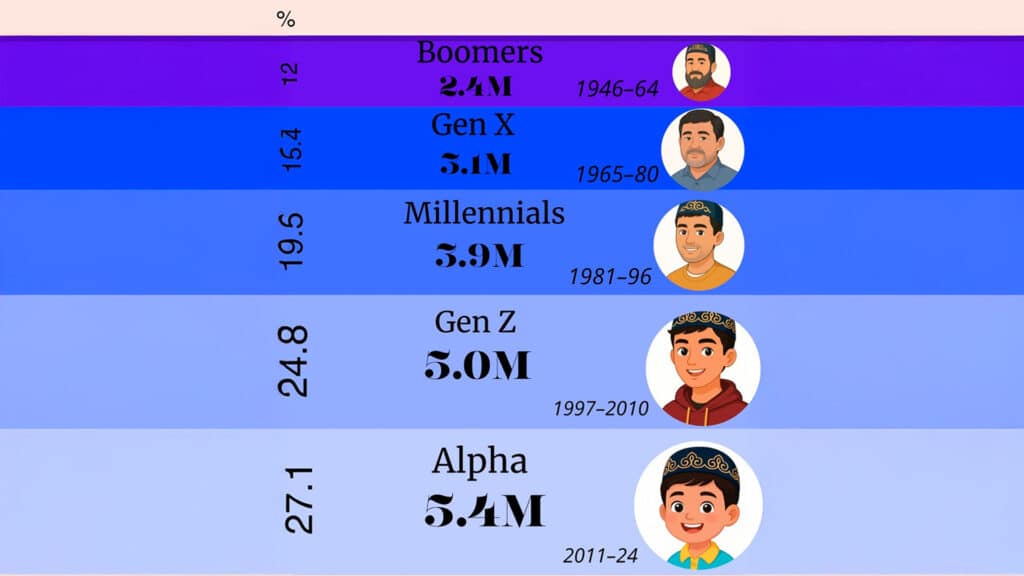
Kazakhstanis born between the mid-1990s and early 2010s — commonly known as Generation Z — already account for about a quarter of the country’s workforce.
According to Arman Shokparov, an HR expert at Qazaq Expert Club, Gen Z workers made up just 13% of the workforce in 2018. Over the next three to five years, their share could rise to 45% to 50% of the economically active population.
Changing attitudes toward work
Shokparov said younger employees are often criticized for job-hopping or lacking diligence, but his professional experience suggests otherwise.
«Gen Z employees are more adaptable to change, less attached to traditional authority structures and less tolerant of nontransparent management decisions,» he said.
He added that Gen Z workers are willing to work as hard as millennials and often bring creativity and new ideas — but only when they feel aligned with a company’s values, culture and professional development opportunities.
Read also: Morocco’s Gen Z protests over FIFA World Cup spending.
International HR research shows that more than 60% of Gen Z employees consider workplace flexibility and corporate culture more important than salary.
Higher turnover and entrepreneurial ambitions
Generation Z workers are generally more comfortable changing jobs. On average, they remain with one employer for about 1.5 to two years — nearly half as long as millennials.
Replacing an employee can cost companies between 20% and 50% of a worker’s annual salary, highlighting retention challenges for employers.
Read also: Reselling gains traction as Gen Z embraces secondhand fashion.
Entrepreneurial ambitions are also rising. About 30% of people ages 18 to 24 view starting their own business as an alternative to traditional employment, particularly in the digital sector, creative industries and online retail.
Pressure on employers to rethink career paths
According to Shokparov, companies may need to rethink career development models by offering greater responsibility and autonomy earlier in employees’ careers.
Research indicates that Generation Z workers expect career advancement within their first 12 to 18 months of employment, accelerating changes in corporate promotion structures. Millennials, meanwhile, face the choice of adapting to new labor market expectations or building work environments aligned with their own generation or more senior employees.
Kursiv.media previously reported that Kazakhstanis aged 16 to 24, often referred to as «Zoomers,» earn the lowest salaries among all age groups.