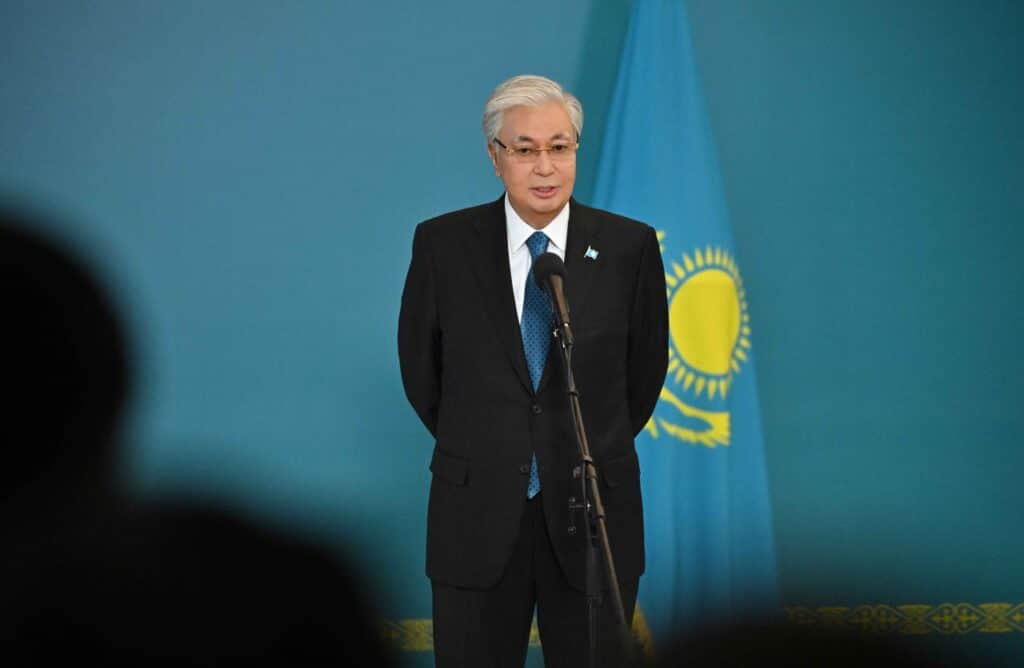
Kazakhstan has not abandoned its neutral and peace-oriented stance regarding the conflict in the Middle East and views dual power as a dangerous factor that can undermine stability, President Kassym-Jomart Tokayev said March 15 during a briefing for domestic and international media following the national referendum on a draft new Constitution.
«We have always advocated that all conflicts be resolved through peaceful, diplomatic means. This position of ours remains unchanged,» Tokayev said.
He noted that the conflict in the Middle East has multiple causes and said he had recently discussed the situation with leaders of several Arab Gulf states.
«There were telephone conversations with the heads of the Arab countries of the Gulf. We expressed solidarity with these countries,» he said.
Comments on Iran’s political system
Tokayev also referenced his recent meeting with Iran’s president, Masoud Pezeshkian, who paid an official visit to Kazakhstan.
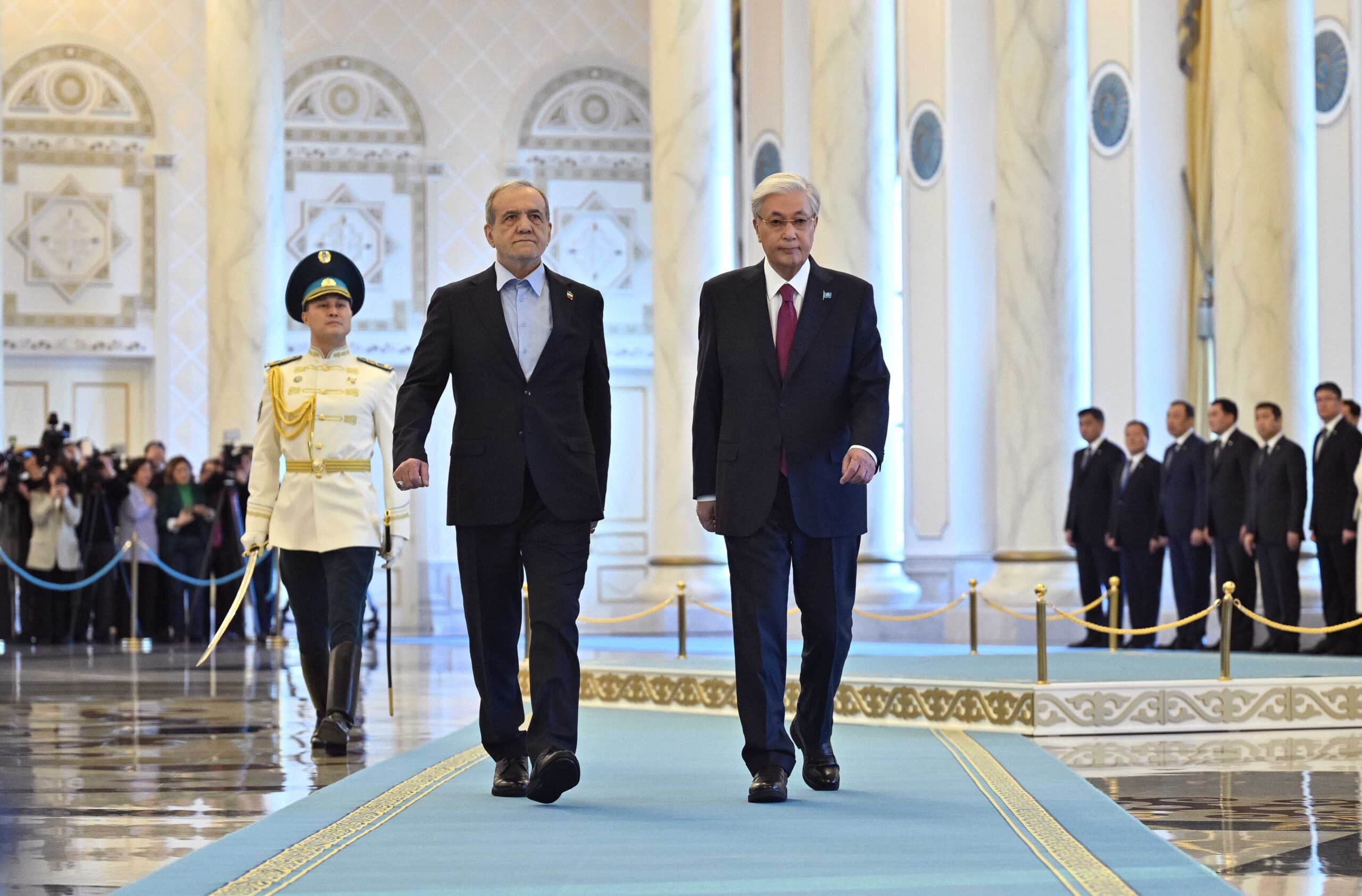
«He made the most favorable impression. He is a man of secular views, a cardiac surgeon,» Tokayev said.
Notably, Pezeshkian had earlier stated that Iran would not attack Arab Gulf states and even apologized on behalf of Iran in that regard. However, Tokayev said those remarks were later effectively disavowed.
«But then his statements were disavowed, essentially annulled. Iran has attacked and continues to attack the Arab countries of the Gulf,» Tokayev said. «This suggests that the president of Iran does not have full authority. This is a fact. I am not accusing anyone — I am simply talking about the facts.»
Tokayev said the situation reflects the structure of power in Iran, where authority is divided between religious leadership and elected officials.
«On the one hand, there is a religious authority that determines the main decisions. He is the head of state, the decision-maker. But there is also the president, who is formally the head of state but in reality is not the key figure,» he said.
Warning against «dual power»
Tokayev added that political systems should avoid competing centers of authority.
«Generally speaking, in any country, including Kazakhstan, there should be no dual power,» he said.
He noted that Kazakhstan previously experienced a similar situation that he said weakened the country’s stability.
«We failed to withstand this system at the time; it effectively undermined stability in our country four years ago. Therefore, I think this is a major lesson for many countries, including Kazakhstan.»
At the same time, Tokayev emphasized Kazakhstan’s respect for the Iranian people.
«We have great sympathy for the Iranian people. We show unwavering respect for their culture and their unique history. Therefore, there is no deviation from our position. We have been and remain a peace-loving country,» he said.
Diplomatic context
Interestingly, in light of the comments about the revocation of the Iranian president’s statement, a similar dynamic was described by American diplomat William J. Burns in his book «The Back Channel: A Memoir of American Diplomacy and the Case for Its Renewal.»
In a chapter devoted to secret U.S.-Iran negotiations in 2013 over Iran’s nuclear program and sanctions relief, Burns recalls talks with Iranian officials Majid Takht-Ravanchi and Abbas Araghchi, who at the time served as deputies to Foreign Minister Mohammad Javad Zarif.
Although senior Iranian government officials had the authority to negotiate with the U.S., Burns wrote that it was clear the final decision rested not with Iran’s executive branch but with the country’s supreme leader.
Read also: Mojtaba Khamenei is Iran’s new leader amidst war.
Burns writes that Ravanchi and Araghchi were staunch Iranian patriots who were skeptical about engaging with the U.S. and firmly defended their country’s positions. At the same time, he notes, they proved to be flexible and creative problem-solvers. Both men were professional diplomats rather than ideologues. That did not mean they were any less committed to Iran. They were proud of the Islamic Revolution and determined to demonstrate their ability to defend their country’s interests in the diplomatic arena.
The Iranian negotiators frequently referred to the political constraints they faced at home, according to Burns. At times, he writes, they confided that Iran’s Supreme Leader was waiting for an opportunity to say «I told you so» — to prove that the U.S. could not be trusted and that President Barack Obama was no less interested in regime change than former President George W. Bush.