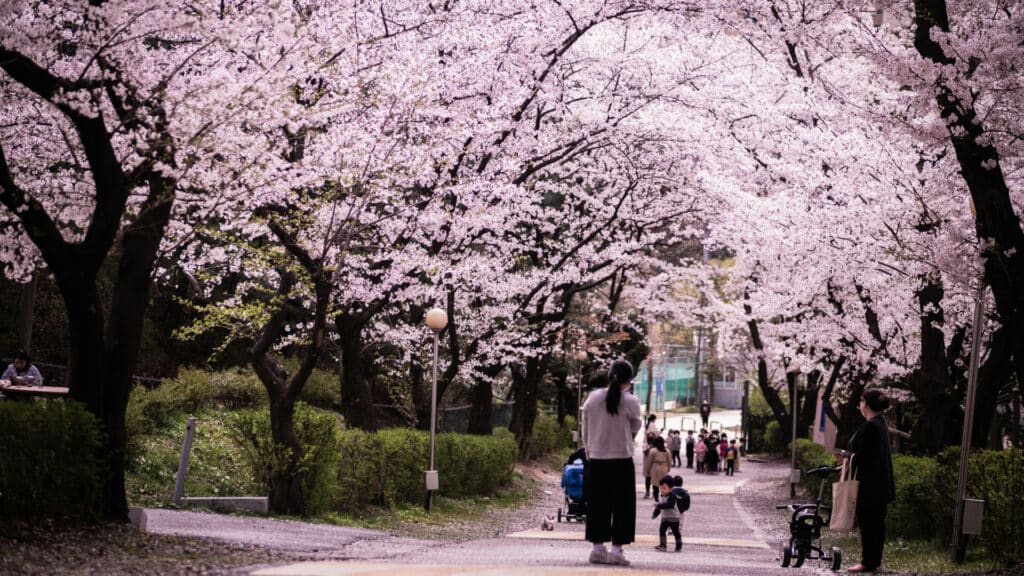
Japan’s cherry blossom season, marked by the blooming of sakura, is one of the country’s most celebrated natural events. These delicate flowers, which come from various species of Prunus trees, bloom each spring briefly and draw widespread attention across the nation.
Most cherry trees flower for only a short period — typically one to two weeks. In Tokyo and much of central Japan, peak bloom usually occurs between late March and early April. Further north, in regions such as Hokkaido, blossoms appear later, often beginning in early May. Some varieties, such as shikizakura, bloom twice a year. In Aichi Prefecture, these trees create a unique autumn scene, with pink blossoms appearing alongside red fall foliage.
The arrival of sakura signals the start of spring and is closely tied to seasonal traditions. People gather in parks and public spaces for hanami, or flower-viewing gatherings, where they enjoy the scenery and spend time outdoors with friends, family and colleagues. Bloom forecasts are announced as early as January, prompting discussions and plans for viewing spots ranging from well-known locations to quieter areas, reflecting the deep cultural significance of cherry blossoms in Japan.
Sakura’s brief and simultaneous blooming, followed by a rapid fall, has long symbolized the transient nature of life. This idea is reflected in the Japanese concept of mono no aware, which emphasizes an awareness of both beauty and impermanence.
The atmosphere of the sakura season can be compared to Nauryz, a spring festival observed across regions from Iran to West China, as both reflect renewal and the arrival of warmer weather.
Although Japan is especially associated with cherry blossoms due to its wide variety and nationwide celebrations, cherry blossom trees can also be found in many other parts of the world with temperate climates. Notable locations include Beijing in China, Bonn in Germany, Campos do Jordão in Brazil, Copenhagen in Denmark, Jerte Valley in Spain, Macon in the U.S., Seoul in South Korea, Vancouver in Canada, Washington, D.C. in the U.S. and Sydney in Australia.