Kazakhstan’s 2025 investment supports Turkish growth

In 2025, Turkey moved from an «aggressive stabilization» phase to a more sustainable, long-term economic model. The country succeeded in easing extreme inflationary pressures, which peaked at 75.5% year over year in May 2024. However, inflation remains elevated, standing at 30.9% in December 2025, well above sustainable levels.
Moderate growth driven by services and construction
GDP grew by 3.6% year over year in 2025. Growth was supported primarily by the expansion of the services sector and continued strength in construction. The government is still rebuilding housing and infrastructure following the devastating 2023 earthquakes.
The services sector posted solid growth of 4.2% year over year, driven by trade, transportation and the hospitality industry.
Tourism remains a key pillar
Tourism continued to play a central role in economic performance. In 2025, the sector generated $65.2 billion in revenue, up 6.8% from the previous year. Visitor numbers reached 63.9 million, an increase of 2.7%. Overall, tourism is estimated to account for about 12% of GDP.
Rising foreign investment and Kazakhstan’s role
Foreign direct investment (FDI) rose from $11.7 billion in 2024 to $13.1 billion in 2025. The services sector saw particularly strong gains, with inflows nearly doubling from $3.6 billion to $6.3 billion.
Wholesale and retail trade remained the most attractive segment, accounting for 48.7% of all FDI in services. Investment in this segment increased from $1.7 billion to $3.1 billion, with most capital coming from Europe and Central Asia.
Read also: Freedom Holding acquires Turkish Bank.
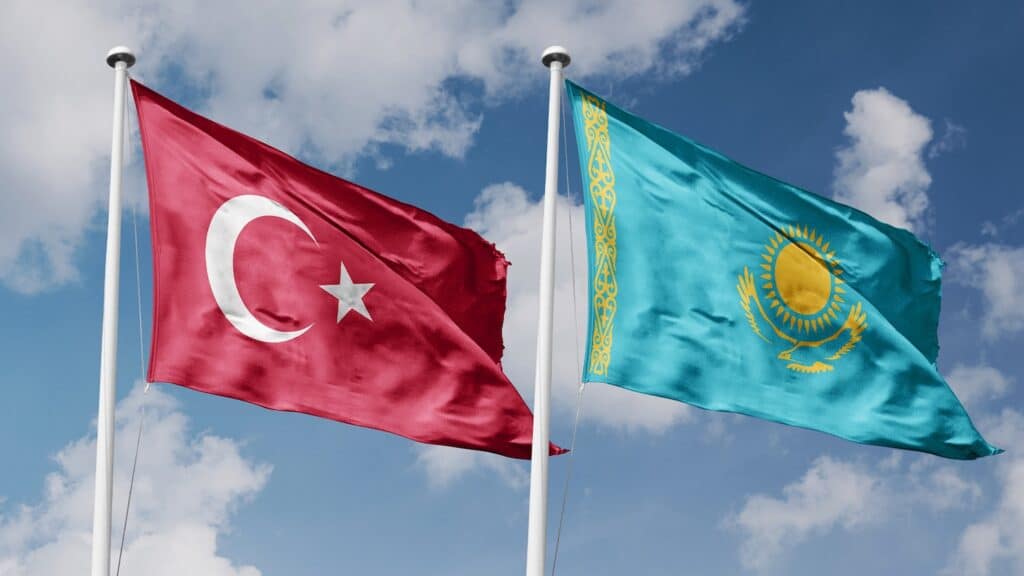
Kazakhstan emerged as the third-largest investor in Turkey’s economy by the end of 2025, contributing $1.1 billion. It followed the Netherlands at $2.9 billion and Luxembourg at $1.2 billion.
Outlook and inflation targets
According to the Presidency of Strategy and Budget (SBB), Turkey’s economy is projected to grow by 3.8% in 2026, with growth expected to reach 5% by the end of the current program period.
A key priority is bringing inflation under control. The government aims to reduce inflation to 16% in 2026, cut it roughly in half the following year and bring it down to 8% by 2028.
Geopolitical risks could weigh on outlook
These projections were made before the escalation of tensions involving the U.S., Israel and Iran. Given Turkey’s geographic proximity and reliance on energy imports, a prolonged conflict could pose significant risks.
Potential energy price shocks and supply chain disruptions would likely put pressure on both GDP growth and the Turkish lira.