
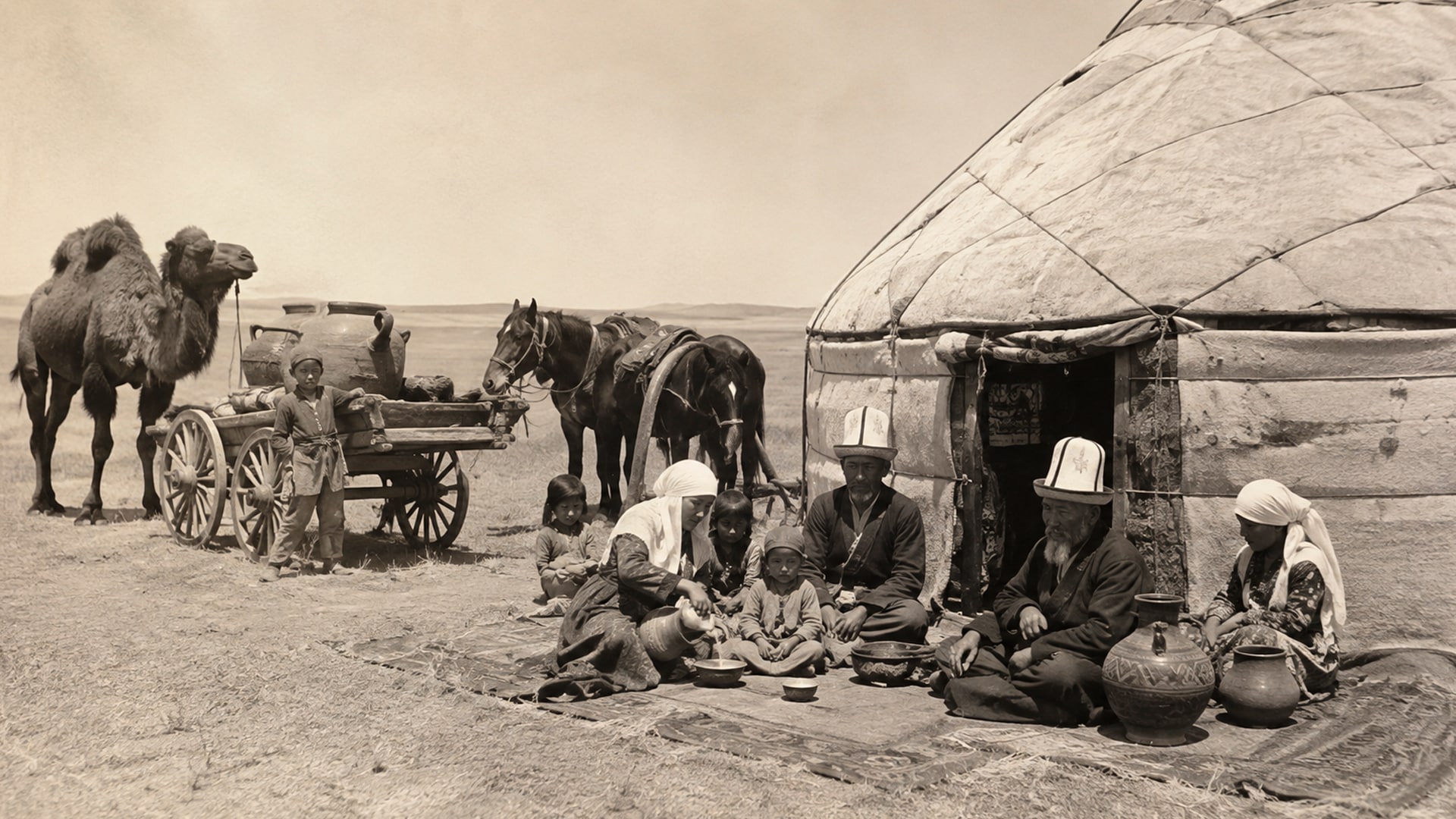
In the extreme summer heat, traditional methods of staying cool may seem surprising. Hot green tea instead of ice water, a thick quilted robe instead of an open T-shirt, and a felt yurt instead of a lightweight awning — these time-tested solutions helped residents of the steppes and cities of Central Asia cope with extreme temperatures long before the advent of air conditioning. Kursiv LifeStyle, citing Qalam, explains how traditional steppe culture and the architecture of ancient cities helped people cope with the midday heat.
Kazakh culture and steppe civilization brought together two ways of life: nomadic and sedentary. Each developed its own mechanisms for adapting to the region’s climate.
Nomads: Natural ventilation and the rules of the steppe
For nomadic populations, the challenge of scorching heat was partly addressed through seasonal migration. Summer pastures were often located in cooler northern regions or in the highlands. At the same time, the everyday lives of steppe dwellers were adapted to hot conditions.
The yurt as a natural air conditioner
The design of the yurt allowed for continuous air circulation. Hot air rose through the open shanyrak, the circular crown at the top of the yurt, and escaped through the opening. In extreme heat, the felt wall coverings could be raised or removed, leaving the lattice framework and reed matting exposed to the breeze. The felt roof, meanwhile, helped shield the interior from direct sunlight.
Temperatures inside a yurt could be 5 to 10 degrees lower than outside.
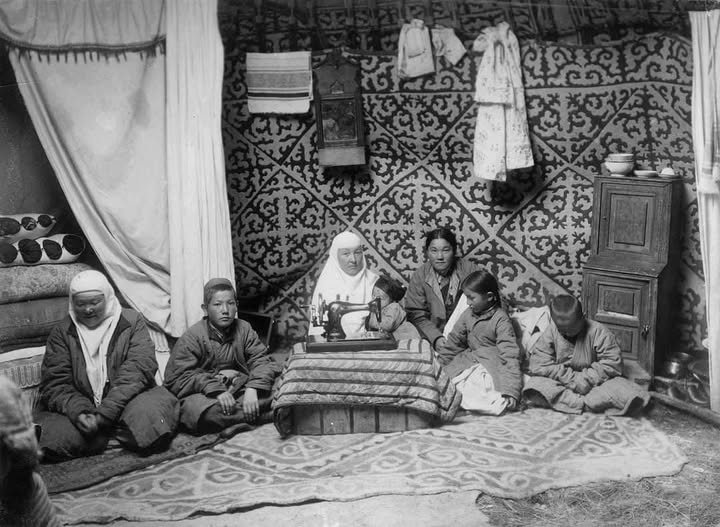
Contrary to modern assumptions, loose, quilted robes were well suited to protecting the body from the sun. Like felt, layers of fabric trapped air and helped reduce direct exposure to heat. Going out into the steppe without a head covering was also considered inappropriate.
Summer diet
During the hot season, the diet shifted toward fermented dairy products such as kumys, airan, shubat and kozhe. Meat consumption was generally reduced during the summer. Water and other beverages were stored in leather containers and clay vessels, which helped keep them cool.
Cities: Thick walls and morning plov
The architecture and urban planning of sedentary communities in Central Asia were likewise shaped by the region’s climate.
Walls and narrow streets
Houses were often built from mud brick, with walls ranging from about 60 centimeters to 1 meter thick. Their mass helped slow the transfer of heat, keeping interiors cooler during the hottest part of the day. Narrow streets also provided shade and limited the amount of direct sunlight reaching the ground.
Courtyards and water
Daily life in urban homes often revolved around enclosed courtyards with trees, vine-covered canopies and a hauz, a small pool or reservoir. Vegetation and water helped create cooler microclimates within the home.
Engineering solutions
Central Asian communities also developed sophisticated methods of managing heat and water. These included karez — underground channels used to transport water, often from mountainous areas over long distances — as well as sardoba, dome-shaped water reservoirs, and badgir, or wind towers, designed to improve ventilation.
Hot tea and the daily routine
Like nomads, city dwellers traditionally drank hot tea in hot weather rather than relying exclusively on cold water. Labor-intensive activities were often scheduled for the early morning or evening, when temperatures were lower.
This helps explain the tradition of morning plov. Men would gather for a shared meal before dawn and then head to work before the midday heat set in.