
Freedom bets on simplicity to win crypto clients


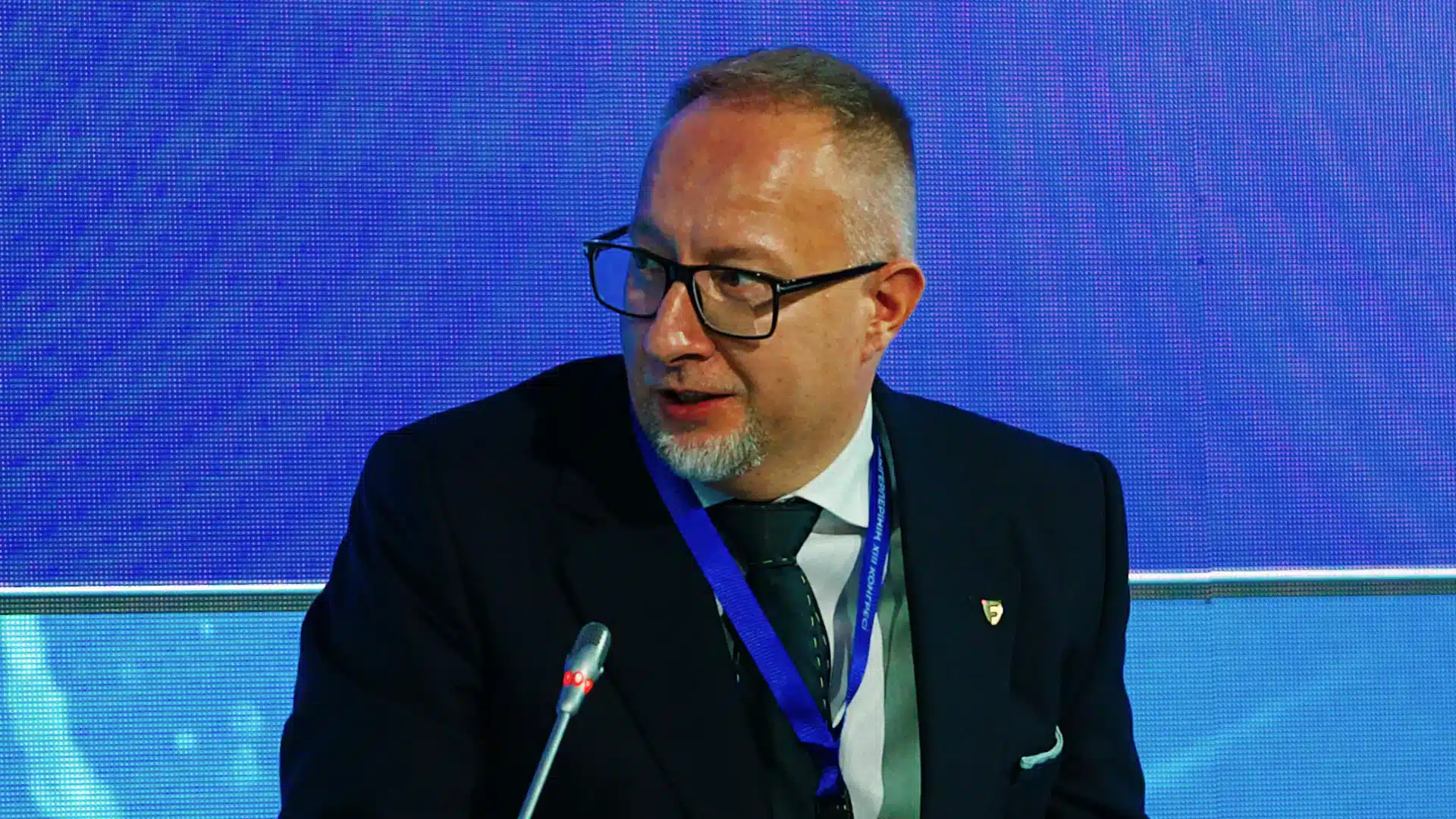
If financial firms force customers to navigate blockchain standards and transaction fees on their own, they risk losing them to competitors that offer a simpler experience, according to Sergey Lukyanov, chairman of the management board of Freedom Finance JSC. Speaking at the 14th Congress of Financiers of Kazakhstan on Nov. 13, he said that Freedom wants to make buying cryptocurrencies and tokens as easy as transferring money or booking a ride through an app.
As Lukyanov noted, the world is moving toward tokenization and digital assets — a trend no financial market participant can afford to ignore. The real question is who will succeed in making these tools accessible and easy for everyday investors to understand.
Asset tokenization involves converting rights to real-world or financial assets — such as real estate, land, gold, stocks or ownership stakes in businesses — into digital tokens recorded on a blockchain. Tokenization allows high-value assets to be divided into smaller digital units, potentially making them accessible to a broader range of investors. For example, instead of buying an entire office building worth millions of dollars, an investor could purchase a handful of tokens that, depending on the terms of issuance, might represent an ownership stake in the property or a right to a share of its rental income.
«If a client has to figure out what an ERC-20 token is, how it differs from a TRC-20, what ‘gas’ is, or how to load the right tokens into the app, then we have failed our homework and made the customer journey far too complicated,» he said.
The goal of any financial ecosystem, he added, is to turn complex products into simple, intuitive solutions for customers. If traditional financial firms fail to adapt, they risk losing customers to emerging players that can better meet their needs.
Tokenization could replace lengthy prospectuses
Lukyanov sees tokenization as the future of financial markets — a major upgrade to the existing system. He believes that once financial institutions recognize how much easier it could become to issue tokens that can be traded around the clock and across borders, they may move away from the lengthy prospectuses traditionally required for securities offerings.
Still, traditional securities markets aren’t going anywhere. They’re highly capitalized, and Lukyanov expects them to remain in operation for many years to come. The shift from conventional financial instruments to newer alternatives could accelerate as tokenized real-world assets (RWAs) become more widely available.
Freedom is currently exploring several platforms, including the Kazakhstan Stock Exchange (KASE), to gain practical experience and begin tokenizing relatively simple financial instruments. According to Lukyanov, fully developed commercial products have yet to emerge, as most market participants are still figuring out how to navigate this new landscape.
The group has already taken its first practical step, partnering with Binance to launch tokenized futures linked to its own shares. The company plans to make the product available to its broader banking customer base soon.
Who will win the battle for customers?
Responding to a question about who is going to win — banks integrating crypto services into their super apps or global crypto exchanges with banks acting as behind-the-scenes infrastructure providers — Lukyanov said it would depend on regulators.
He pointed to the proactive approach taken by the Astana International Financial Centre (AIFC), which successfully sought a court order to block offshore platforms operating without local licenses from serving the Kazakhstani market. Lukyanov described the initiative as «highly successful.» In his view, regulators are protecting the market while industry participants develop new services, improve the customer experience, and seek the necessary licenses.
«Time will tell who wins the race. The main point is that we are all moving in this direction together, which expands the market itself,» Lukyanov said.
He added that tokenization could help channel capital from the cryptocurrency market into infrastructure and urban development projects. Kazakhstan has numerous such projects that could benefit from this additional source of financing.
