

Lawyers must understand the business – not just the rules.
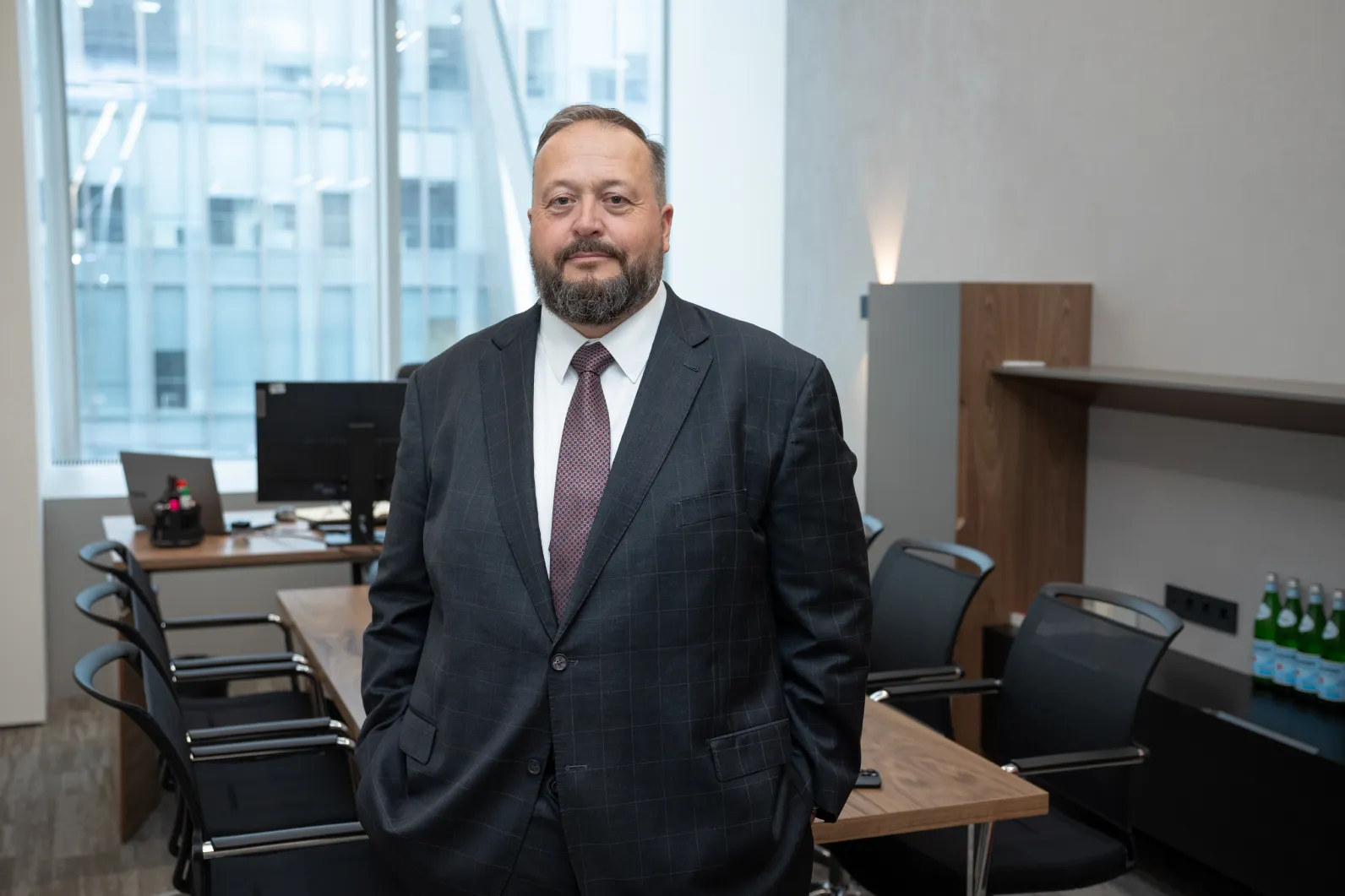
As Freedom Holding Corp. expands across more than 20 countries, its legal function has evolved from a traditional support role into a strategic pillar of the business. Freedom’s Chief Legal Officer (CLO) Jason Kerr explained how his team navigates regulatory complexity, supports the company’s growth and ensures alignment in various divisions across diverse markets.

How is the legal function at Freedom Holding Corp. structured today? What key areas and teams shape the holding’s legal architecture?
At our scale, the legal function has to mirror the complexity of the business. We have over one hundred lawyers across 80 subsidiaries operating in 21 countries. At the holding level, the legal team focuses on group-level governance, public company obligations, strategic initiatives like fundraising, mergers and acquisitions, regulatory compliance and government relations.
Our major subsidiaries each have strong local teams that handle day-to-day operations in their respective jurisdiction.
With operations in more than 20 countries, it is less about a rigid structure and more about coordination. The key is making sure everyone is aligned, even though they are dealing with very different local realities.

The holding operates across multiple jurisdictions. How do you ensure consistent legal principles and standards at such an international scale?
You cannot standardize everything across 20+ countries — and you should not try. What we focus on instead is creating and communicating consistent principles, standards and practices: how we approach risk, how we interpret regulations and how we make decisions.
We invest a lot in internal alignment: regular communication, shared frameworks and making sure people do not operate in isolation. At this scale, consistency is more cultural than procedural. At the end of the day, consistency comes from alignment, a strong understanding of the business and its guiding principles, and adherence to the highest ethical and professional standards.
Where do you draw the line between legal oversight and strategic partnership with the business? How involved is the legal function in key decision-making today?
In a public company, legal must do both. There is a clear responsibility around oversight — governance, disclosure and compliance — but at the same time, you cannot just sit on the sidelines. Lawyers are problem solvers. We must have a deep understanding of the business and be prepared to offer the best possible advice and support. We are involved early in strategic discussions, especially when it comes to expansion, new products or transactions. The role is to help the business move forward in a way that is both sustainable and legally compliant.

How does the role of a CLO in a diversified holding differ from that in a single-business company?
In a holding, you are not dealing with one business model — you are dealing with many: financial services, lifestyle brands and fintech, all operating in more than twenty legal and regulatory environments. That adds an incredible layer of complexity. The role requires perspective and breadth of knowledge — understanding how different pieces fit together, as well as the risks and opportunities involved.
Freedom Holding Corp. is a public company. How does that status impact the legal function and the day-to-day work of your team?
It changes everything in terms of discipline and expectations. You are operating under a much higher level of scrutiny — from regulators, investors and the market.
For the legal team, that means deep involvement in disclosure, governance and internal controls. There is also a constant awareness that decisions are not just internal. They can quickly have external implications. A public company legal team must always keep in mind that it serves shareholders and acts in their best interests.
Which regulatory requirements currently have the greatest impact on international fintech companies?
It is a combination of regulation, data protection and cross-border rules. For companies operating in multiple jurisdictions, the challenge is that these frameworks do not always align.
You are not just complying with a single system. You are constantly reconciling different legal and regulatory requirements.

How has the legal environment for financial companies evolved in recent years? What has changed most significantly?
It has become more demanding and more dynamic. Regulators are more proactive, expectations around transparency are higher and there is less tolerance for ambiguity.
At the same time, innovation is advancing rapidly, so legal teams must keep pace while continuing to support the business.
The holding is actively growing and exploring new areas. How does the legal team contribute to these initiatives?
At our scale, legal must be involved from the very beginning of any new initiative. When entering new markets or launching new products, legal and regulatory considerations are often central to determining feasibility.
So, the role is not only to assess risk but also to help structure initiatives in a way that works across jurisdictions and aligns with our obligations as a public company and the shareholder interests.
From a legal perspective, what is more challenging: launching a new product, entering a new market or integrating an acquired business?
Integration is usually the most complex, especially in a global organization, as you must bring together different regulatory frameworks, systems, business cultures and models. It is not just a legal exercise — it is an organizational one, and legal plays a big role in ensuring integration is carried out effectively.
So legal expertise can help accelerate a product launch or market entry?
Yes. There are many cases where early legal involvement helped avoid delays or duplicated work.
Sometimes it involves structuring a product differently so it can be rolled out across multiple jurisdictions, or anticipating regulatory concerns before they arise. This work is not always visible externally, but internally it can significantly impact execution speed.
What factors determine a company’s legal readiness for international expansion today?
For a company like ours, readiness goes beyond meeting local regulatory requirements. It depends on whether governance, reporting and control systems can support expansion.
As a NASDAQ-listed company, we must also consider how expansion affects disclosure, risk management and investor expectations.

Which competencies are becoming critical for lawyers working in international technology and financial companies today?
A combination of legal expertise and business understanding. At this level, lawyers are expected to contribute to strategy, not just interpret rules.
Communication — the ability to explain complex issues clearly to different stakeholders, including management and the board — is also critical.
What is the key professional challenge for you personally as a holding’s CLO?
Managing scale and complexity while maintaining clarity. Operating across multiple jurisdictions and regulatory environments creates a constant risk of fragmentation.
The challenge is to maintain a clear strategic perspective and make decisions that work at the group level.

Do you have personal principles that help you make complex legal decisions in uncertain situations?
One principle is long-term thinking, especially in a public company environment, where short-term decisions can have lasting consequences.
Another is transparency. It is better to address issues openly and early rather than deal with them later under pressure.
Professional competence is also critical. In this role, continuous learning and development are essential for success.
Most important is trust. This is not a one-person job. You need a hardworking, competent team you can rely on. Otherwise, this job is impossible.
The legal function often operates under constant pressure and high responsibility. How do you maintain balance and avoid burnout in such a demanding role?
This is something you have to manage consciously. The pace can be intense, especially in a global business.
For me, it is about maintaining routines outside of work and creating moments to step back and reset.
I have a daily meditation practice that helps me stay grounded. Meditation keeps me focused on the present moment.
I also read for pleasure every day — around 50 books a year — and spend at least an hour reading legal articles and books every day.
I enjoy riding motorcycles and own three Harley-Davidson bikes. Riding is a hobby I share with my son, which is a great way to us stay connected. My daughter has also decided to learn to ride, and we will be taking a course together in May.
Read also
Freedom Life chairman on AI, digital insurance and long-term planning

How Freedom Telecom is building telecom operator around financial ecosystem

How Digitalization Saved Freedom Insurance $14 Million in One Year

From Drone Delivery to Healthcare of the Future: How Freedom Is Building Its Lifestyle Ecosystem
No Future for Standalone Banks. It’s Time for Ecosystems

When Rapid Growth Is Part of DNA: The Role of M&A in Scaling Freedom Holding Corp.
Compliance Is Not About Control. It's About the Infrastructure of Trust
How risk management works in the Freedom ecosystem
The key role of IT is to help business grow