
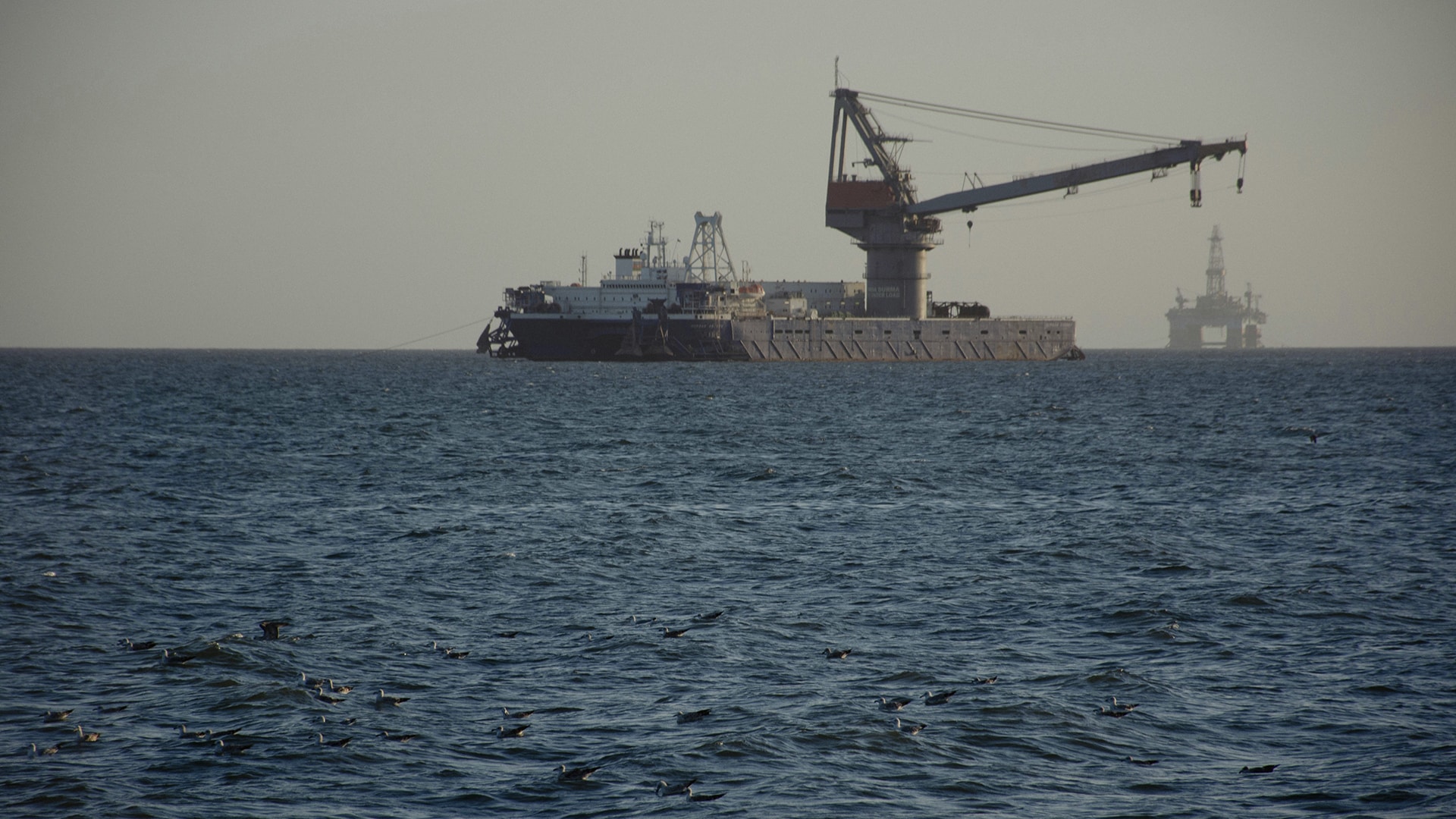
Kazakhstan’s Ministry of Defense plans to conduct underwater surveys and explosive ordnance disposal operations in the country’s sector of the Caspian Sea to clear planned routes for subsea oil pipelines for the Kalamkas-Sea and Khazar project. The plans are outlined in the rationale for proposed amendments to Kazakhstan’s Tax Code, published on the Open Legal Acts portal.
Military to clear pipeline routes
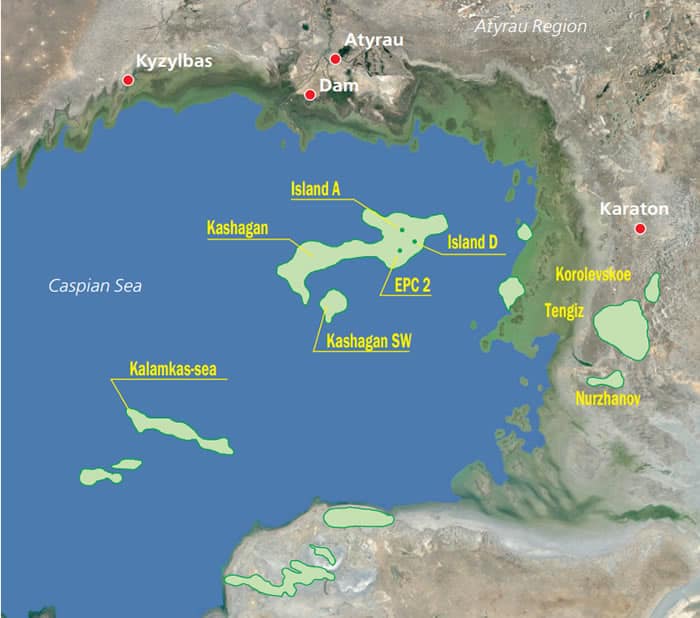
The operations will focus on Area No. 200 in Kazakhstan’s sector of the Caspian Sea, where the planned subsea oil pipeline routes will pass.
Military personnel will conduct the mine-clearing operations. To facilitate the work, Kalamkas-Khazar Operating is required to purchase specialized equipment and transfer ownership of it to the Ministry of Defense.
In light of this, the bill’s drafters propose adding a new category of income to Article 238 of the Tax Code that would be excluded from the calculation of corporate income tax.
The provision would cover the value of the work and services performed by the Ministry of Defense in exchange for equipment transferred by the subsoil user to the state. In other words, the transfer of equipment to the military and the subsequent mine-clearing operations would not generate taxable income for the company.
Project jointly owned by KazMunayGas and Lukoil
The Kalamkas-Sea and Khazar fields are located in Kazakhstan’s sector of the Caspian Sea. Their combined reserves are estimated at 8.5 million tons of oil and 19 billion cubic meters of natural gas.
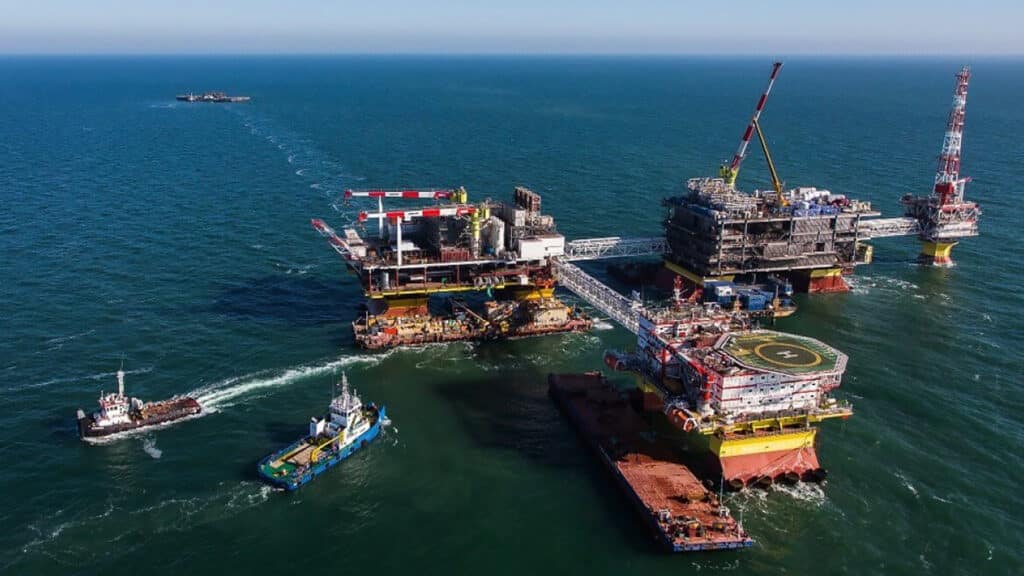
The project is expected to produce about 4 million tons of oil annually, equivalent to approximately 80,000 barrels per day. Initial oil production was scheduled for late 2029.
The project is jointly owned by Kazakhstan’s national oil and gas company KazMunayGas and Russian oil company Lukoil, with each holding a 50% stake. Total investment in the project has been estimated at $6.4 billion.
Notably, in March 2026, Askhat Khasenov, CEO KazMunayGas, said that further work on the Kalamkas-Sea and Khazar joint project with Russia’s Lukoil had been suspended because of sanctions against the Russian company. Only the Tengiz and Caspian Pipeline Consortium (CPC) projects — where Lukoil partners with U.S. companies — have been exempted from sanctions.