



Chinese researchers from Beihang University have developed an experimental electric comb designed to treat hair loss. According to a study, published in the journal «Nature Communications,» electric signals sent to the scalp can stimulate hair growth.
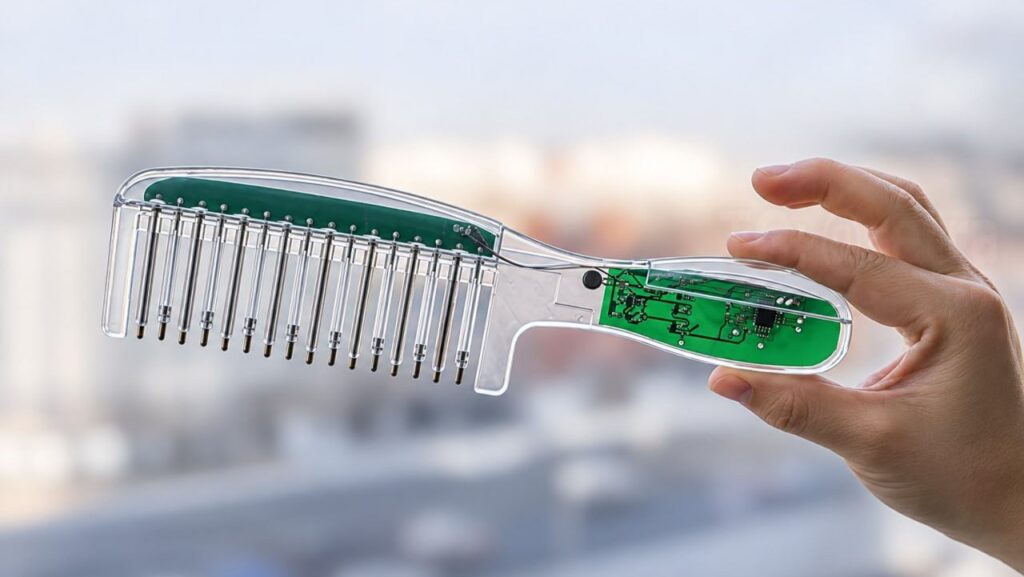
Based on the research, they developed an electric comb, featuring built-in electrodes and specialized compartments for medication.
As the comb dubbed «Detangle» moves across the scalp, its teeth gently lift the skin and deliver mild electrical impulses. This creates an electric field that helps active substances penetrate deep into hair follicle cells.
The comb is loaded with two specific molecules: a VEGFA plasmid, which stimulates the growth of new blood vessels to improve nutrient delivery to the hair roots, and SRD5A2 siRNA, which reduces the production of dihydrotestosterone (DHT) — the primary hormone responsible for hair thinning.
First tests in mice
Researchers tested the device’s effectiveness on laboratory mice with induced male-pattern baldness. Over 28 days, researchers treated the shaved backs of the mice with the electric comb and the two therapeutic agents, performing the procedure once every three days. To objectively evaluate the technology, researchers compared the results with a group of mice treated with standard alopecia remedies: minoxidil and finasteride.
Human trials still needed
The four-week treatment outcomes significantly outperformed traditional therapies. Mice treated with the Detangle device showed hair regrowth across nearly 100% of the shaved area, compared with about 70% in the group treated with minoxidil.
The comb also proved more effective than finasteride. Further research showed that the number of follicles themselves increased in the animals, and blood flow in the skin intensified. The authors noted, however, that the technology has so far only been tested on animals, and its effectiveness in humans remains to be confirmed in future trials.
