
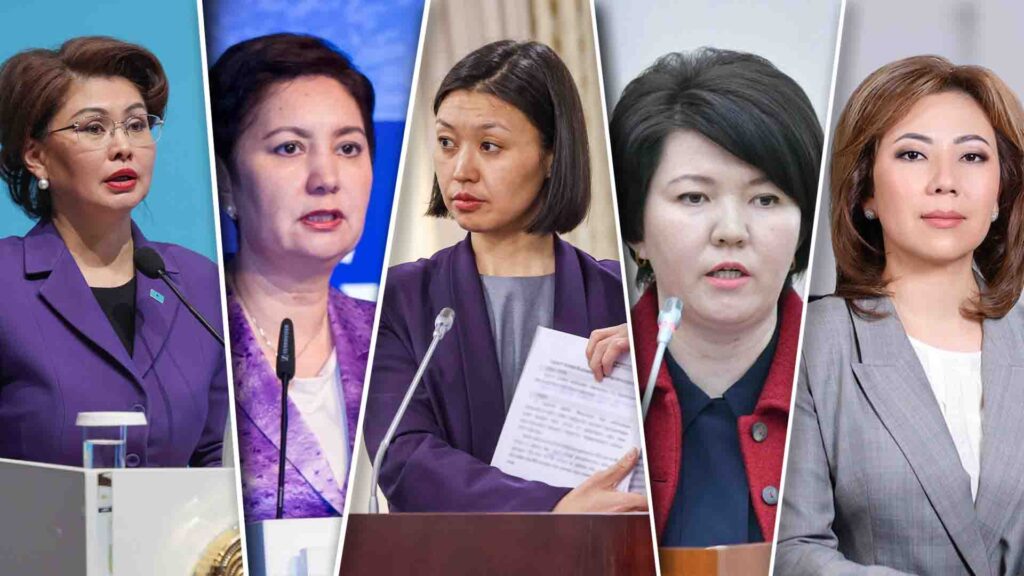
There are few female ministers in Kazakhstan’s government. The public is accustomed to seeing them deliver official speeches from the rostrum. But what about their clothing choices and public image? Do they work with stylists?
Kursiv.media, together with professional stylist Nurly Okas, analyzed the archetypes and personal style of female ministers in Kazakhstan.
An unspoken rule: Don’t stand out
In Kazakhstani politics, women operate under an unwritten rule: don’t stand out too much. This norm dates back to the post-Soviet era and is reinforced by strict protocol. After one or two instances in which a public figure appears in mid-range or luxury clothing and draws criticism, most choose to blend in completely.
That, according to stylist Nurly Okas, defines the prevailing approach to dress among women in politics.
«Style and fashion require boldness, and very few are willing to take that risk,» Okas says. «Female ministers act extremely cautiously. First, there is a rigid protocol and dress code. Second, society harshly criticizes ministers for luxury clothing and branded accessories. As a result, women dress almost exclusively in classic business attire, choosing neutral colors and tailored suits.»
Archetypes and restraint
An archetype is an innate psychological image and behavioral pattern shared across cultures, reflected in both conduct and appearance.
Aida Balayeva: Modern classic with detail
According to Okas, Aida Balayeva, deputy prime minister, projects a gentle character and high empathy. She most often chooses light colors, classic silhouettes and tweed jackets.
«There’s one detail that sets her apart,» the stylist notes. «She often wears brooches and accessories and knows how to combine them well. I remember an informal event where she wore a velvet dress with a national pattern — every bead was hand-sewn.»
Overall, Balayeva keeps up with modern trends while staying within the bounds of protocol.
Classic style, Okas explains, is typical of what she calls «systemic» professions — teachers, doctors and politicians at official events. Flashy accents are avoided. In photos of most ministers, statement jewelry is rare; earrings, if present, are small and understated.
Balayeva follows this approach but stands out through her hairstyle, which she has kept consistent for many years. In some photos, she favors red lipstick.
«Even as part of the system, she allows herself a subtle individuality,» Okas says. «She doesn’t declare it openly, but she signals that she listens to others.»
Aristocratic restraint: Gulshara Abdykalykova and Akmaral Alnazarova
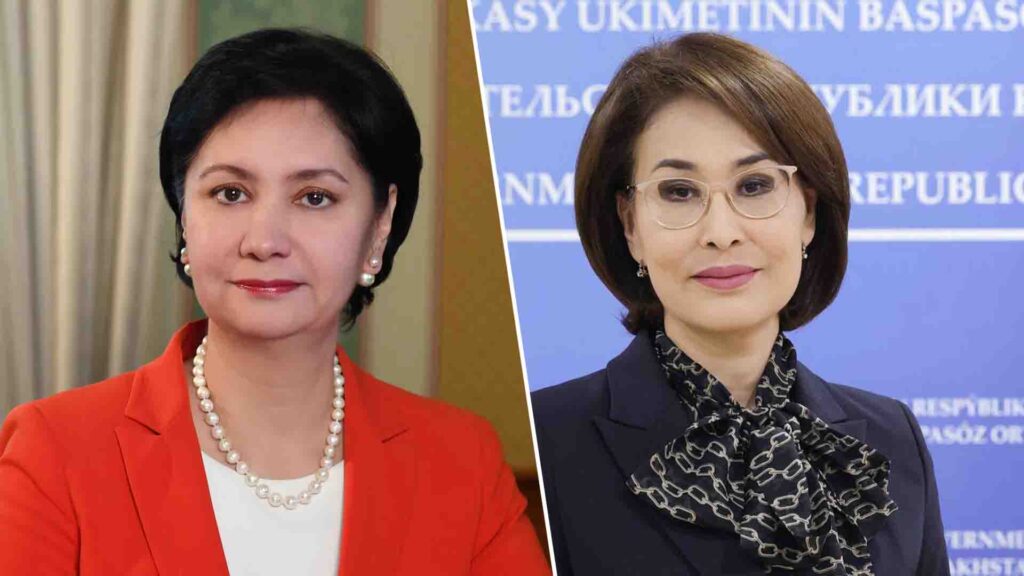
Gulshara Abdykalykova is no longer active in politics, but she is remembered as Kazakhstan’s first female regional akim and as minister of labor and social protection.
«She stood out not because of fashion, but because of courage,» Okas says. «During the January events, she wanted to go out and speak to the people. As a politician, she embodies pure classicism. She shows little emotion — it’s difficult to tell whether she’s happy or angry. Absolute restraint.»
Her wardrobe reflects this approach: understated, classic and without excess. Like Balayeva, she has soft facial features, and despite her emotional reserve, she conveys empathy.
«It’s encouraging to see such women in politics,» Okas says. «Women are carriers of soft power. Their presence matters. Abdykalykova also has an aristocratic quality — nothing superfluous in her clothing or manners. Her posture and gait suggest formal training in etiquette.»
A similar sense of restraint and pragmatism is evident in the style of Health Minister Akmaral Alnazarova.
«She was once criticized for wearing Valentino shoes,» Okas recalls. «But that brand is typically chosen by people with strong, reserved personalities. Her wardrobe is dominated by white, blue and gray. She is confident and wants to project professional openness.»
Kursiv.media previously reported that Alnazarova has also worn luxury Swiss watches and carried a Fendi handbag.
Zulfiya Suleimenova: Simplicity
Zulfiya Suleimenova is remembered as Kazakhstan’s youngest female cabinet member, having led the environmental ministry. Her style, however, stands in sharp contrast to those described above and reflects what Okas defines as the archetype of simplicity.
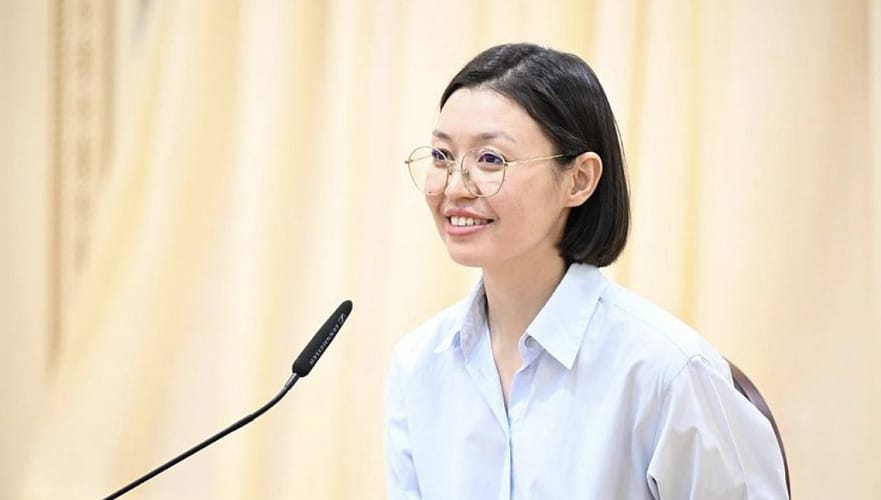
«She’s very simple, open and friendly. From her first appearance on the political scene, she inspired complete trust,» Okas says. «She’s young, and she surprised many by not eating meat, refusing cosmetics tested on animals and avoiding fur coats. That combination of uniqueness and simplicity won people over.»
According to the stylist, Suleimenova’s wardrobe reinforces this perception. Her clothing choices are soft and understated, without harsh lines or aggressive elements, which further enhances a sense of approachability.
Zhuldyz Suleimenova: The intellectual
By contrast, politics appears to have sharpened Education Minister Zhuldyz Suleimenova.
«She’s already a brave woman,» Okas says. «She stands out for her intellect and her manner of speaking. Her archetype is that of a thinker, a sage. She sees the big picture, has strong intuition, expresses her views openly and is always ready to engage with journalists.»
Since becoming a minister — after previously serving as a member of parliament — her style has evolved. She has begun paying more attention to her hair, often wearing it in soft curls. Silk scarves and jackets in white and coral tones have appeared in her wardrobe, replacing the neutral-toned classic suits that once dominated.
«Her style is clearly improving,» Okas says. «Perhaps this aspect was overlooked before. Now her professionalism, speech and clothing work together to create a harmonious image. That’s how it should be. Sometimes, no matter how well you do your job, if you don’t know how to present yourself, you remain in the shadows.»
Madina Abylkassymova: Disciplined and businesslike
Another vivid example of a business-oriented image is Madina Abylkassymova, head of the Agency for Regulation and Development of the Financial Market and a former minister of labor.
«She is a true businesswoman and a pragmatist,» Okas says. «While many women favor coral and white — colors that convey warmth — her wardrobe is dominated by black and gray. She is very restrained. Even her clothing communicates toughness.»
According to the stylist, Abylkassymova has developed a clearly defined image and does not deviate from it to attract attention.
Style as a political strategy
Style should be viewed as a strategic tool, not a superficial concern, Okas argues. Yet many women in Kazakhstani politics do not work with professional stylists.
«There is a fear of criticism and public scrutiny,» she says. «Even Labor and Social Protection Minister Svetlana Zhakupova has openly said she wears replicas. I see this as fear of publicity. But people need to understand that style isn’t frivolous — it’s a strategy.»
International examples illustrate this approach. During her campaign against Donald Trump, Kamala Harris became known for pairing tailored suits with Converse sneakers. Barack Obama frequently wore white or light blue shirts before elections, sometimes rolling up his sleeves.
«These are signals,» Okas explains. «Converse sneakers or rolled-up sleeves say, ‘I’m just like you.’ Everything is deliberate. Unfortunately, we don’t yet see such clearly constructed images here. Protocol and strict dress codes leave little room to maneuver.»
Beyond luxury brands
Style, Okas emphasizes, does not require luxury labels. Domestic designers and national elements can be just as effective.
«Kazakhstani designers create beautiful items, including scarves,» she says. «National motifs and local brands can be powerful. Some men in government wear skullcaps — women can also experiment. Many people underestimate the power of accessories. A small brooch or hair clip can make you memorable.»
Still, stereotypes such as «no shorts» or «no bright accents» continue to limit women’s self-expression in politics. Gender inequality and patriarchal norms also shape expectations around appearance.
«Because of the ‘no revealing’ mindset, women choose pale, shapeless or uniform looks,» Okas says. «Some suits are long out of fashion. Others are made from cheap fabrics, which undermine authority.»
Color, she adds, can be a subtle but effective tool.
«Blue signals trust, while light and brown shades convey stability. Every color communicates character.»