
Despite the continued dominance of the state in Uzbekistan’s banking sector, private players — particularly young digital banks — are expanding more rapidly. The gradual denationalization of the economy is also expected to revive the local stock market, which currently lacks attractive instruments for investors.
Assets of Uzbekistan’s credit institutions rose 20.5% by the end of 2025 to 937 trillion sums (about $77 billion). According to Kursiv Research, that equals 50.7% of the country’s GDP, up 0.1 percentage point year over year. Microfinance organizations grew 50%, and pawnshops expanded 34.6%, but their combined share remains small — just 1.3% of total assets, compared with 98.7% for banks.
Private and mid-sized banks gain momentum
In 2025, 35 commercial banks were operating in the country, with total assets of 925 trillion sums, up 20.2% year over year. One of the sector’s defining trends has been the rising role of private banks. In 2025, their assets increased 26.9%, compared with 16.6% for state-owned lenders.
Mid-sized banks — with assets ranging from 12 trillion to 31 trillion sums — posted even stronger growth, averaging 53.9%.
Three digital-focused banks stand out: Octobank, Hayot Bank and Apex Bank. Founded in 2023, they have expanded rapidly by leveraging digital solutions and integrating with broader ecosystems, including Apex Insurance. In 2025, each more than tripled its assets.
Aloqabank was the fastest-growing state-owned lender, with assets rising 35.6% year over year. By the end of 2025, it ranked 10th in the sector, with 31.5 trillion sums in assets. The bank is investing in digital transformation and the IT sector, supporting startups while serving as a key source of financing for telecommunications companies.
Policy tensions weigh on the financial system
The government’s heavy influence over the banking sector creates structural challenges. First, the expansionary fiscal policy of the cabinet conflicts with the relatively tight monetary stance of the Central Bank of Uzbekistan, reducing the effectiveness of efforts to contain inflation, which stood at 7.3% in 2025.
Second, subsidized lending and continued capital injections under state development programs distort financial markets and pricing mechanisms.
Repo market and currency dynamics
The ability to use Central Bank securities as collateral has driven the growing popularity of repurchase, or repo, transactions in the interbank market. Their share of trading volume on the Uzbek Republican Currency Exchange rose from 63% to 70% over the year, with overnight deals accounting for as much as 89% of transactions.
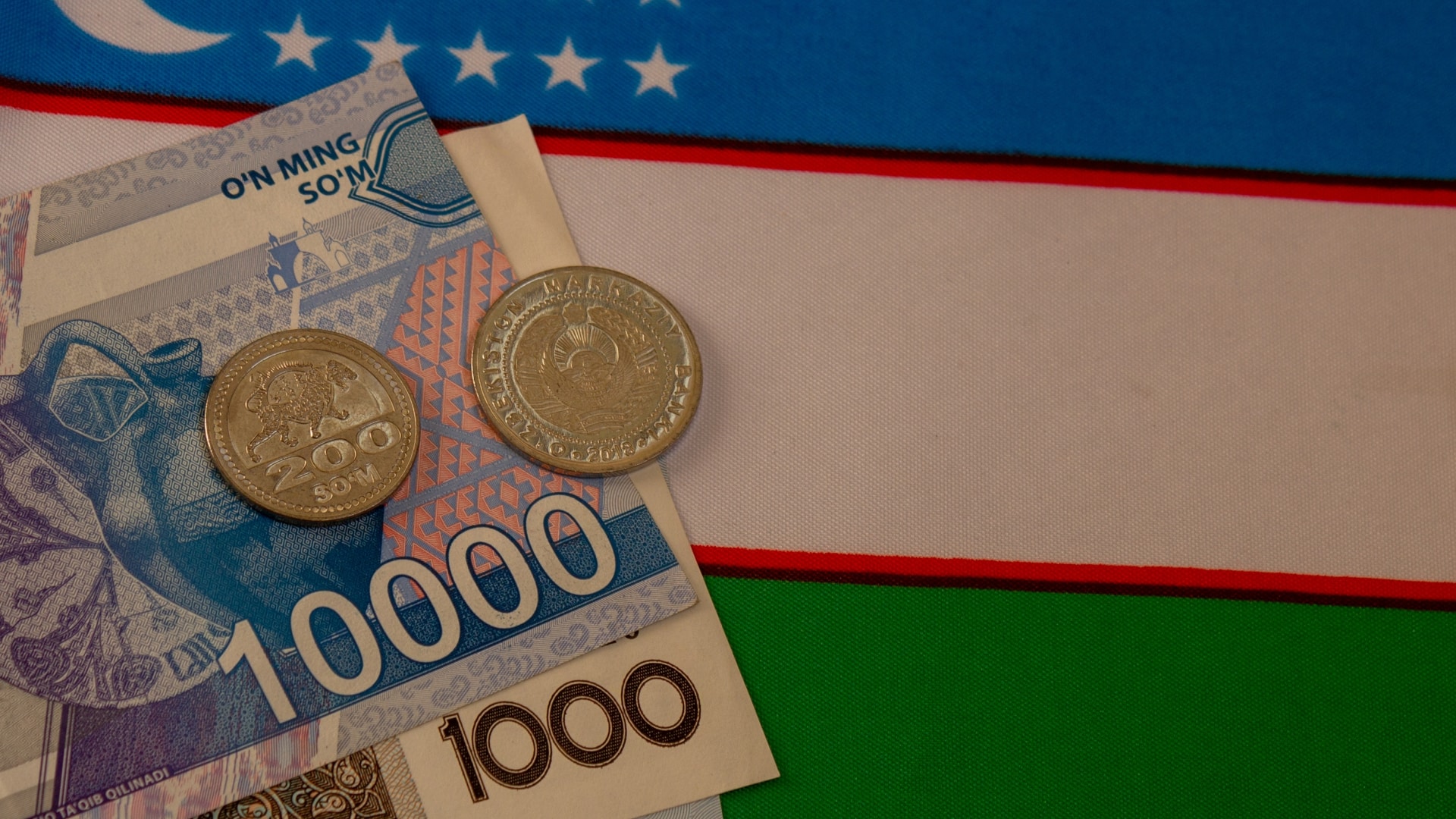
In 2025, Uzbekistan’s currency market was marked by a notable strengthening of the national currency, supported by active Central Bank intervention. Net interventions — defined as the net supply of foreign currency to the market — totaled $9.3 billion. As a result, the sum appreciated 6.8% against the U.S. dollar, reaching 12,000 per dollar by year-end.
Stock market shows gradual improvement
The stock market posted moderate gains. The combined market capitalization of companies in the UCI index reached 285 trillion sums (about $23.7 billion) by the end of 2025.
Microfinance organizations have become more active in tapping capital markets. Funds raised through bond issuances increased from 109 billion sums at the beginning of 2025 to 362 billion sums by year-end.
Privatization plans delayed but intact
Following the sale of Ipoteka Bank — acquired by Hungary’s OTP Bank in March 2023 — Uzbekistan postponed plans to privatize additional state-owned banks until 2027.
The long-term objectives remain unchanged. By 2030, only four second-tier banks — the National Bank of Uzbekistan, Agrobank, Xalq Bank and the Business Development Bank — are expected to remain under state ownership. The government aims to reduce the state’s share of banking sector assets to 55%.
New steps toward market liberalization
At the turn of 2025 and 2026, the government introduced measures clarifying how assets will be transferred to private investors.
Notably, the state’s 40% stake in Uzpromstroybank was transferred to Uzbekistan’s National Investment Fund, managed by Franklin Templeton. The fund is expected to pursue a dual listing in mid-2026 on the Tashkent Stock Exchange and the London Stock Exchange.
Authorities hope the listing, alongside broader bank privatization, will elevate the country’s financial markets to a new stage of development.