
Kazakhstan plans to compile a comprehensive catalog of cultural artifacts that have ended up abroad over time, said Berik Abdigaliuly, director of Kazakhstan’s National Museum. The project is expected to take about five years and will allow the public to identify where key historical objects are currently held.
Among the items expected to be included is the so-called «Tamerlane’s Stone,» a slab bearing an inscription ordered by the 14th-century conqueror Amir Timur to commemorate his campaign against Khan Tokhtamysh.
Artifacts from the Mausoleum of Khoja Ahmed Yasawi
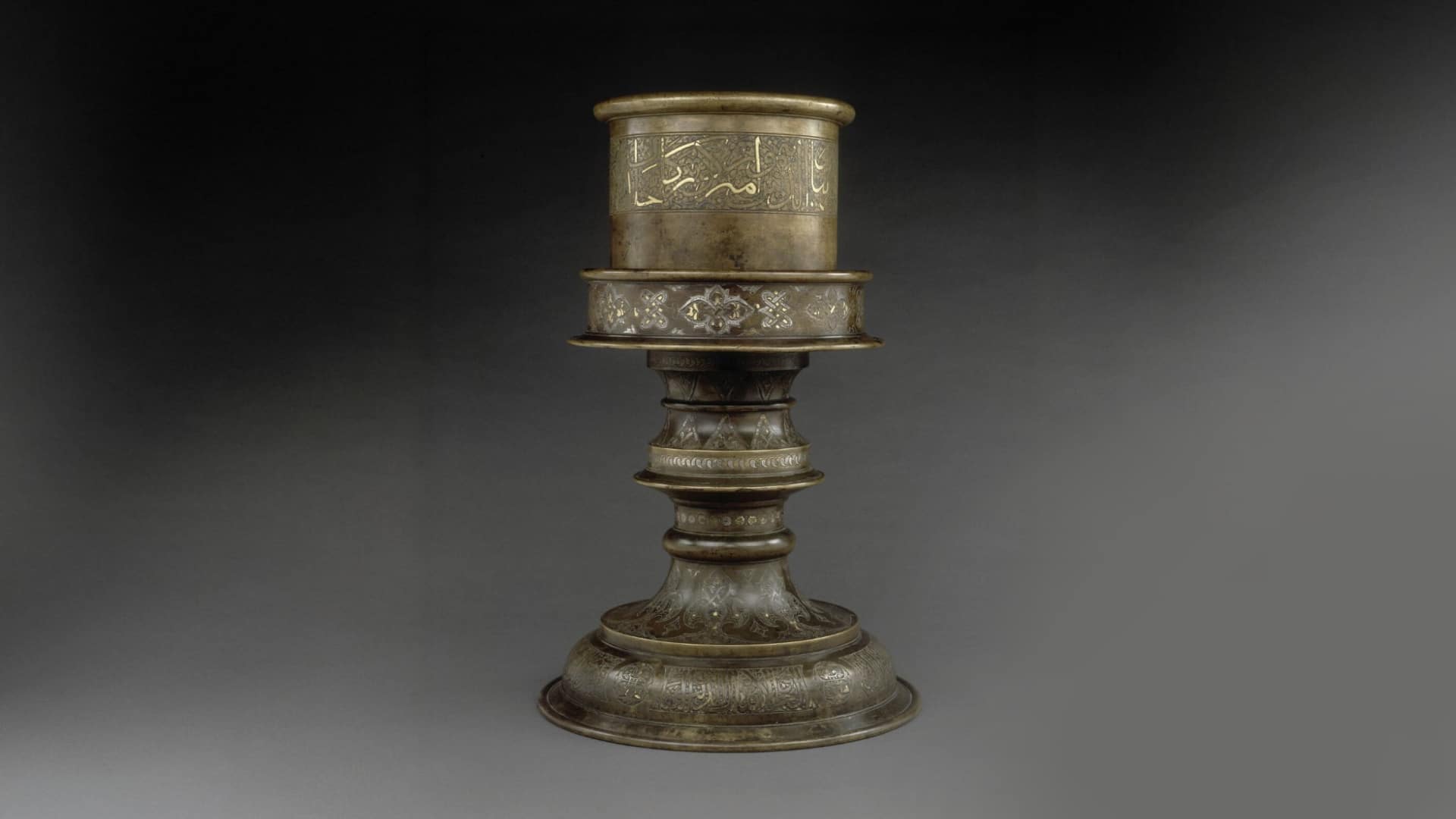
Several artifacts linked to the Mausoleum of Khoja Ahmed Yasawi are currently held abroad. The Louvre Museum in Paris lists one such object as «the central part of Timur’s lamp,» with a second lamp largely preserved.
According to the museum’s catalog, the artifact (inventory No. OA 7079) dates to 1396-1397 and originates from the Yasawi mausoleum. It is made of cast bronze with engraving and gold and silver inlay. The Louvre’s records indicate it was offered to the museum in November 1916, though they do not explain how it left the mausoleum.
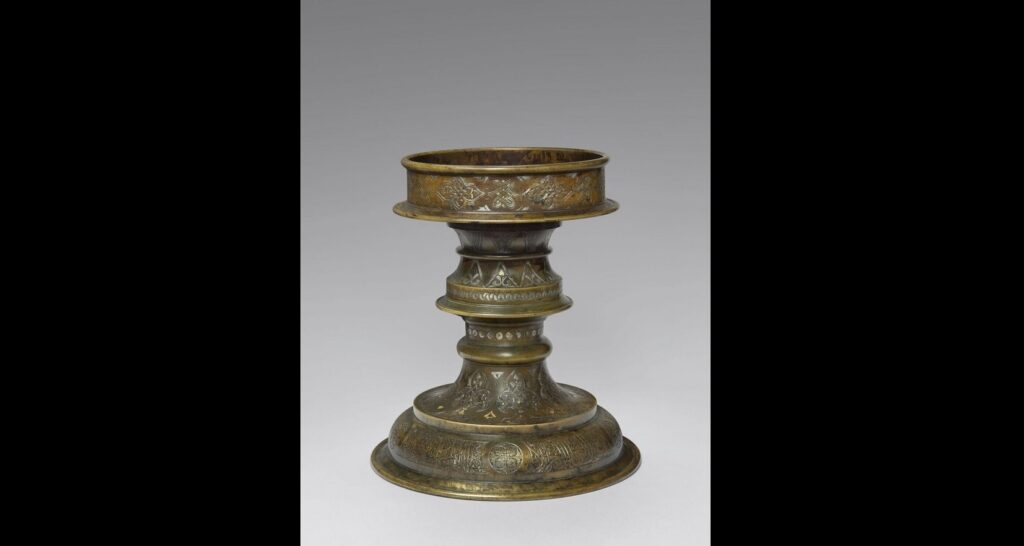
Historical accounts suggest the site may have been looted. Bauyrzhan Baitanayev, a member of the National Academy of Sciences of Kazakhstan, told local media that the mausoleum was reportedly robbed in February 1906, when bronze lamps disappeared from its central hall, known as the kazandyk.
Belt attributed to Kenesary Khan’s brother
Another artifact is a decorative belt housed at the Peter the Great Museum of Anthropology and Ethnography (Kunstkamera) in St. Petersburg, Russia. An inventory record from 1899 states that such belts were worn in the mid-19th century by wealthy individuals and batyrs, typically over a robe, and that this particular item belonged to a brother of Kenesary Khan.
The belt itself bears the engraved name «Kadyrbai» in Arabic script, raising questions about its provenance, as widely known historical sources do not mention a brother of Kenesary Khan by that name. Still, museum records note no reason to doubt the attribution, particularly given the broader use of the term «brother» in steppe traditions.
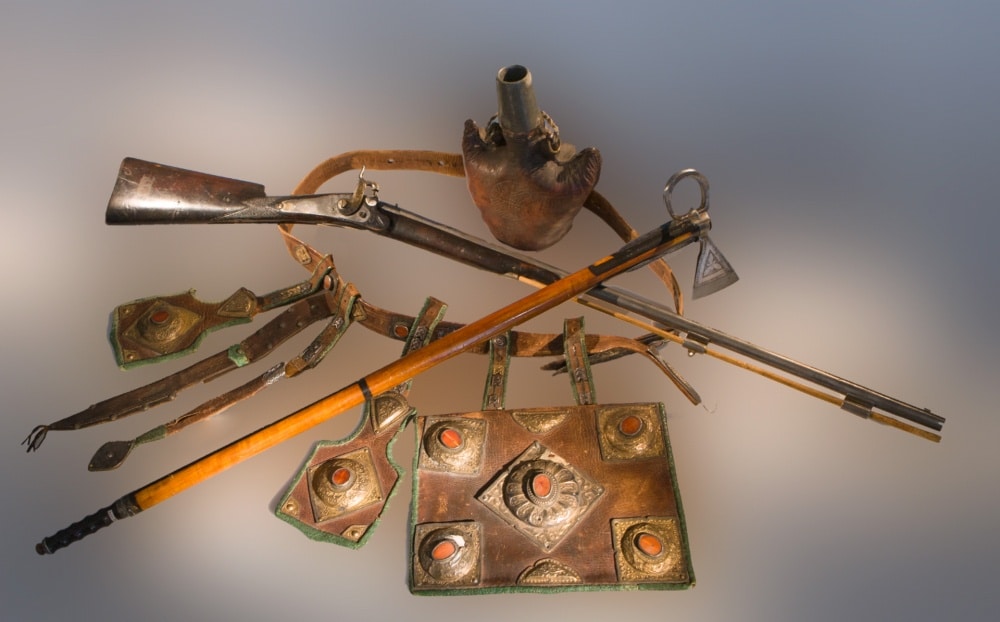
The belt is made from horsehide and decorated with carnelian, copper and silver, using techniques such as embossing, engraving, gilding, niello and chasing.
Tamerlane’s Stone in the Hermitage
The so-called Tamerlane’s Stone is housed at the State Hermitage Museum in St. Petersburg. According to historical accounts, after years of conflict with Tokhtamysh, Amir Timur launched a campaign against the Golden Horde in 1391, passing through Yasi and the Syr Darya region before reaching the Ulytau Mountains.
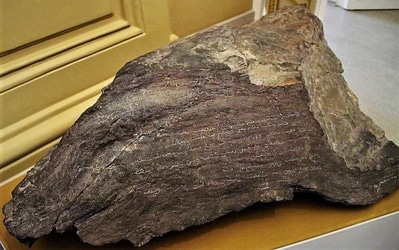
There, he ordered an inscription carved into a stone to commemorate the campaign. The Persian chronicler Nizam al-Din Shami later wrote that it was intended «so that the memory of this campaign may remain for all time.» The campaign culminated in Timur’s decisive victory at the Battle of the Kondurcha River.
Kazakh bridal headdress in the British Museum
A traditional Kazakh bridal headdress known as a saukele is among the items held by the British Museum in London. While many such headdresses are located outside Kazakhstan, the provenance of this particular piece remains unclear.
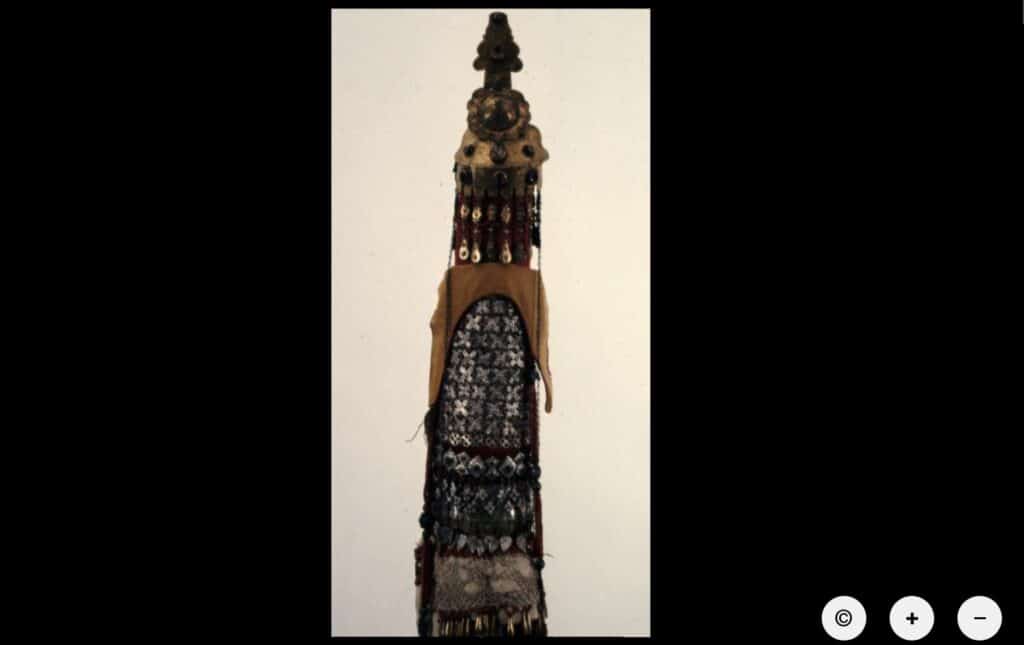
The museum’s records list its origin as the Zhetysu region near Almaty and note it was acquired in 1926 from a donor identified as Mrs. T. Kallin. Further details about how the artifact left Kazakhstan are not provided.