
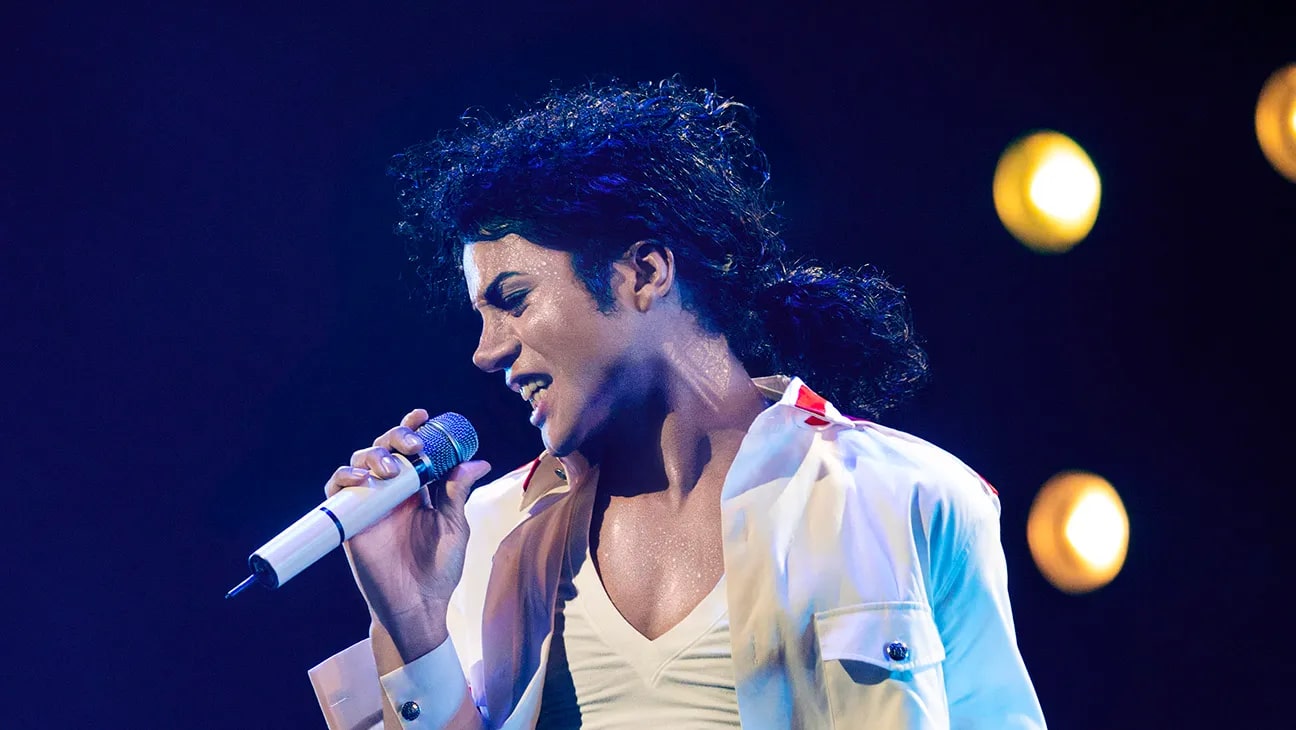
«Michael,» a film about Michael Jackson’s rise to fame, is now in theaters. The lead role is played by his 29-year-old nephew, Jaafar Jackson, who bears a striking resemblance to the pop icon. Even before its release, the film faced criticism for softening the singer’s troubled public image, shaped in part by longstanding allegations of child sexual abuse.
A familiar rise-to-fame story
The film spans roughly two decades of Jackson’s life, from his early years performing with the Jackson 5 to his first solo «Bad» tour in the late 1980s.
This is not the first attempt to bring Jackson’s story to the screen. In 1992, ABC aired the five-hour miniseries «The Jacksons: An American Dream,» followed by additional biopics in 2004 and 2017. In recent years, however, Jackson’s legacy has been overshadowed by HBO’s documentary «Leaving Neverland,» in which Wade Robson and James Safechuck described alleged abuse they say they experienced as children.

A carefully managed narrative
Released after multiple delays, «Michael» appears to be an effort to counter those allegations, which have followed Jackson since the early 1990s. The film functions largely as a hagiography — a reverential portrait that avoids controversial claims or speculation.
The project was developed under close oversight from Jackson’s family and producer Graham King, known for «Bohemian Rhapsody.» It was directed by Antoine Fuqua, who began his career directing music videos for artists such as Stevie Wonder and Prince and has publicly commented on the financial motivations of some accusers.
Rewrites and controversy
The film underwent significant rewrites tied to past allegations. Screenwriter John Logan, known for «Gladiator» and several James Bond films, initially incorporated events involving the Chandler family. In 1993, Evan Chandler accused Jackson of sexually abusing his son. The case was settled out of court, with terms reportedly restricting the use of the family’s likeness or story in fictional works.
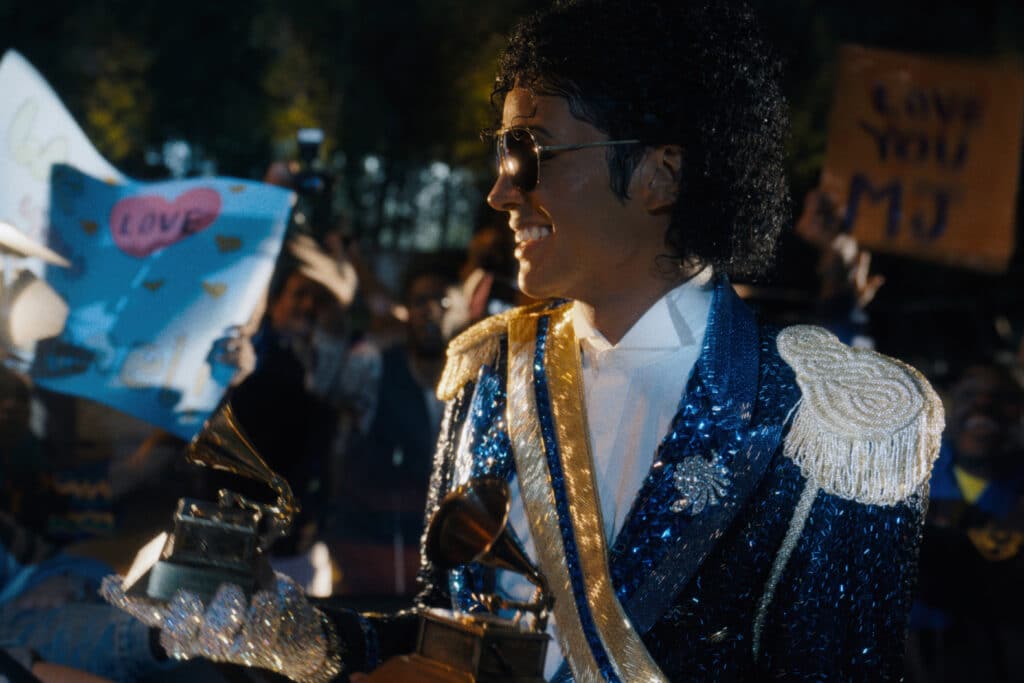
That oversight reportedly led to costly reshoots and a revised ending. The film now culminates near the infamous 1984 Pepsi commercial incident, in which Jackson’s hair caught fire, leaving him with burns and lasting injuries.
A polished but shallow portrait
That moment stands as one of the few significant hardships depicted. Rather than presenting a fully developed narrative, the film moves briskly through major milestones, stitched together with Jackson’s greatest hits.
The result is a highly controlled portrayal: instead of a complex protagonist, the film offers an idealized figure shaped by those managing his legacy. Characters surrounding Jackson exist largely to reinforce his exceptionalism. By the end, even Jackson himself appears to embrace a near-mythic sense of destiny.
His father, played by Colman Domingo, is rendered as a one-dimensional antagonist — more caricature than character — while other figures, including Jackson’s brothers, are pushed into the background. Personal details that might have deepened the portrait — such as his fascination with Peter Pan or his private menagerie — are presented as charming quirks rather than explored for their psychological implications.
A formulaic music biopic
Ultimately, «Michael» follows a familiar biopic formula at its most conventional: safe, polished and reliant on the enduring power of its subject’s music. The film packages Jackson’s artistic genius into a series of performance-driven montages, prioritizing spectacle over introspection.
Neither Jackson’s loneliness and inner insecurity — hinted at in scenes involving his changing appearance, including a nose job — nor broader racial issues are meaningfully explored. The film briefly acknowledges that Black artists were once excluded from MTV rotation, but even that conflict is quickly and neatly resolved.
Instead, these elements function as surface-level additions to an otherwise glossy dance-musical spectacle. The film ultimately closes with extended back-to-back concert sequences, reinforcing its emphasis on performance over introspection.
Performance over substance
At times, the show itself is undeniably effective. But it raises a basic question: Why settle for imitation when a more powerful original is readily available — on YouTube, for example?
Jaafar Jackson is convincing in the role, particularly in performance scenes where he channels his uncle’s stage presence. Offstage, however, his portrayal leans toward a constant, almost beatific smile that limits the character’s emotional range.
The outcome feels less like a probing portrait than a carefully curated eulogy — a gilded cage built around its subject. Even allowing for the complexities and controversies surrounding Jackson’s legacy, the so-called King of Pop arguably deserved a more searching and nuanced film.