A new wave: Why Russian-speakers in Kazakhstan are embracing the native tongue

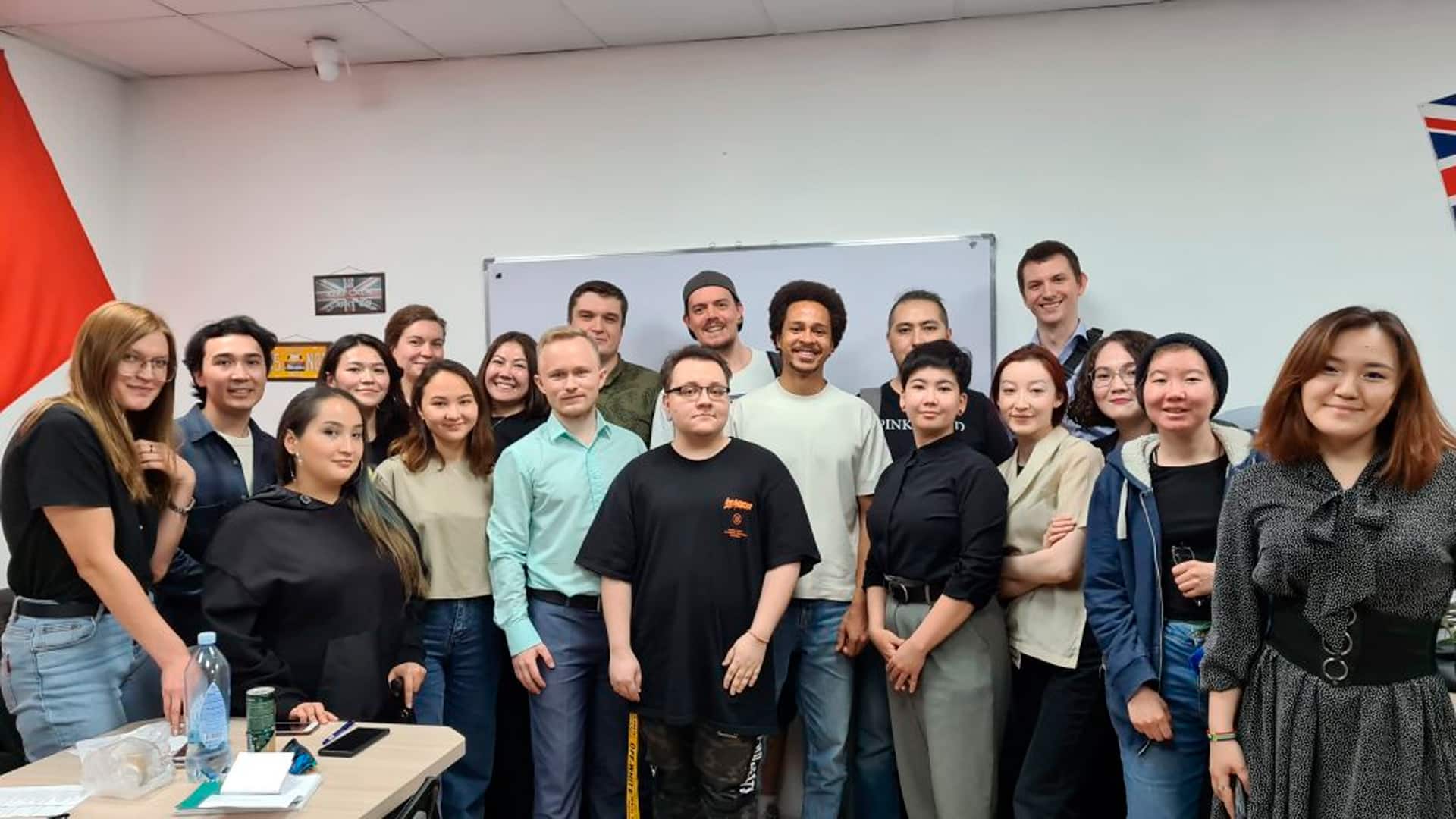
While Russian politicians and commentators speak of the alleged «oppression of Russians» in Kazakhstan, some Russian speakers in the country are helping popularize the Kazakh language. Through music, Instagram and language clubs, Kazakh is becoming the new norm for many of them, Deutsche Welle reported in a recent article.
A shifting linguistic landscape
For many years, there was a clear hierarchy between Russian and Kazakh.
«In the Soviet Union, Kazakhstan was one of the most Russified republics,» Kamila Smagulova, a doctoral candidate specializing in history and language research at Leiden University, told Deutsche Welle.
«Russian was the dominant language throughout the USSR, but especially in Central Asia and Kazakhstan. To get a job or obtain a higher education, you had to study Russian,» she added.
Russian remains widely spoken. According to a 2020 study by the Friedrich Ebert Foundation, 39% of Kazakhstan’s population speaks and writes Kazakh fluently, while 51% speaks Russian.
However, that was before Russia’s full-scale invasion of Ukraine — an event observers say accelerated changes across the region. Although sociologists have not conducted major language surveys since 2022, the growing popularity of Kazakh-language clubs is widely seen as evidence of that shift.
Language clubs gain momentum
Alexey Skalozubov, who describes himself as a «local Russian» from the northern Kazakh city of Esil, founded one such club, Batyl Bol («Be Brave»), in 2022.

The club, funded by KAZ Minerals, one of the country’s largest mining companies, now operates branches in five cities. More than 120 students regularly attend classes in Almaty alone.
According to Skalozubov, many non-Kazakhs are now learning Kazakh and beginning to use it in daily life. Most students are between 25 and 35 years old.
«These are working people who understand that Kazakh is extremely useful — that it’s a skill worth mastering,» he told DW.
A changing identity among Russian speakers
Following the arrival of large numbers of Russians relocating to Kazakhstan after 2022, many Russian-speaking residents of Kazakhstan began to recognize how different they were from Russians living in Russia.
Yuriy Serebriansky, a Polish-born Kazakh writer and cultural scholar, noted not only differences in mentality, but also linguistic distinctions.
«Our Russian differs from the Russian spoken in Russia,» he said. «We naturally use many Kazakh expressions and words without even thinking about it.»
After Kazakhstan gained independence, there was little incentive for Russian-speaking communities — particularly ethnic minorities — to learn Kazakh. But the demographic balance has changed significantly. Ethnic Kazakhs now make up an overwhelming majority of the population, while the share of ethnic Russians has fallen to 14.6%.
Social media and the rise of Kazakh
The shift is also increasingly visible on social media, where non-Kazakh influencers have begun using — and promoting — the Kazakh language to audiences of hundreds of thousands.
Alina Kan, a Kazakh citizen with German and Russian roots, uses her social media platforms to advocate patriotism and the importance of learning Kazakh. She also runs the Alash language club, named after the early 20th-century Kazakh independence movement.
«I think people like us motivate others. Learning your native language is possible. If we’ve learned it, you can too,» Kan said.
As Smagulova emphasized, even in a polarized world, language «is not a zero-sum game.» The growing use of Kazakh does not necessarily mean the marginalization or disappearance of Russian. Most likely, both languages will continue to coexist.
Read also: The ‘Russian accent’ of Central Asia’s first AI-based digital board member explained.