Life after death: How technology creates a new era of posthumous kinship


A new era of «ghost parenting» is emerging as children are increasingly being conceived years after the deaths of one or both biological parents. Advances in reproductive technology are transforming what was once considered rare or culturally specific into a growing reality in Western societies, raising difficult legal, ethical and social questions.
In her recent article on posthumous reproduction, Sandra Carol Bamford examines how medical advances allowing the retrieval and preservation of genetic material after death are reshaping concepts of family, inheritance and legal parenthood.
Legal systems struggle to keep pace
Bamford argues that legal systems around the world are struggling to keep up with the rapid development of reproductive technologies.
In the U.S., disputes often center on inheritance rights and government benefits. One of the most widely cited cases involved Karen Capato, whose twins were conceived using frozen sperm from her late husband.
The Supreme Court ruled that the children were not eligible for Social Security survivor benefits because they could not automatically inherit from their deceased father without a will. As a result, they were not recognized as his legal children.
In the UK, courts have focused heavily on the issue of written consent.
Women including Diane Blood and another identified in court documents only as «L» fought lengthy legal battles for the right to use sperm retrieved from their deceased husbands despite the absence of formal written authorization. Although British courts initially ruled that retrieval without explicit consent was unlawful, they later allowed the women to pursue fertility treatment abroad based on evidence that the couples had intended to have children together.
Russia takes a stricter approach
In Russia, the legal framework has proven even more restrictive.
The case of Lamara Kelesheva involved a grandmother who used her deceased son’s preserved sperm with the help of surrogates. Because the son had not provided explicit consent before his death, Russian authorities refused to issue birth certificates for the children, effectively leaving them without legal recognition.
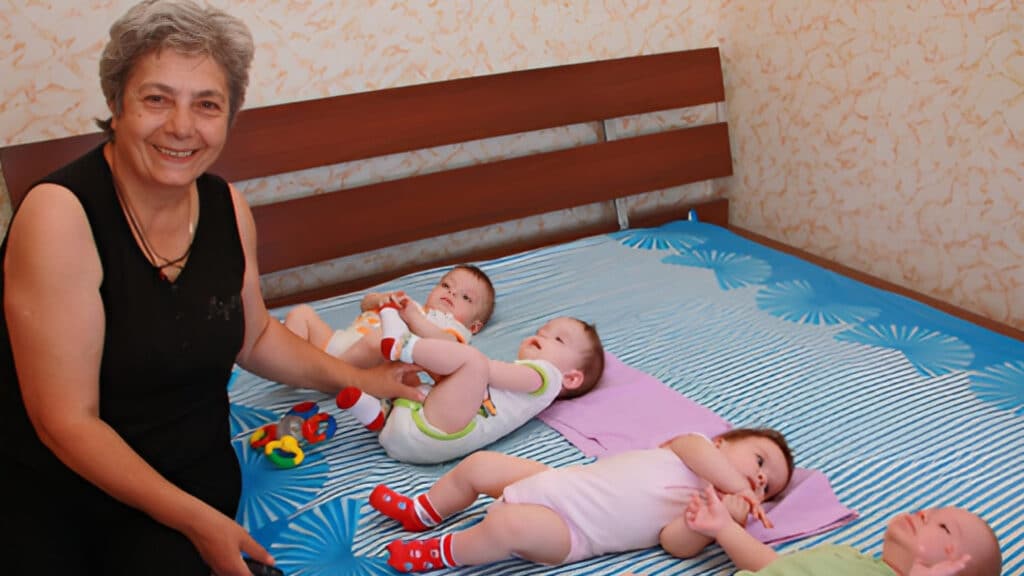
According to Bamford, the children were eventually placed in foster care after the state challenged Kelesheva’s claim to legal parenthood.
Conflict zones fuel growing demand
While many earlier legal disputes emerged during peacetime, Bamford notes that armed conflicts have sharply increased demand for posthumous reproduction.
In Israel, more than 200 cases of posthumous sperm retrieval have reportedly been recorded since the start of the 2023 war with Hamas. Many requests have come from parents of unmarried soldiers hoping to preserve their family lineage.
Ukraine has also experienced a rise in fertility preservation among military personnel. Soldiers increasingly freeze sperm before deployment, aided by new legislation allowing partners to use the material after death.
Rethinking family and inheritance
According to Bamford, these cases demonstrate that modern Western ideas of family extend far beyond biology alone.
She argues that legal systems often treat preserved genetic material both as property and as a potential source of inheritance claims.
One of the central challenges, Bamford writes, is the long-term viability of frozen reproductive cells. Estates are typically expected to be settled quickly after death, yet preserved sperm and eggs may remain usable for decades, allowing potential heirs to be conceived years later.
Ultimately, Bamford suggests that reproductive technology is fundamentally changing society’s relationship with death itself. Through posthumous reproduction, she argues, the dead continue to participate in the lives of the living, blurring the boundary between absence and ongoing familial presence.
Read also: The phallus collectors: Why are people obsessed with genitals and their symbols.