
Over the past two years, artificial intelligence (AI) has become one of the world’s leading investment topics. Tech companies are announcing the construction of gigantic AI clusters, governments are launching national programs and investment in computing infrastructure has reached hundreds of billions of dollars.
At first glance, it might seem that the main limitation in this race is money. However, reality has proven the opposite — capital is something that can be found far more easily than decent infrastructure.
A modern AI project doesn’t begin with an algorithm or with purchasing chips. It begins with questions that sound far less impressive: where to get tens or hundreds of megawatts of electricity, how to connect to the power grid as quickly as possible, where to locate the facility, how to cool it, whether there are nearby backbone communication channels and how many years site preparation will take.
These factors are becoming a new constraint for the entire AI market.
AI needs both chips and megawatts
According to the International Energy Agency (IEA), data centers consumed approximately 415 terawatt-hours (TWh) of electricity in 2024, or approximately 1.5% of total global energy output. By 2030, this figure could more than double to approximately 945 TWh, which is comparable to Japan’s current annual electricity consumption. The IEA estimates that a typical AI-focused data center requires as much energy as 100,000 households, while the largest facilities under construction will require 20 times more than that.
In other words, an AI cluster is no longer simply an IT facility. By its energy profile, it increasingly resembles a large industrial plant.
The problem is that energy infrastructure does not scale as quickly as computing demand. Building a model, raising funds or leasing server capacity doesn’t take much time. Building a substation, however, is a different story, as is strengthening the grid, securing connections and ensuring stable power. All of this takes years to complete.
According to the IEA, approximately 20% of planned data centers face the risk of delays due to power grid constraints. In developed economies, building new transmission lines can take four to eight years. Moreover, delivery times for critical equipment, including transformers and cables, have doubled over the past three years.
Old hubs and physical limitations
Traditional data center hubs — such as London, Frankfurt, Amsterdam, Dublin and Singapore — have long been considered natural locations for digital infrastructure. But today, even they are facing physical limits to growth.
According to CBRE’s Global Data Center Trends 2025 survey, power shortages remain the main barrier to data center development in key markets. Against this backdrop, the share of available capacity globally fell to 6.6% in the first quarter of 2025, while demand continues to grow faster than new facilities are being commissioned.
The situation in Europe is particularly telling. Some new projects in the West London area are set to wait until 2030 or later for substation upgrades. In Frankfurt, operators are forced to move 50 to 65 kilometers from traditional cloud availability zones (CAZs) to find spare power capacity.
In Singapore, the share of spare power capacity remains at 2%, with new facilities constrained by environmental and regulatory requirements. Because of this, demand is gradually shifting to neighboring markets, including Johor, Malaysia, where land and power capacity are easier to find and facility deployment costs are significantly lower. As a result, the industry is gradually shifting from a «best location» mindset to a «where can I get capacity within a reasonable timeframe?» paradigm.
Cooling and communications as part of the equation
The higher the computing output, the more heat the equipment generates. This is especially critical for AI, where GPU server racks require a different engineering architecture than traditional enterprise servers. In some regions, water is a constraint; in others, it’s the cost of electricity for air cooling or even the physical feasibility of building a facility capable of handling such a heat load.
There are also significant challenges associated with building telecommunications infrastructure. AI clusters don’t exist in a vacuum: they require international communication channels, low latency, redundancy and access to major markets. A modern data center is therefore no longer simply a building with servers, but a complex infrastructure facility that cannot be created without available power capacity, advanced telecom connectivity, sophisticated engineering solutions and suitable development sites.
This is where the main gap between announced and implemented AI projects arises.
In the coming years, many announcements will be revised, postponed or implemented in different regions. This isn’t because interest in AI will wane or capital will run out, but because physical infrastructure is developing more slowly than market ambitions.
Even tech giants are beginning to more carefully revise the schedules and geographies of their infrastructure projects. In 2025, for example, TD Cowen analysts reported that Microsoft had canceled or revised several hundred megawatts of data center leases. At the time, this was covered by Barron’s and the New York Post. That said, Microsoft continued to announce major investments in AI infrastructure — indicating not a strategic pivot, but a more pragmatic reassessment of timing, geography and deployment formats.
New regions will have their chance
Previously, companies sought out established digital hubs. Now, the focus is shifting to new locations that meet at least four criteria: available land, available power capacity (or the ability to scale it up), network connectivity and the ability to quickly deploy the infrastructure needed for a data center to operate. A window of opportunity is opening for these markets, and Kazakhstan fits this profile well.
The country is located between the largest markets in Europe and Asia, has ample land available for infrastructure deployment and retains strong potential for expanding energy capacity. At the same time, the region is gradually gaining visibility among international companies seeking alternative locations for computing resources.
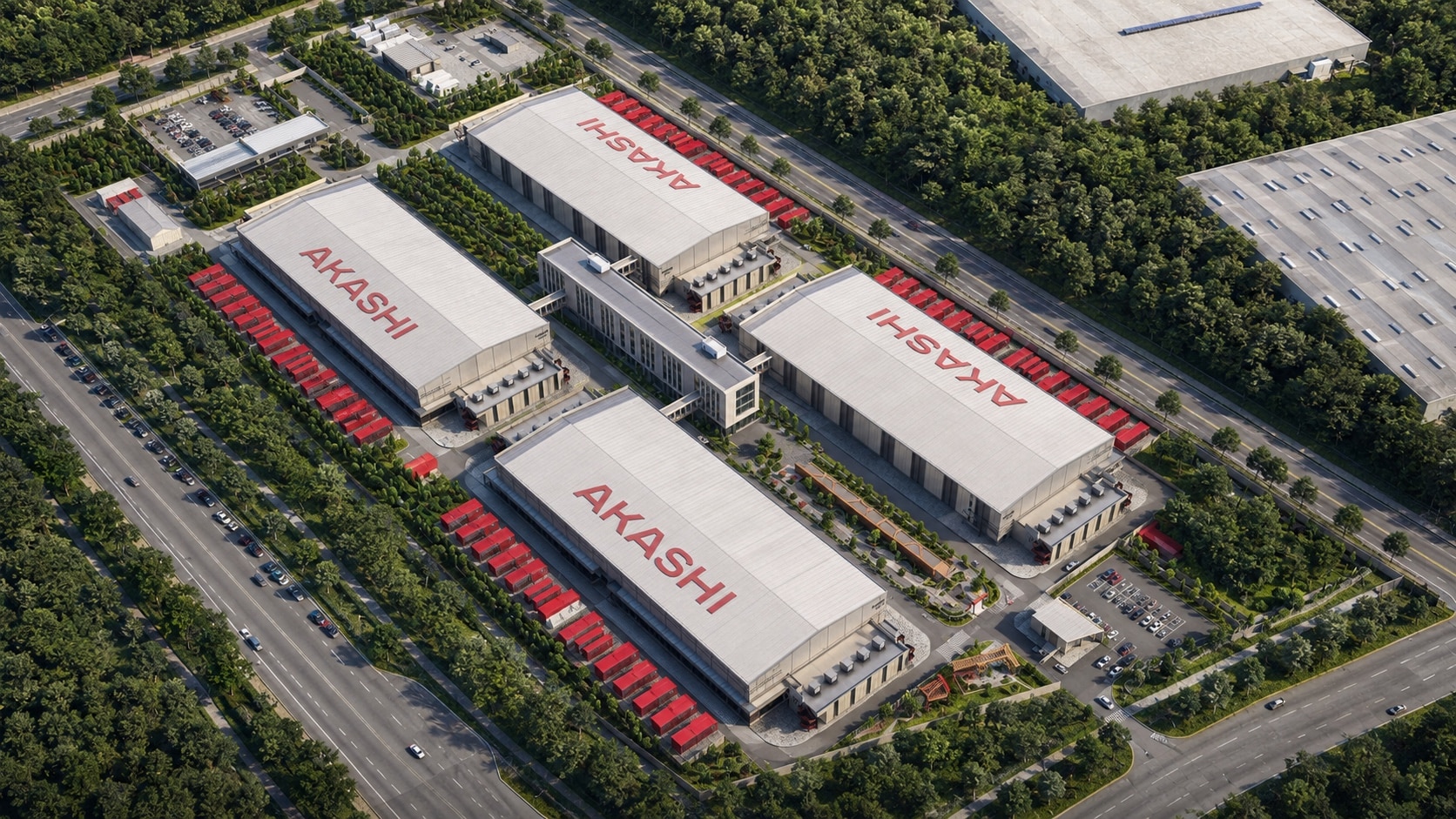
Once Akashi Data Center in Astana is fully operational, it will be the largest data center in Central Asia and the first Tier IV data center in the region. According to the Economic Times, the project is designed to accommodate 4,000 server racks, more than doubling Kazakhstan’s current computing capacity, estimated at 3,800 racks.
The company has revealed that the first Akashi module is already more than 125% reserved before even being commissioned. This is a vivid illustration of the demand: the market doesn’t need presentations about future capacity – it needs actual sites where equipment can be deployed and growth can be planned.
The importance of such projects extends beyond the local market. For international clients, Kazakhstan could become not just an alternative for Frankfurt, London or Singapore, but an additional infrastructure base — especially for workloads where capacity availability, regional connectivity, redundancy and geographic diversification are critical.
A new shortage for the global economy
The global AI infrastructure of the future will likely not be concentrated in just a few overloaded hubs. It will become more distributed. Some workloads and computing power will remain near the largest financial and technology centers. Others will move to places where it’s easier to secure power, land, cooling and realistic timelines.
This is why the question of «where to build?» is becoming just as important as «which chips to use?»
In other words, the future of AI is determined not only by the quality of models and the performance of GPU servers. It increasingly depends on far more mundane factors: available megawatts, accessible sites, water, substations, fiber-optic cables, regulatory permits and engineering teams capable of turning a project into a working facility.
This is the central paradox of the current AI boom. On one hand, demand for computing power has never been higher. On the other, the digital industry has never faced so many physical constraints.
As a result, a significant portion of announced AI projects are bound to remain on paper.
In this environment, the winners will not be those who make the loudest announcements, but those who can quickly assemble the full infrastructure stack: energy, land, cooling, communications and operations. In the era of AI, the new shortage in the global economy is not only chips. The new shortage is megawatts.