The 10 biggest sexual harassment scandals in FIFA history

Over the past decade, football’s global governing body, FIFA, and its regional affiliates have faced increased scrutiny over safeguarding protocols and institutional accountability. A series of widely reported sexual abuse and harassment cases has exposed significant vulnerabilities within the sport’s governance structures.
The following 10 widely cited cases outline some of the most prominent investigations and disciplinary actions of the past decade.
Luis Rubiales and the 2023 Women’s World Cup (Spain)
Following Spain’s victory at the 2023 Women’s World Cup, the president of the Spanish Football Federation, Luis Rubiales, kissed player Jenni Hermoso on the lips without her consent during the medal ceremony.
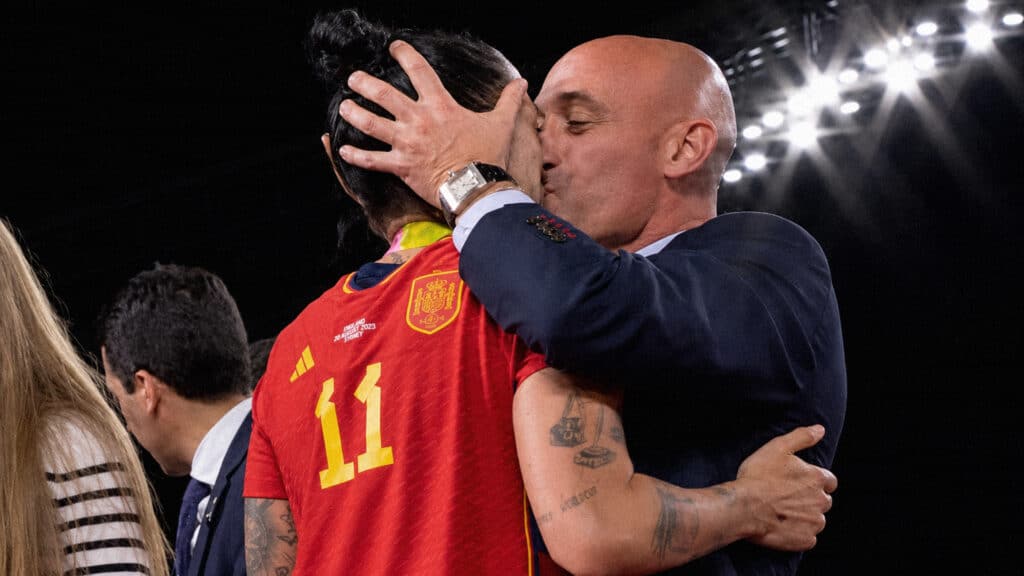
The incident sparked global outrage, leading to investigations of sexual assault and prompting FIFA to provisionally suspend Rubiales. He eventually resigned and faced a three-year ban from all football-related activities.
Sepp Blatter allegations (2013 Ballon d’Or, reported 2017)
Former long-time FIFA President Sepp Blatter was accused of sexual harassment by prominent US Women’s National Team goalkeeper Hope Solo. In 2017, she alleged that Blatter grabbed her bottom right before they went on stage to present an award at the 2013 FIFA Ballon d’Or ceremony.
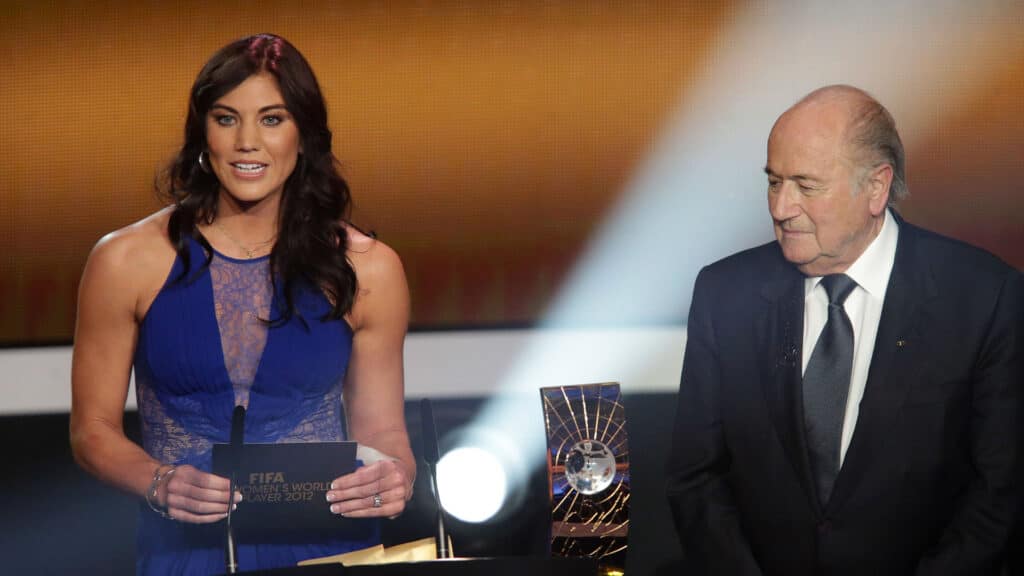
Blatter’s representatives denied the allegations, calling them «ridiculous.» Blatter served as president of FIFA for 17 years until a corruption scandal engulfed the organization in 2015. FIFA subsequently banned the Swiss official from football for eight years, although the sanction was later reduced to six years on appeal.
Yves Jean-Bart and the Haitian Football Federation
Yves Jean-Bart, the former president of the Haitian Football Federation, was investigated for the systematic sexual abuse of female players, including minors, at the national training center. Following extensive reporting and investigations by FIFA’s Ethics Committee, he was handed a lifetime ban from the sport. Human Rights Watch strongly criticized the handling of witness protection after survivors faced death threats.
Keramuudin Karim and the Afghanistan Women’s National Team
The former president of the Afghanistan Football Federation, Keramuudin Karim, was accused by multiple players of the national women’s team of sexual abuse. In 2019, FIFA’s Ethics Committee found him guilty of abusing his position and sexually abusing female players, issuing him a lifetime ban from all football-related activities and a substantial fine.
Bruce Mwape and the Zambia Women’s National Team
Ahead of and during the 2023 Women’s World Cup, Zambia’s head coach Bruce Mwape faced allegations of sexual misconduct. Reports claimed that players were coerced into sexual relations to maintain their roster spots, and FIFA confirmed it investigated a specific complaint regarding inappropriate physical contact during the World Cup tournament itself. Mwape denied the allegations.
Patrick Assoumou Eyi («Capello») and Gabon youth football
Following a lengthy investigation into the abuse of minors, FIFA issued a lifetime ban to former Gabon youth-team coach Patrick Assoumou Eyi. The FIFA Ethics Committee found him guilty of committing repeated acts of sexual abuse against multiple youth players over a span of 15 years.
Rosnick Grant and referees in Haiti
In a case connected to the broader systemic abuse in Haitian football, Rosnick Grant, the former head coordinator of referees in Haiti, was investigated and subsequently banned for life by FIFA. The Ethics Committee found him guilty of sexual abuse and harassment of female referees, as well as threatening those who attempted to report the abuse.
Ahmad Ahmad and the Confederation of African Football (CAF)
Ahmad Ahmad, the former president of the Confederation of African Football and a FIFA Vice President, was primarily banned by FIFA for financial misconduct and corruption. However, Human Rights Watch and various investigative reports also noted that he faced multiple allegations of sexual harassment from female employees and consultants.
Harassment of female journalists (2018 World Cup Russia)
During the 2018 FIFA World Cup in Russia, numerous female sports journalists and broadcasters reported experiencing sexual harassment while covering the tournament.
A DW reporter was sexually harassed while covering the #WorldCup. @JULIETHCGT was kissed, groped by a man while reporting from Moscow.
— DW Sports (@dw_sports) June 20, 2018
The incident can be seen here (00:13).
Sexual harassment is not okay. It needs to stop. In football, and elsewhere.pic.twitter.com/O0S1a1F4Es
Several high-profile incidents involved fans grabbing, kissing, and groping female reporters while they were broadcasting live on air, sparking a broader conversation about the safety of women working in football media.
Systemic online sexual abuse (Qatar 2022 & Women’s World Cup 2023)
While not a single isolated individual’s case, major reports by FIFA have highlighted the systemic issue of targeted online sexual and sexist abuse during recent World Cups. Analysis tracking player abuse during the 2022 Men’s World Cup and the 2023 Women’s World Cup found massive spikes in harassing messages directed at players, prompting FIFA and FIFPRO to launch automated moderation tools to protect participants.
Notably, the 2023 FIFA Women’s World Cup saw discriminatory, abusive or threatening content directed at more than 150 players. Two teams emerged as the primary targets: the U.S. and Argentina. The U.S. Women’s National Team received the highest volume of abuse during the tournament.
Sexist, sexual and homophobic messages accounted for nearly 50% of all abusive content detected during the competition, making them the most common forms of abuse directed at female footballers. Players at the 2023 FIFA Women’s World Cup were 29% more likely to be targeted by online abuse than players at the 2022 FIFA World Cup.