Metallurgy and state spending drive Tajikistan’s economic growth

After a robust 2025, Tajikistan’s economic growth eased slightly in the first quarter of 2026, with GDP expanding 8.0% year over year, down from 8.4% in 2025. Strong industrial output and investment continued to drive the economy, while construction related to the Rogun Hydropower Plant and higher public-sector wages supported domestic demand. However, the country’s growth model remains vulnerable to external risks.
In Q1 2026, Tajikistan remained one of the fastest-growing economies in Central Asia. The services sector contributed 4.4 percentage points to GDP growth, while manufacturing added another 2.5 p.p.
Manufacturing offsets weakness in mining
Industrial output increased 14.1% year over year from January through March, reaching 16.1 billion somoni (about $1.7 billion).
The mining sector, however, contracted 9.8%, largely reflecting a high comparison base from the previous year. Coal production fell 30%, while oil and gas output declined 63.8%. Metal ore mining — which accounts for 97.3% of the sector’s total output — edged down 0.6%.
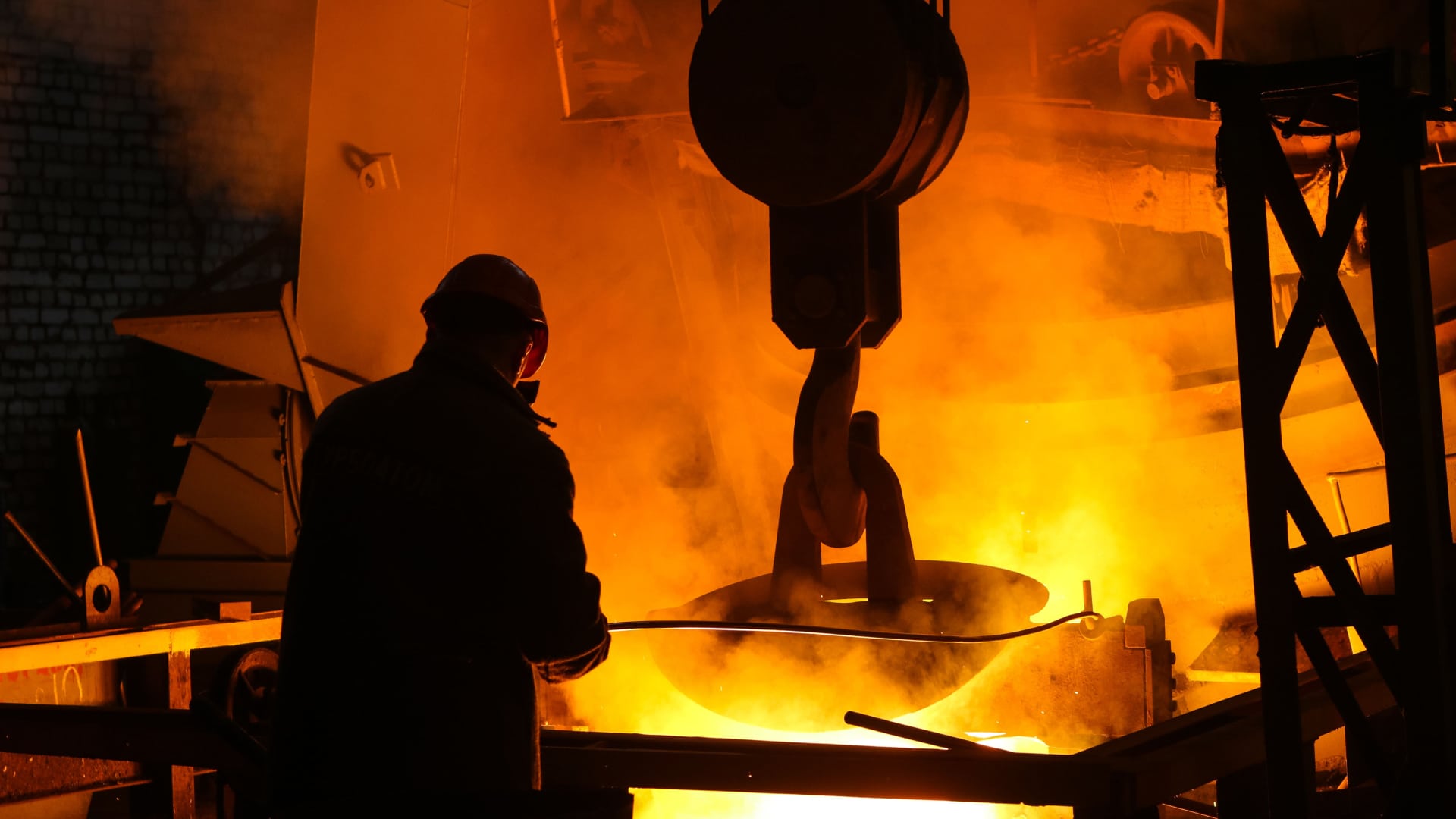
Manufacturing remained the main engine of industrial growth, expanding 29.6% year over year. The strongest gains came from metallurgy, up 25.5%, and food production, which increased 17.1%.
The Agency on Statistics under the President of the Republic of Tajikistan does not publish detailed breakdowns for individual metallurgy segments. However, higher global prices for gold and aluminum likely supported the sector’s performance.
Investment boom fueled by public spending
Capital investment rose 34.2% year over year in comparable prices during the first quarter, reaching 6 billion somoni. The surge translated into higher construction activity, with the value of construction work increasing by 1.3 billion somoni to 4.7 billion.
Public investment was the primary driver of growth. Budget-funded investment climbed 50% to 3.2 billion somoni, accounting for 54.1% of total fixed capital investment. Private-sector investment increased 25.8%, while foreign investment declined 16%.
The energy sector remained the government’s top investment priority. Spending on energy projects, including the Rogun Hydropower Plant, totaled 2.4 billion somoni in the first quarter, up 46.4% from a year earlier.
Stable public finances support monetary policy
Tajikistan’s public finances remained on solid footing. Government revenue reached 16.7 billion somoni during Q1, exceeding the revised budget target by 8.3%.
Inflation remained near the lower end of the National Bank of Tajikistan’s target range of 5%, plus or minus 2 p.p., giving policymakers room to maintain a relatively accommodative monetary policy.
Trade deficit widens despite stronger trade
Total foreign trade reached $2.7 billion during the January-March period, up 12.8% from a year earlier.
Exports slipped 0.7% to $514 million, while imports rose 16.6% to $2.2 billion. As a result, the country’s trade deficit widened to $1.6 billion.
The shortfall continues to be offset by substantial remittance inflows from migrant workers. According to S&P Global Ratings, remittances accounted for as much as 60% of Tajikistan’s GDP in 2025.
However, this source of income remains vulnerable to political developments and economic conditions in migrant destination countries, particularly Russia.
At the same time, Tajikistan’s heavy dependence on imported energy could further widen the trade deficit in the second quarter if global oil prices continue to rise. Higher fuel costs would also add to inflationary pressures.
International institutions remain optimistic
Despite the modest slowdown, Tajikistan continues to outperform the forecasts of most international financial institutions.
The Asian Development Bank projects GDP growth of 7.3% in 2026. A key development this year was the agreement on a new $1.1 billion ADB financing package covering 2026-2028.
In April, the International Monetary Fund raised its baseline forecast for Tajikistan’s economic growth in 2026 to 6.0%, up from the 5.5% projected in October.
In February, S&P Global Ratings revised Tajikistan’s outlook to positive from stable while affirming the country’s sovereign credit ratings at B/B.