Kazakhstan reshapes power dynamics as new constitutional order takes effect

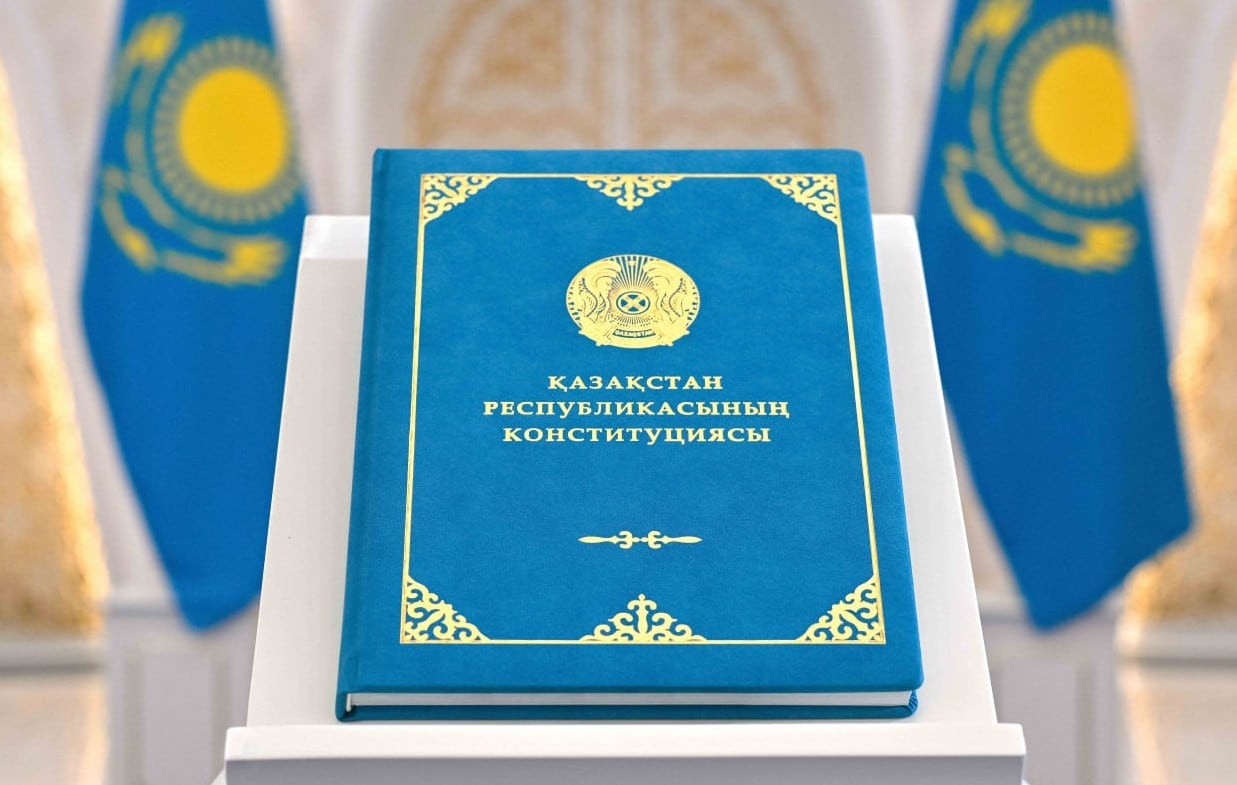
Kazakhstan officially transitioned to a new constitutional framework on July 1, 2026, following a nationwide referendum that significantly reshaped the country’s system of government.
Read also: Kazakhstan’s constitutional reset: Top officials facing dismissal.
The revised Constitution retains a presidential form of government while introducing a unicameral legislature and a high-level consultative body designed to decentralize authority and strengthen public representation.
Seven-year presidency and new line of succession
Under the new constitutional framework, the president of Kazakhstan remains the head of state and the country’s highest public official, responsible for setting the main directions of domestic and foreign policy.
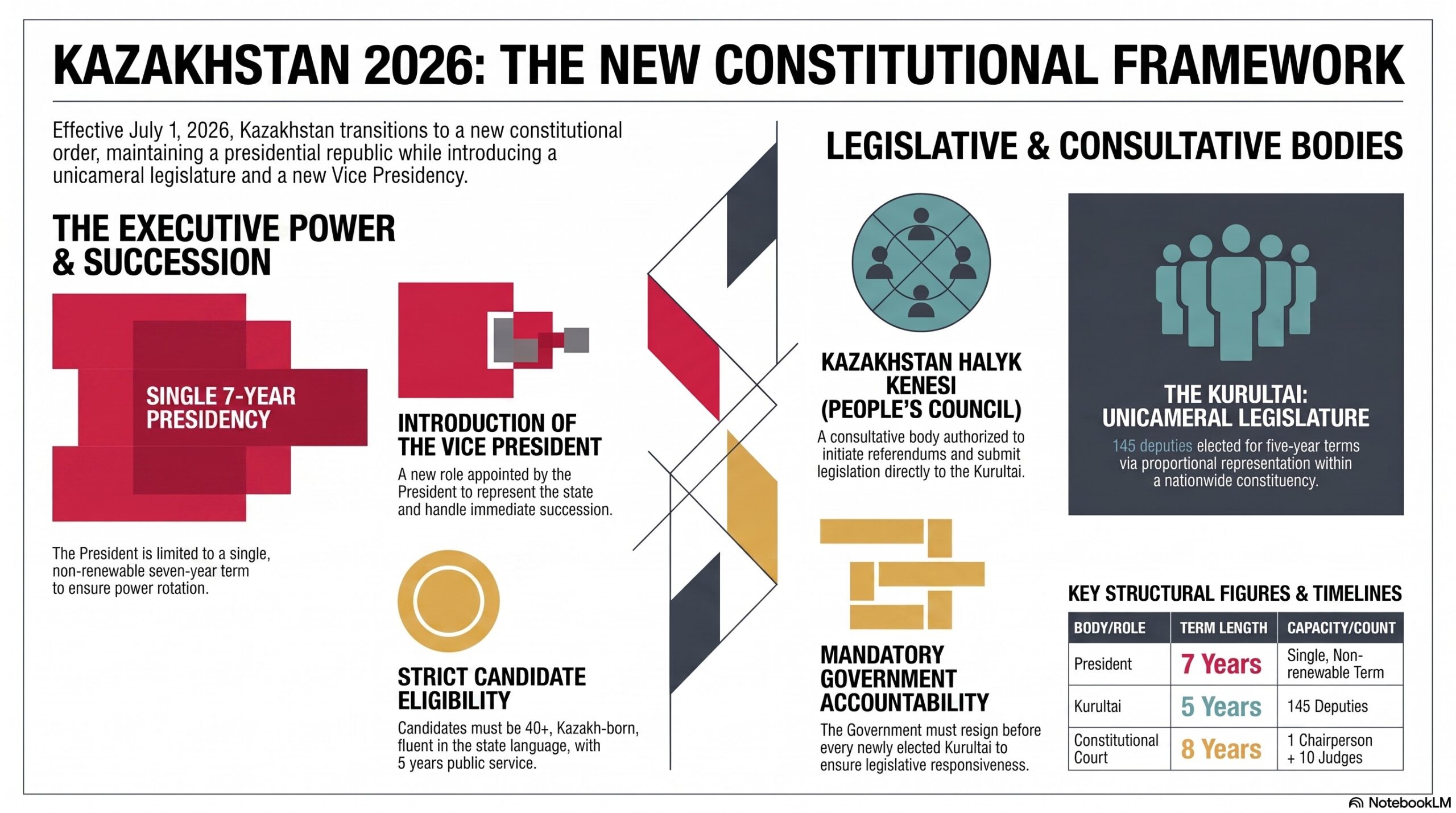
A key change limits the presidency to a single, nonrenewable seven-year term. Presidential candidates must be at least 40 years old, born in Kazakhstan, fluent in Kazakh and have at least five years of public service experience.
Note: According to a regulatory ruling issued by the Constitutional Court of Kazakhstan on July 7, the incumbent president, who was elected under the 1995 Constitution, remains eligible to run for president after the 2026 Constitution takes effect. The court ruled that the first presidential election held under the 2026 Constitution will be treated as a new constitutional election cycle, meaning any election held after the new Constitution enters into force will be considered a candidate’s first election under the new constitutional framework.
Another major institutional change is the creation of the office of vice president. Appointed by the president with the consent of the legislature, the vice president represents the head of state in relations with other branches of government and carries out duties assigned by the president.
The office also plays a central role in the new succession process. If the president resigns, dies or is removed from office, presidential powers immediately transfer to the vice president. If the vice president is unable to assume the office, succession passes to the chairperson of the Kurultai and then to the prime minister.
Kurultai becomes the legislature
The new Constitution replaces the previous bicameral parliamentary system with the Kurultai, designated as the country’s highest representative body and vested with legislative authority.
The Kurultai consists of 145 deputies elected to five-year terms through proportional representation in a single nationwide electoral district. The inaugural elections to the Kurultai are scheduled for Aug. 23.
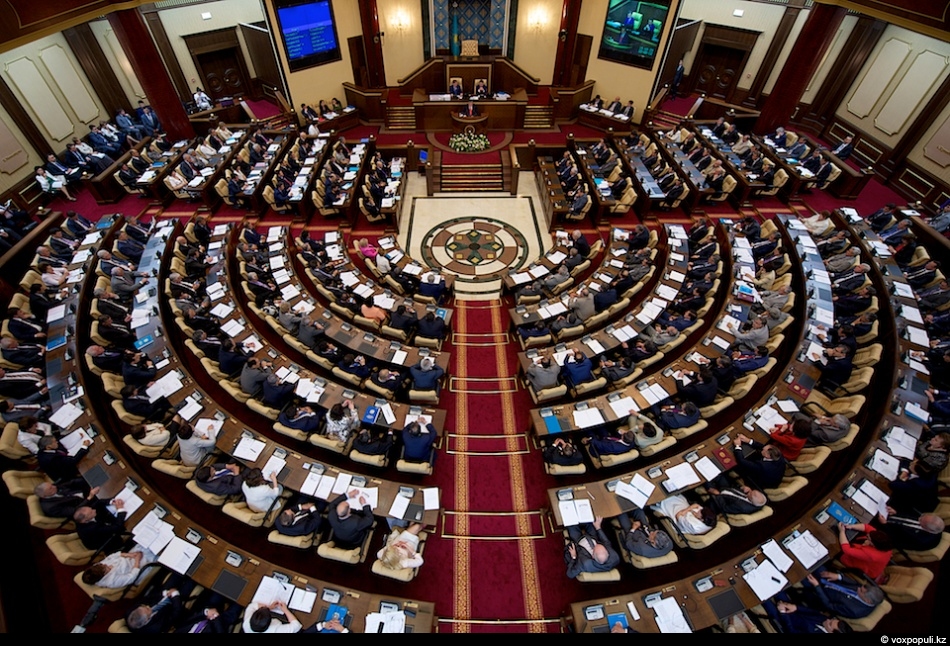
The legislature is granted broad oversight powers, including the authority to pass a vote of no confidence in the government. It must also approve the president’s nominations for prime minister, vice president and members of the Constitutional Court and the Central Election Commission.
People’s Council gains consultative role
The Constitution also establishes the Kazakhstan Halyk Kenesi, or People’s Council of Kazakhstan, as the country’s highest consultative body.
The council represents the interests of the public and develops recommendations on national unity and domestic policy. It is also empowered to initiate nationwide referendums and submit draft legislation directly to the Kurultai for consideration.
Government formation and accountability
The government, which heads the executive branch, is formed by the president following consultations with political factions represented in the Kurultai.
The prime minister bears personal responsibility for the government’s performance and reports to both the president and the Kurultai.
To strengthen institutional accountability, the government is required to resign after each parliamentary election, allowing a newly elected Kurultai to participate in the formation of a new executive.