
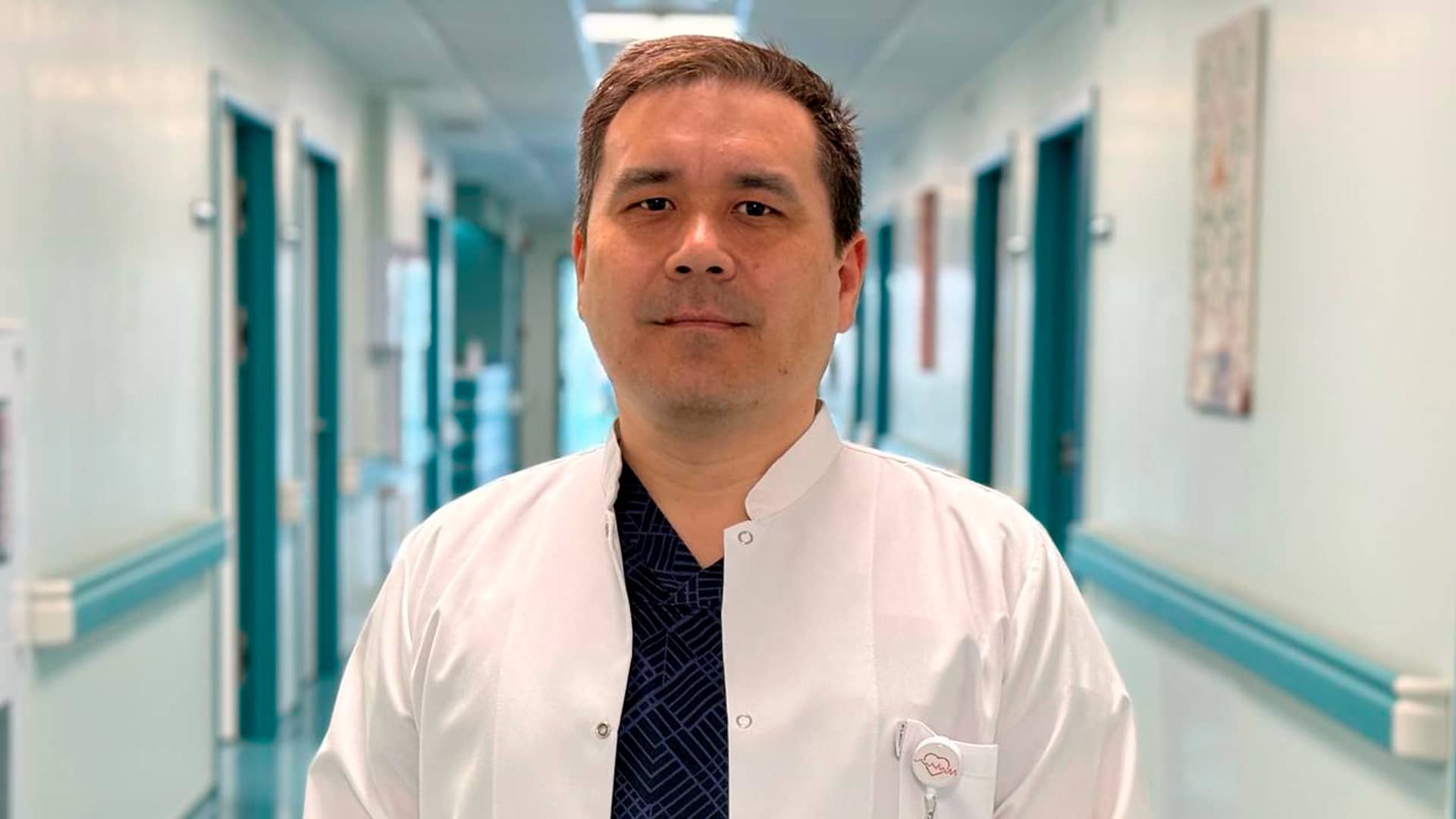
Every minute of hesitation during a stroke costs a person up to 1 million brain cells. Yerkin Duissenbayev, head of the Department of Neurosurgery and Neurology at Kazakhstan’s National Center for Neurosurgery, explained why it is critical to call an ambulance immediately at the first signs of facial asymmetry or slurred speech.
Recognizing the warning signs
Q: Dr. Duissenbayev, how can the average person tell if a loved one is having a stroke? What are the warning signs?
A: There are several key symptoms to watch for. The first thing to pay attention to is the person’s face. A stroke often causes facial drooping, with one corner of the mouth sagging and an uneven smile.
A person may also experience weakness or numbness in one arm or leg. In some cases, one entire side of the body suddenly becomes numb.
Another common symptom is slurred speech. The person may have difficulty speaking or may be unable to understand what others are saying. Difficulty swallowing can also occur.
Other symptoms include severe weakness, dizziness, loss of coordination or balance, double vision and, in some cases, loss of consciousness.
A hemorrhagic stroke is often accompanied by a sudden, severe headache caused by bleeding in the brain. Seizures may also occur.
In any of these situations, there is no time to delay. Call an ambulance immediately.
The importance of the «golden hour»
Q: How much time is there to save someone having a stroke?
A: We use the term «golden hour» to describe the first 60 minutes after symptoms begin. This is when medical treatment is most effective and offers the best chance of saving a person’s life and preventing long-term disability.
Every minute matters because up to 1 million brain cells can die during each minute of a stroke.
For ischemic stroke, medication to dissolve blood clots can generally be administered within the first 3.5 hours after symptoms begin.
If surgery is required, the treatment window may range from about six hours to as long as 24 hours, depending on the patient’s condition.
The sooner family members recognize the symptoms and call an ambulance, the better the patient’s chances of recovery.
What to do before the ambulance arrives
Q: What should family members do while waiting for emergency medical services?
A: The first and most important step is to call an ambulance immediately.
Next, note the exact time when the first symptoms appeared.
Lay the person down and elevate their head with a pillow. Make sure the room is well ventilated. If the stroke occurred while the person was eating, check the mouth and carefully remove any remaining food particles.
Loosen tight clothing and unbutton the collar.
If the person vomits, turn their head to one side to prevent choking.
Continue monitoring their breathing and try to keep them awake and responsive until medical personnel arrive.
If possible, prepare a list of the medications the person takes regularly, as well as any existing medical conditions. This information can help doctors begin appropriate treatment more quickly.
What not to do
Q: Are there things people should absolutely avoid doing?
A: Yes. Do not give the person food, water or medication.
Do not attempt to lower their blood pressure or give blood-thinning medications. Self-medicating during a suspected stroke can be extremely dangerous.
Also, do not encourage the person to walk or leave them alone.
Perhaps the biggest mistake is waiting to see whether the symptoms go away on their own. They won’t.
Ischemic vs. hemorrhagic stroke
Q: What’s the difference between ischemic and hemorrhagic stroke?
A: An ischemic stroke occurs when a blood vessel becomes blocked, preventing blood from reaching part of the brain. Blood clots and atherosclerotic plaques are common causes. Ischemic strokes often occur during sleep.
A hemorrhagic stroke occurs when a weakened blood vessel ruptures, usually as a result of high blood pressure, causing bleeding in the brain. It is typically accompanied by a sudden, severe headache.
Treatment differs significantly. Ischemic stroke is treated by restoring blood flow and removing or dissolving the clot, while hemorrhagic stroke requires stopping the bleeding and often involves surgery.
Who is most at risk?
Q: Who is at the highest risk of having a stroke?
A: Stroke is often the result of underlying health conditions. People with heart disease, diabetes or high blood pressure are at particularly high risk.
When these conditions go untreated or are poorly managed over time, the risk of stroke increases substantially.