How 19th-century American travelers saw the Great Steppe’s changing world

Exactly 250 years ago, on July 4, 1776, as the Second Continental Congress adopted the U.S. Declaration of Independence, Ablai Khan was navigating a treacherous political landscape to preserve the sovereignty of the Kazakh Khanate between the rival Russian and Qing empires.
To mark the 250th anniversary of American independence, Qalam revisited the journals of the first American travelers who ventured into the Great Steppe, leaving behind vivid — if sometimes biased — accounts of a world on the brink of profound transformation. These early narratives, ranging from the observations of commercial agents to the reports of seasoned diplomats, offer a unique perspective on the cultural and intellectual life of 19th-century Kazakhstan.
The telegraph visionary and the Ishim Steppe
One of the first Americans to publish a detailed account of his travels through the region was Perry McDonough Collins, a commercial agent appointed to the Amur River in 1856.
In his 1860 book «Siberian Journey Down the Amur,» Collins described his journey across the Ishim Steppe, a vast territory stretching between the western tributaries of the Ob and Irtysh rivers. Traveling along well-worn routes, Collins noted a distinct sense of mutual curiosity: The local inhabitants were as much of a «novelty» to him as he and his foreign goods were to them.
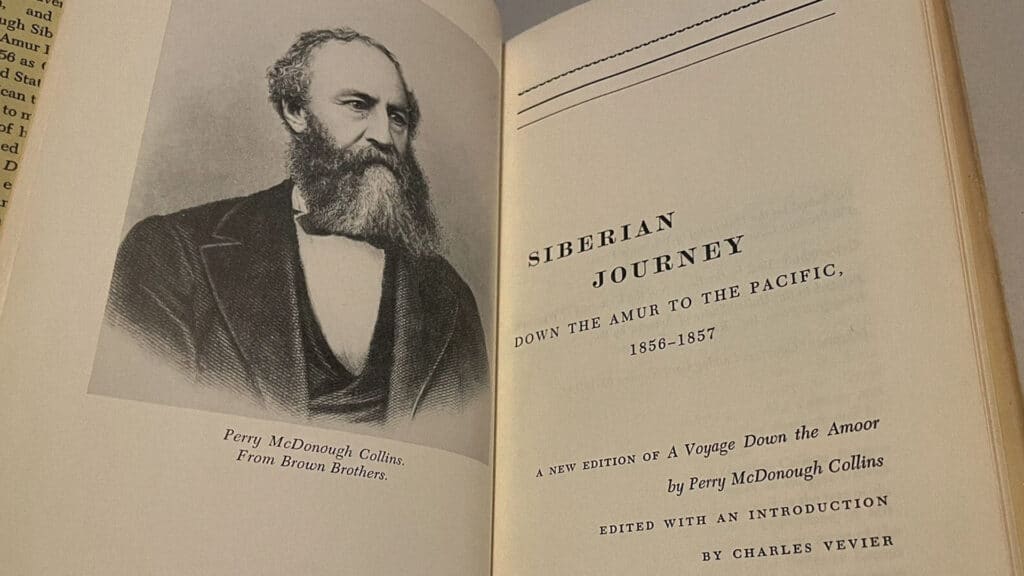
Although Collins never became a serious scholar of the region’s culture, he made history as the driving force behind the Russian-American Telegraph, a Western Union project intended to connect California and Moscow via a transcontinental telegraph line.
George Kennan and the intellectual reach of the Steppe
The telegraph project brought another American to the region who would leave an even more enduring mark on journalism. George Kennan, a correspondent for The Associated Press and later a contributor to National Geographic, documented his travels in his 1891 work «Siberia and the Exile System.»
Kennan offered grueling descriptions of local infrastructure, famously calling the road to Ust-Kamenogorsk «worse than any neglected wood-road in the mountains of West Virginia.»
His most fascinating contribution, however, was his account of the intellectual life of Semipalatinsk.
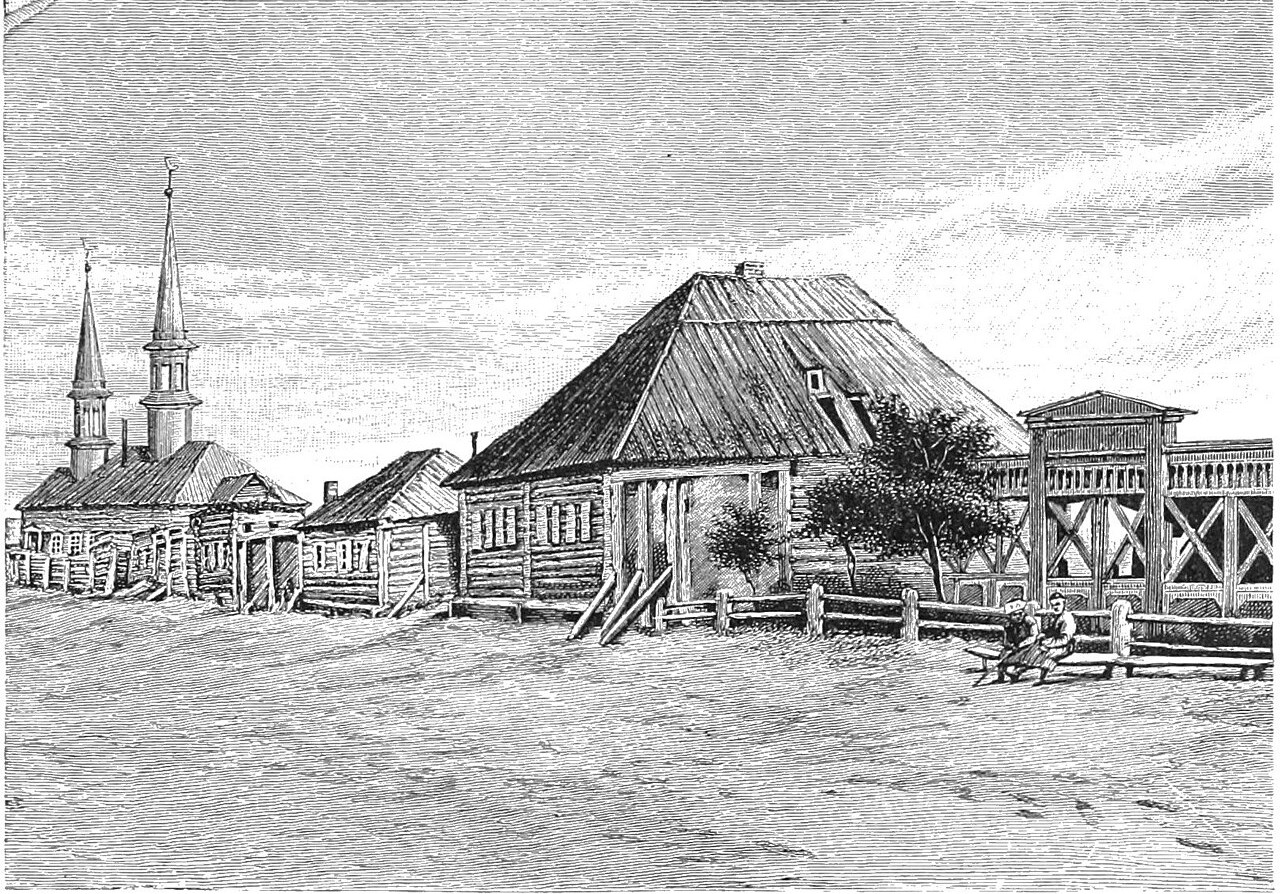
Through a meeting with the exiled ethnographer Alexander Leontiev (Leántief), Kennan learned that the town’s library had become a center of lively intellectual exchange. Most notably, he recorded the story of a «learned old Kírghis» named Ibrahim Konobai, now recognized as the great Kazakh poet and philosopher Abai Qunanbaiuly. According to Leontiev, Abai was a frequent visitor to the library, where he studied the works of English thinkers such as John Stuart Mill, Henry Thomas Buckle and John William Draper.
Kennan was astonished to learn that Abai had even sought explanations of complex concepts in logic, including induction and deduction, demonstrating that the intellectual currents of the West had reached deep into the heart of the Steppe.
MacGahan’s account of hospitality and fashion
While Collins and Kennan traveled by horse-drawn carriage, Januarius MacGahan, the renowned American war correspondent, experienced the Steppe with a far greater degree of immersion.
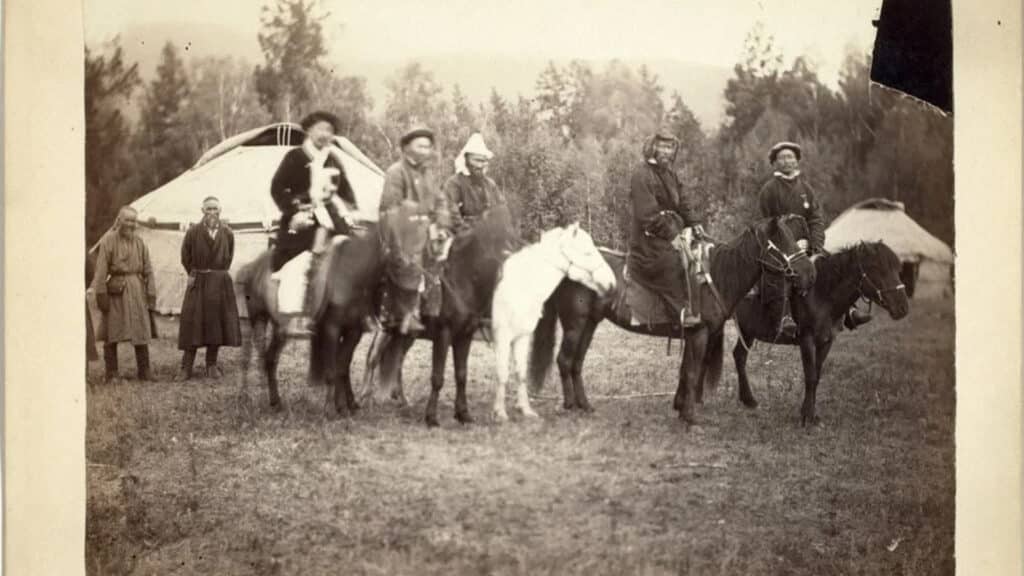
In his 1874 book «Campaigning on the Oxus,» MacGahan wrote glowingly about the Kazakh people, describing his hosts as exceptionally kind, honest and hospitable. He spent a month eating and sleeping in yurts while carrying money and weapons that could easily have been stolen. Yet, he wrote, not a single item went missing. On several occasions, local residents even rode for miles to return small belongings he had accidentally left behind.
MacGahan was also a keen observer of Steppe fashion. He described the elaborate red silk robes worn by Kazakh women, adorned with silver buttons and coral fasteners, as well as the men’s yellow leather trousers, almost entirely covered with multicolored embroidery. He was equally captivated by the dombra — which he called a «Tatar guitar» — and by the heroic songs celebrating the exploits of legendary warriors.
Schuyler and the diplomatic correction of history
Perhaps the most academically rigorous account came from Eugene Schuyler, a Yale-educated diplomat and one of the first Americans to earn a Ph.D.
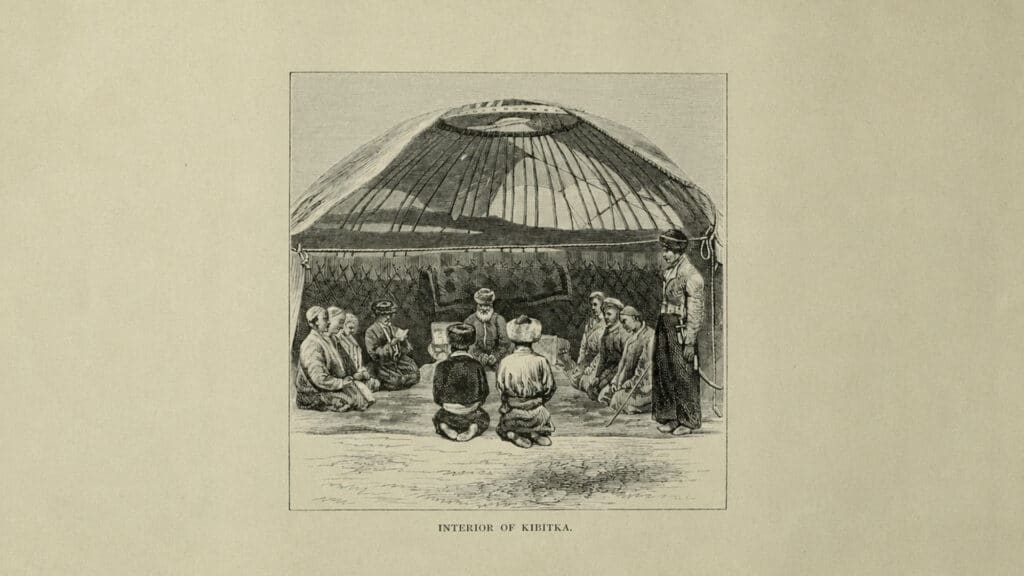
In his two-volume travelogue «Turkistan,» Schuyler challenged the common Russian misnomer for the people of the region. He wrote that although Russians used the «entirely erroneous and meaningless» term «Kirghiz Kaisak,» the people called themselves Kazak, a name meaning «wanderer» or «nomad» in Central Asia.
Schuyler also offered a sophisticated analysis of Kazakh social hierarchy, distinguishing between the White Bone — the aristocracy and descendants of khans — and the Black Bone, or commoners. He observed that although the Kazakhs respected their aristocracy, their deepest loyalty often belonged to batyrs — charismatic heroes such as Syrym Datuly, Aryngazy Khan and Kenesary Khan — who could rally the Steppe under their banners in times of conflict.
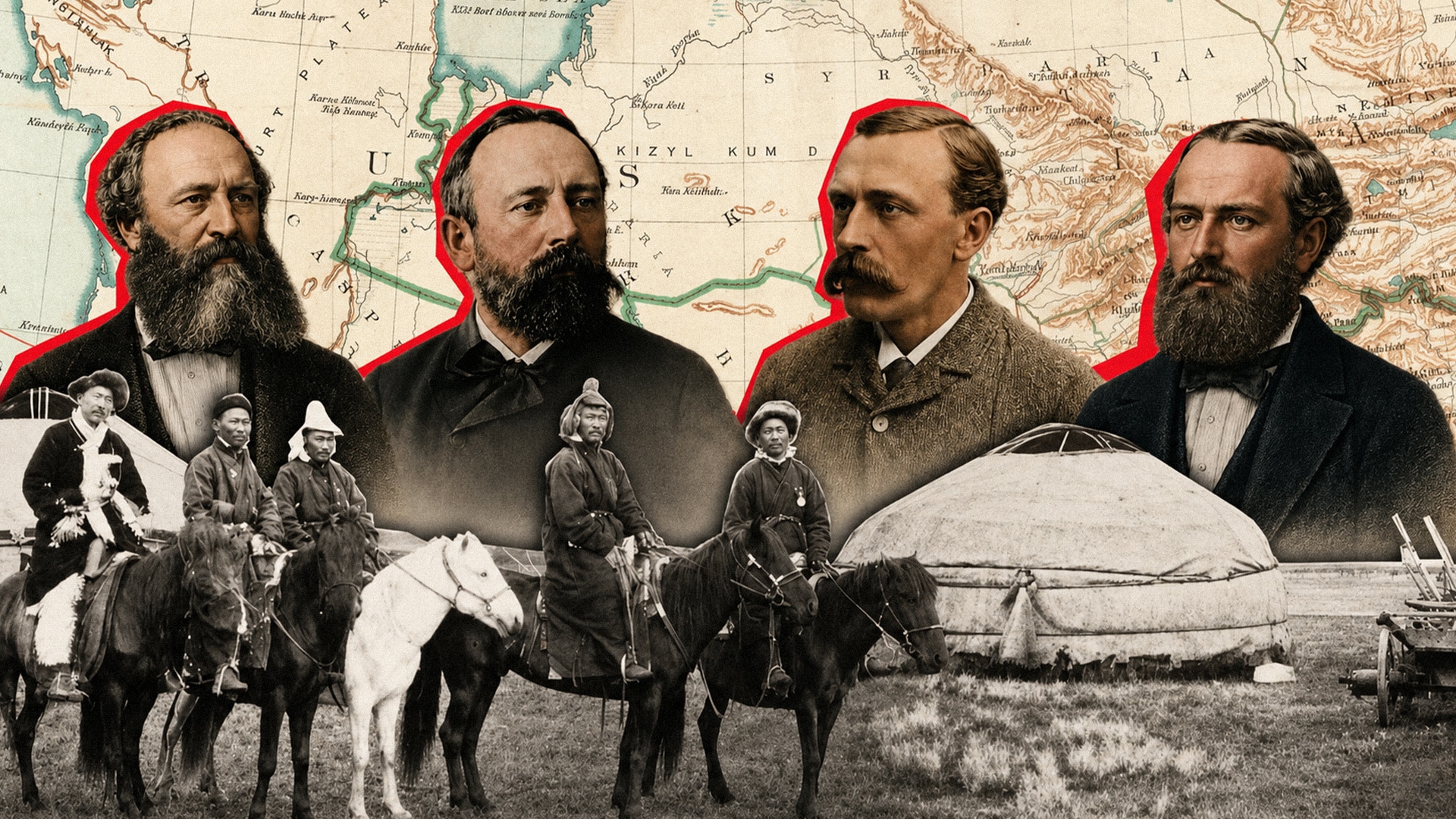
The journals of Collins, Kennan, MacGahan and Schuyler remain invaluable records of a vibrant society on the eve of the profound upheavals that would transform Central Asia in the 20th century.