Nomad roots, modern laws: Visualizing Kazakhstan’s new Kurultai


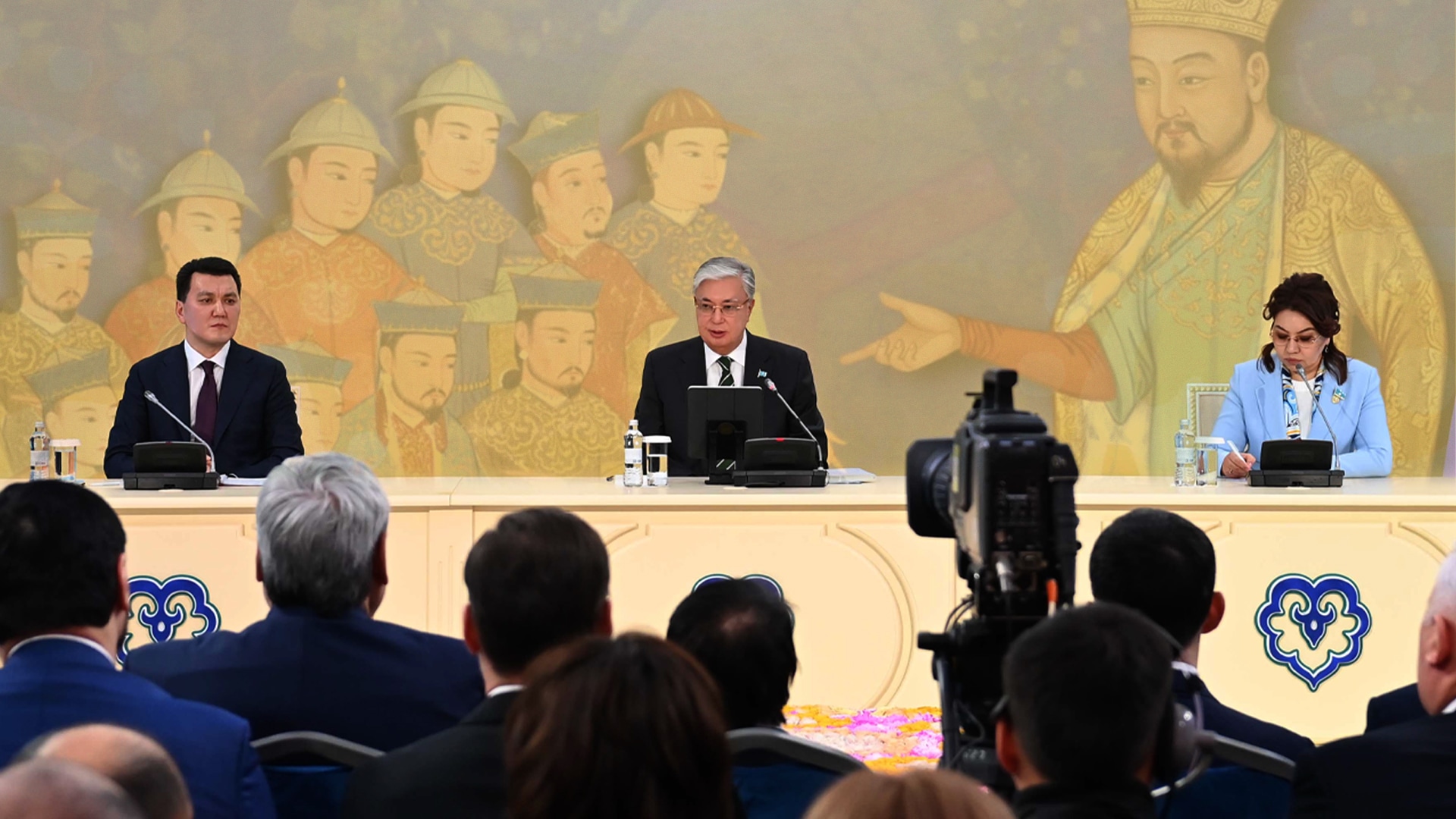
Kazakhstan is set to elect a new unicameral legislature, the Kurultai (Quryltai) this month. Historically, the word referred primarily to steppe assemblies convened to resolve major state affairs. In modern Kazakhstan, it was also associated with the National Kurultai, an advisory body to the president. Now, the name has been adopted for the country’s permanent legislative body.
Here’s how the meaning and format of the kurultai have evolved over the centuries in Kazakhstan.
Origin of the word «kurultai»
Kurultai means «assembly» or «council.» The word is of Turkic origin and originally referred to gatherings of tribal nobles and military leaders that served as supreme councils on matters of war and governance.
Historically, the term has been used in several contexts:
- An official council of Turkic-Mongol nobility.
- An assembly convened in Turkic states, including the Kazakh Khanate, to address major state issues.
- A representative or legislative body of government, as in Bashkortostan and the Altai Republic, etc.
- A congress or general meeting of political parties, social movements and other organizations to discuss important issues.
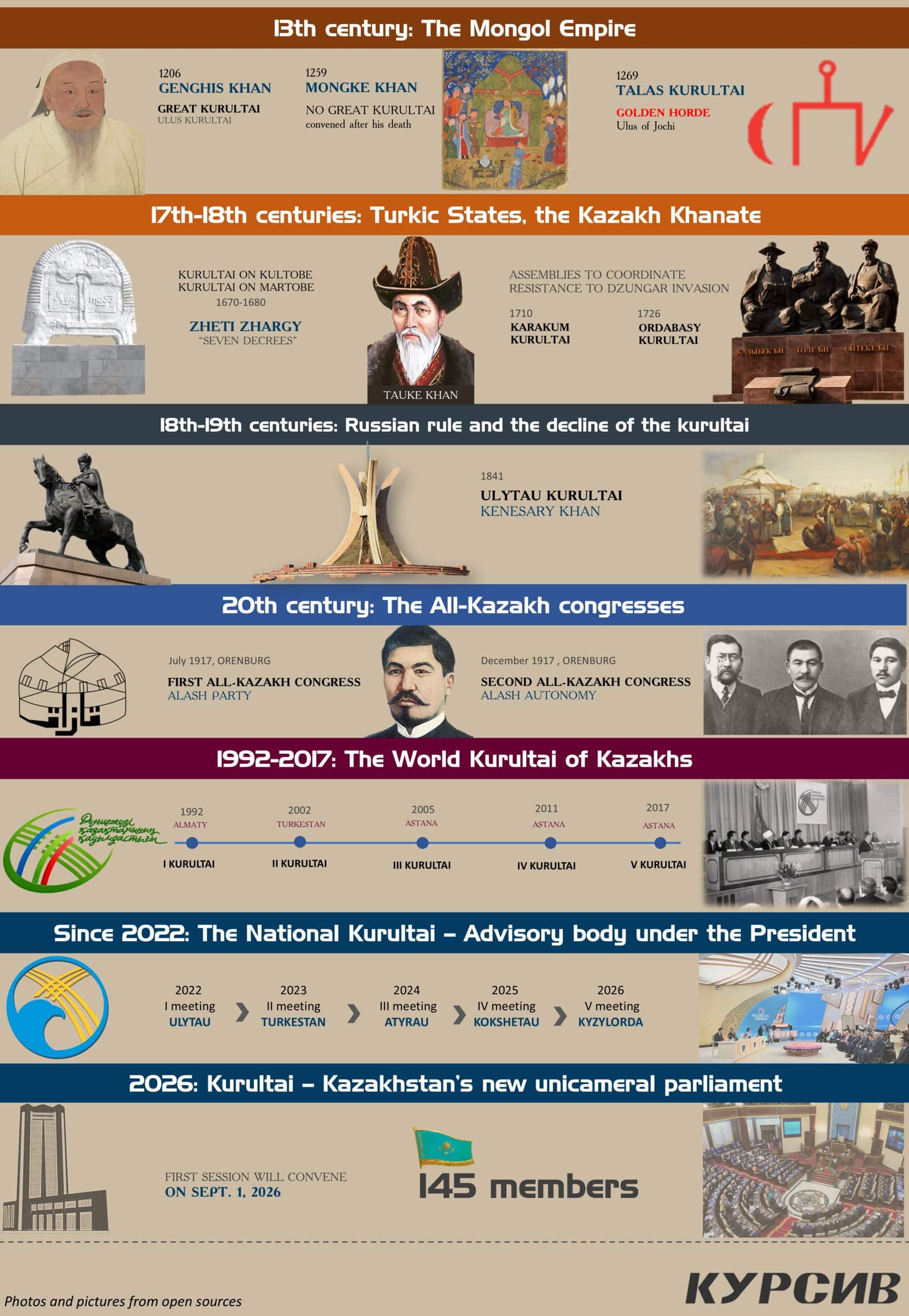
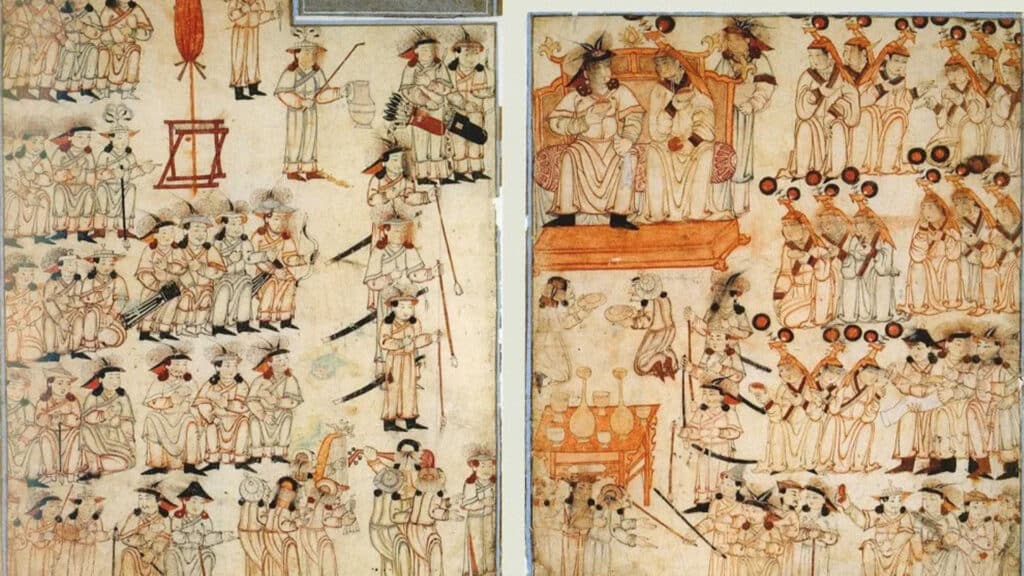
In nomadic societies, the kurultai was one of the most important institutions of collective decision-making alongside the khan’s authority. The tradition of large assemblies dates back to the era of Genghis Khan. In the Mongol Empire, the Great Kurultai was convened to address major state issues, including the enthronement of rulers and decisions on military campaigns.
After the death of Möngke Khan, Genghis Khan’s grandson, in 1259, all-Mongol, or Great, kurultais were no longer regularly convened. The last such gathering took place in the spring of 1269 in the Talas River valley, bringing together descendants of Genghis Khan and Mongol nobles. It became one of the key events in the political fragmentation of the Mongol Empire and the separation of its uluses, including the Ulus of Jochi, also known as the Golden Horde.
Kurultai in the Kazakh Khanate
From the 15th to the 18th centuries, kurultais were convened in various Turkic states, including the Kazakh Khanate.
In traditional Kazakh society, the great kurultai — an assembly attended by khans and sultans, clan and tribal leaders, batyrs, beys and respected elders — held particular importance. Such gatherings addressed major issues of state and public life, including the election of khans, declarations of war and peace, and the codification of customary law.
The Karakum Kurultai of 1710, convened under Tauke Khan, and the Ordabasy Kurultai of 1726, which focused on organizing resistance to the Dzungar invasion, hold a special place in Kazakhstan’s history.
Among the best-known kurultais of the late 17th and early 18th centuries were assemblies convened at the initiative of Tauke Khan and the three chief beys — Tole bey, Kazybek bey and Aiteke bey — at Kultobe and Martobe. One of their most important tasks was to systematize traditional Kazakh legal norms, resulting in the creation of the «Zheti Zhargy,» or «Seven Decrees.»
The era of Russian rule
In the 18th and 19th centuries, political changes associated with the establishment of Russian rule in the Kazakh steppe gradually diminished the kurultai’s traditional significance. However, the practice of holding assemblies to address questions of power did not disappear completely.
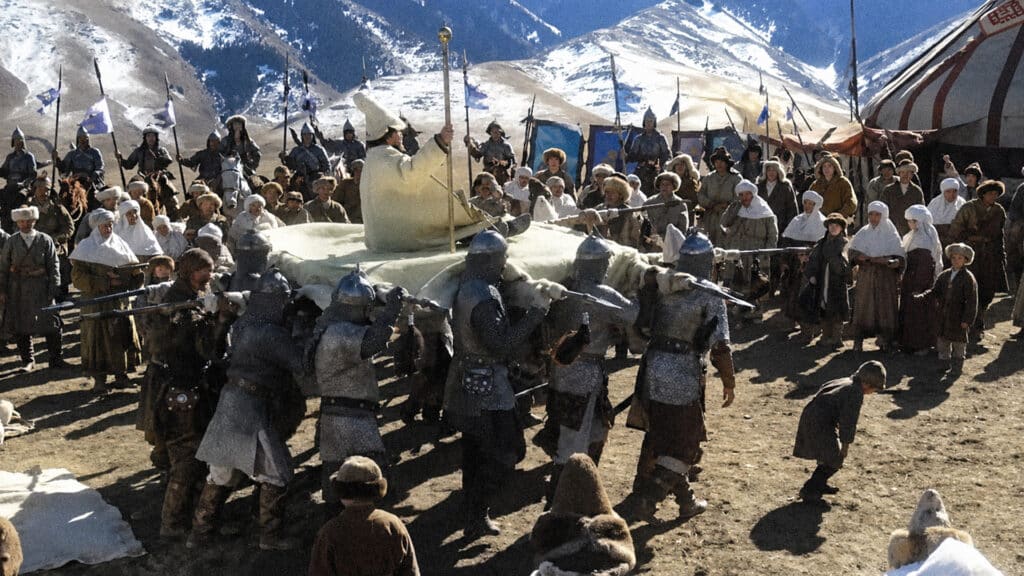
For example, in the early 1840s, Kenesary Khan was raised on a white felt mat in Ulytau and proclaimed khan.
The early 20th century
In the early 20th century, the tradition of national assemblies took on new political significance. The All-Kazakh Congresses held in Orenburg in 1917, where delegates discussed national self-government and Kazakhstan’s political future, occupy an important place in the country’s history.
At the First All-Kazakh Congress, held in Orenburg in July 1917, delegates decided to establish the Alash Party. At the Second All-Kazakh Congress, held in December of the same year, the Alash autonomy was proclaimed.
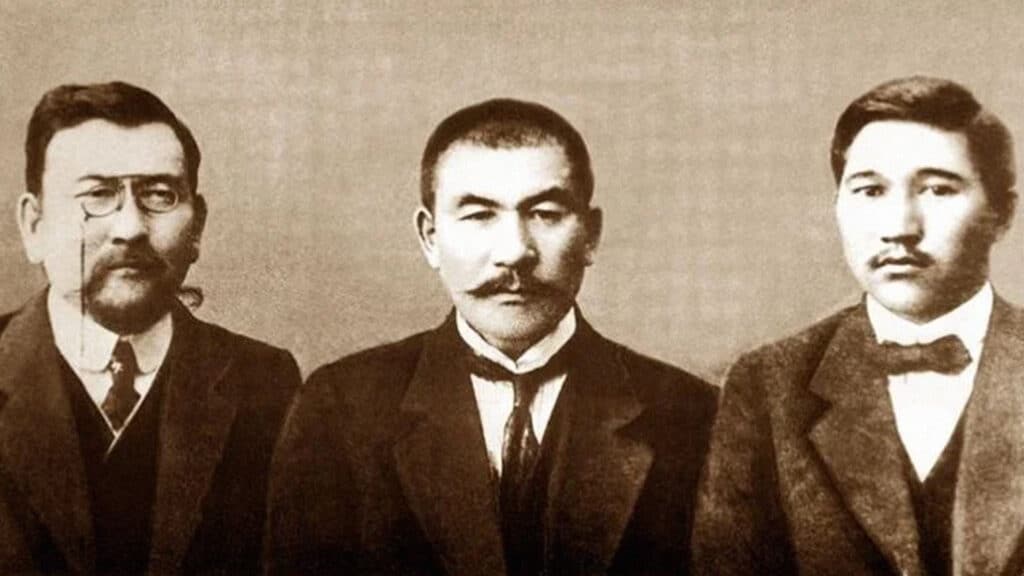
Available sources contain little information about large kurultais held in Kazakhstan during the Soviet period. However, kurultais organized by other nations continued to take place in the Russian Empire and later the Soviet Union. Examples include the Ufa Kurultai of 1905, the First Kurultai of the Crimean Tatar People in 1917 and the Republican Kurultai of Cotton Growers in Uzbekistan in 1944.
These gatherings differed significantly from traditional kurultais in their objectives, composition and format, reflecting the political, social and economic realities of their respective periods.
After independence
After the collapse of the Soviet Union and Kazakhstan’s independence, the concept of the kurultai returned to the country’s sociopolitical discourse. In the early years of independence, one of the government’s priorities was to restore ties with ethnic Kazakhs living abroad and create conditions for their return.
In 1992, the First World Kurultai of Kazakhs was held in Almaty, bringing together representatives of the Kazakh diaspora from various countries. The World Association of Kazakhs was established at the gathering.
Since then, five World Kurultais of Kazakhs have been held: the second in 2002 in Turkestan, the third in 2005, the fourth in 2011 and the fifth in 2017 in Astana.
Since 2019, the format of these gatherings has changed. Under the new concept of the World Association of Kazakhs, priority has been given to holding kurultais in countries with large Kazakh diasporas.
National Kurultai
In recent years, the word «kurultai» has increasingly been associated with the work of the National Kurultai (Ulttyq Quryltai), a consultative and advisory body under the president.
In his March 2022 address to the nation, President Kassym-Jomart Tokayev proposed establishing a National Kurultai as part of the «Listening State» concept. The new body replaced the National Council of Public Trust, which was established in 2019.
The National Kurultai brought together members of parliament, representatives of public organizations, public figures, entrepreneurs and active citizens. Its main purpose was to strengthen public dialogue and interaction between the state and society.
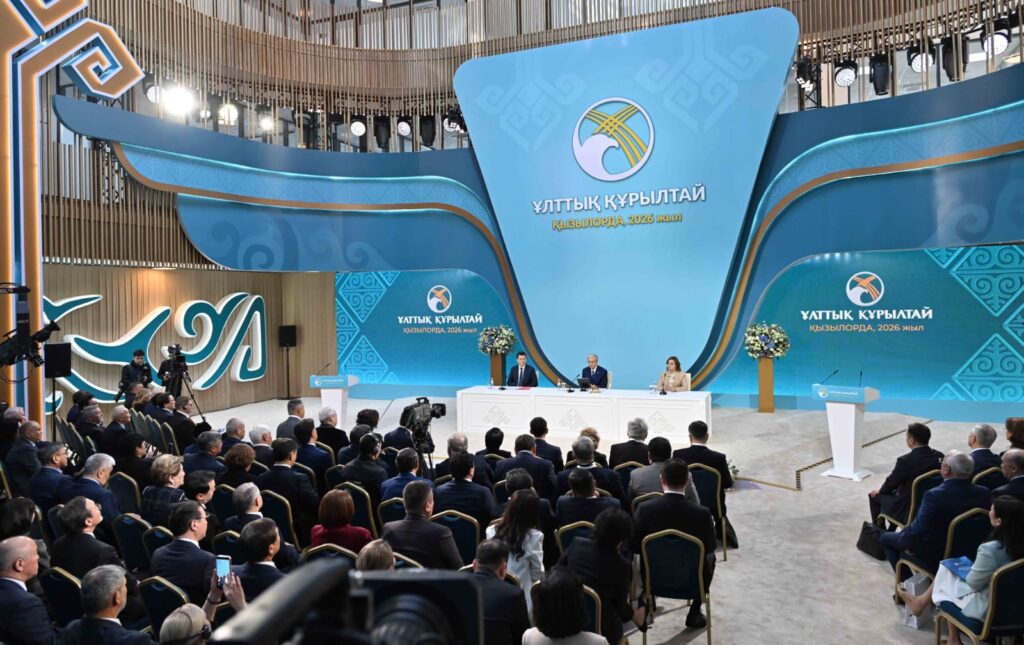
The first meeting of the National Kurultai was held in June 2022 in the Ulytau region, at the Zhoshy Khan historical and cultural complex. The fifth and final meeting took place in Kyzylorda on Jan. 20, 2026.
A new meaning for kurultai
This year, the term «kurultai» is taking on a new political meaning: It will become the name of Kazakhstan’s new unicameral parliament.
Elections for the first convocation of the new legislature are scheduled for Aug. 23.