
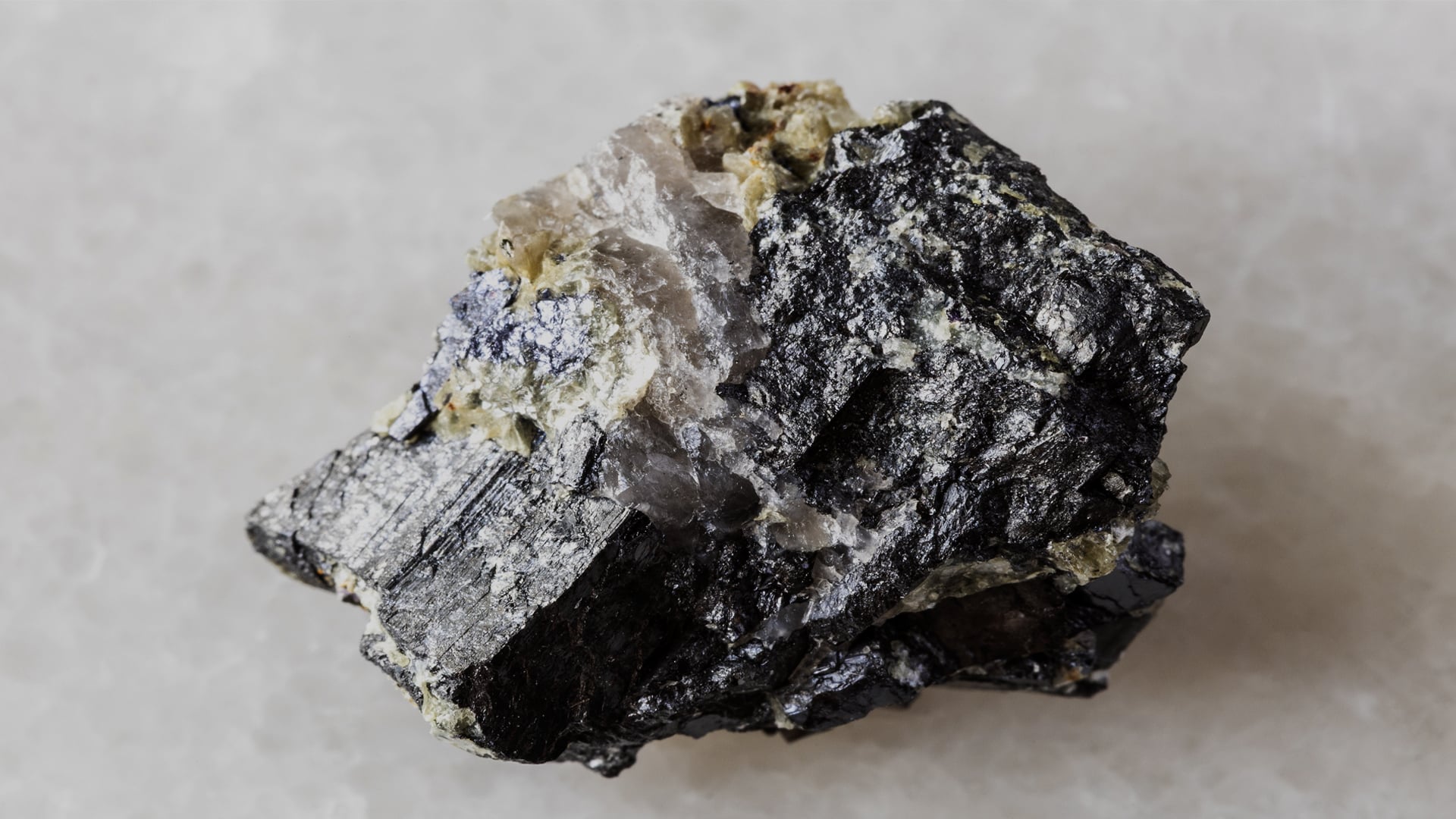
Kazakh company Esil-Mining plans to begin producing approximately 1 million tons of wolframite ore annually at the Aksoran deposit in the Aiyrtau district of North Kazakhstan region by 2028, Qazba.kz reports, citing the company’s Potential Impact Report (PIR) based on an updated mining plan.
The sole owner of Esil-Mining is British company Resources Enterprise Limited.
«The work will be carried out over a period of 16 years, including the mine’s commissioning and closure, of which 13 years will be dedicated to mining operations with a design annual ore production capacity of 1 million tons,» according to the project documentation.
The company considered three mining methods: open-pit, combined and underground mining. Open-pit mining was deemed economically and environmentally unacceptable, while the combined method produced positive results. However, underground mining was considered the most economically attractive option and was ultimately selected.
Mining to begin in 2028
Capital construction and mine development are scheduled to begin at Aksoran in 2027. Tungsten production is expected to start in 2028, when construction of a processing plant is also planned.
The Aksoran deposit is estimated to contain 13.9 million tons of wolframite ore. Tungsten reserves, measured as tungsten trioxide (WO3), are estimated at 61,900 tons, with an average grade of 0.45%. The deposit also contains approximately 3,800 tons of molybdenum.
The deposit lies outside the state forest fund and specially protected natural areas but within the buffer zone of Kokshetau State National Nature Park.
In 2021, Kazakhstan amended its legislation on specially protected natural areas to prohibit exploration and mining in national park buffer zones. The buffer zone around Kokshetau State National Nature Park is 2 kilometers wide.
However, Esil-Mining received its mining license in 2020, before the amendments took effect. As a result, the company will be able to carry out mining operations at the deposit.
Tungsten is classified as a critical mineral by both the U.S. and the European Union. It is used to produce high-strength alloys, cutting tools, welding electrodes and filaments, as well as in military and aerospace applications.
The U.S. has not mined tungsten since 2015, while China is by far the world’s largest producer. As a result, the U.S. and European countries have been seeking opportunities to develop tungsten resources in Kazakhstan and elsewhere to diversify their supply chains.
How does Aksoran compare with other deposits?
In early November 2025, U.S.-based Cove Capital and Kazakhstan’s national mining company Tau-Ken Samruk announced an agreement to jointly develop the Northern Katpar and Upper Kairakty tungsten deposits in the Karaganda region. The deposits are among the world’s largest undeveloped tungsten resources. The agreement was signed on the sidelines of the C5+1 summit in Washington.

Under the initial joint-venture structure, Cove Kaz Capital Group, a Cove Capital affiliate, was to hold a 70% stake, while Tau-Ken Samruk would retain 30%. The projects’ development costs were estimated at approximately $1.1 billion. The U.S. Export-Import Bank expressed interest in providing up to $900 million in financing.
In May 2026, Cove Kaz Capital Group LLC completed the acquisition of a 70% stake in Severny Katpar LLC, a Kazakh mining company previously under the umbrella of Samruk-Kazyna, Kazakhstan’s sovereign wealth fund.
How much is the mine expected to produce?
According to Severny Katpar, mining operations at the Northern Katpar mine are scheduled to begin in 2030, with 300,000 tons of wolframite ore expected to be extracted that year.
Production is projected to increase to 1 million tons in 2031 and 2 million tons in 2032. From 2033 through 2047, annual ore production is planned at 3 million tons, followed by 1.5 million tons in 2048.