Will AI make translators obsolete, or can algorithms capture literature?

In mid-July, renowned Russian writer Boris Akunin announced the release of an English translation of «The Jade Rosary,» or, more precisely, the first part of the substantial collection.
A British publisher had declined to publish the book, saying short story collections do not sell well. Akunin subsequently decided to translate the work himself with the help of artificial intelligence, with the final translation reviewed and verified by the author.
Akunin shared excerpts with English-language writers and translators he knew. He said the writers were impressed by the quality of the translation, while the translators were less enthusiastic.
«Unfortunately, it seems that the profession of the literary translator is destined to become something of a relic,» Akunin wrote on social media.
The post was titled «Steel Cavalry Has Defeated Living Horses.»
How the AI translation was produced
Akunin said the translation process consisted of three stages. First, he instructed the AI to produce a literary and accurate translation from Russian into English. Second, the already translated text was stylized to reflect the writing style of the corresponding author.
Finally, Akunin manually edited and polished the text.
«The first two stages were completed almost instantly (using DeepL and Grok),» Akunin wrote. «Only the third stage required significant time — about an hour a day for two weeks.»
He estimated that a human translator would have needed at least three months to complete the work, followed by editing and proofreading.
Akunin also said six more of his books had been translated and prepared for publication using the same approach.
The rise of the augmented translator
Artificial intelligence is steadily encroaching on the deeply human art of literary translation, raising questions about whether machines can ever replicate the nuanced music of classical prose.
In his recent essay, author Bryan Alistair Charles examines this technological shift and how computer-assisted translation tools are changing the way classic works are brought into English.
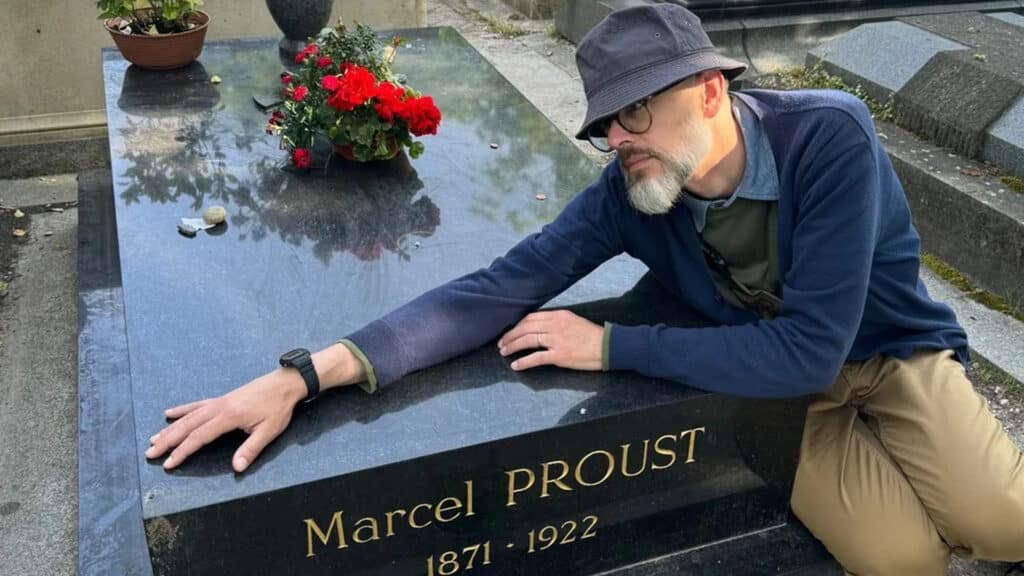
The debate over AI in literature gained momentum after translator Andrew Rothwell revealed his approach to translating Marcel Proust’s fifth volume of «In Search of Lost Time: La Prisonnière,» also known in English as «The Captive.»
According to Charles, Rothwell used a specialized computer-assisted translation platform called Wordscope to streamline his work. The tool allowed him to view the original French alongside C.K. Scott Moncrieff’s influential 1929 translation while also displaying automated draft translations generated by DeepL, Google Translate and ChatGPT.
Rather than relying solely on traditional dictionaries and other conventional tools, Rothwell argued that digital assistance can reduce «cognitive load.» He advocates the concept of the «augmented translator,» treating AI as an intellectual prosthesis that can handle repetitive drafting work while allowing the human translator to focus on higher-level creative decisions.
A brilliant but lazy assistant
The use of AI has drawn significant criticism from the literary translation community, with a 2024 European survey finding broadly negative attitudes toward the technology among translators. Some prominent translators, including Charlotte Mandell, have previously expressed doubts that machines could adequately translate a writer as dense and complex as Proust.
To explore those concerns, Charles interviewed Sam Taylor, the award-winning translator of Proust’s «The Seventy-Five Folios.» Taylor, who uses ChatGPT sparingly as a research tool, compared the technology to working with «a brilliant but lazy child.»
Charles notes that although ChatGPT can accelerate complicated historical and cross-cultural research, Taylor found that it is prone to fabricating information and therefore requires constant human supervision.
The aesthetic limits of AI
At the heart of the debate is whether a machine can capture the soul of a literary work.
Taylor argues that although AI has access to vast amounts of material in numerous languages, it lacks the aesthetic judgment needed to reproduce the distinctive rhythm and «music» of a writer’s voice in another language.
Read also: AI-narrated audiobooks: Can a machine ever truly tell a story?
Still, the rise of AI-assisted translation could ultimately reduce the market for uninspired or overly literal translators. If machines can easily produce stilted, word-for-word translations, publishers may have less reason to pay human translators for routine work.
Paradoxically, Charles suggests, this could elevate the profession by leaving the market primarily to translators who bring a distinctive voice, personality and creative flair to their work.
The choice between speed and contemplation
Ultimately, the advance of AI translation leaves readers with a fundamental choice between speed and slow contemplation.
While technologists push for frictionless productivity, others continue to engage with literature the old-fashioned way — consulting dictionaries, turning paper pages and allowing the act of reading to unfold outside the demands of speed and automation.