
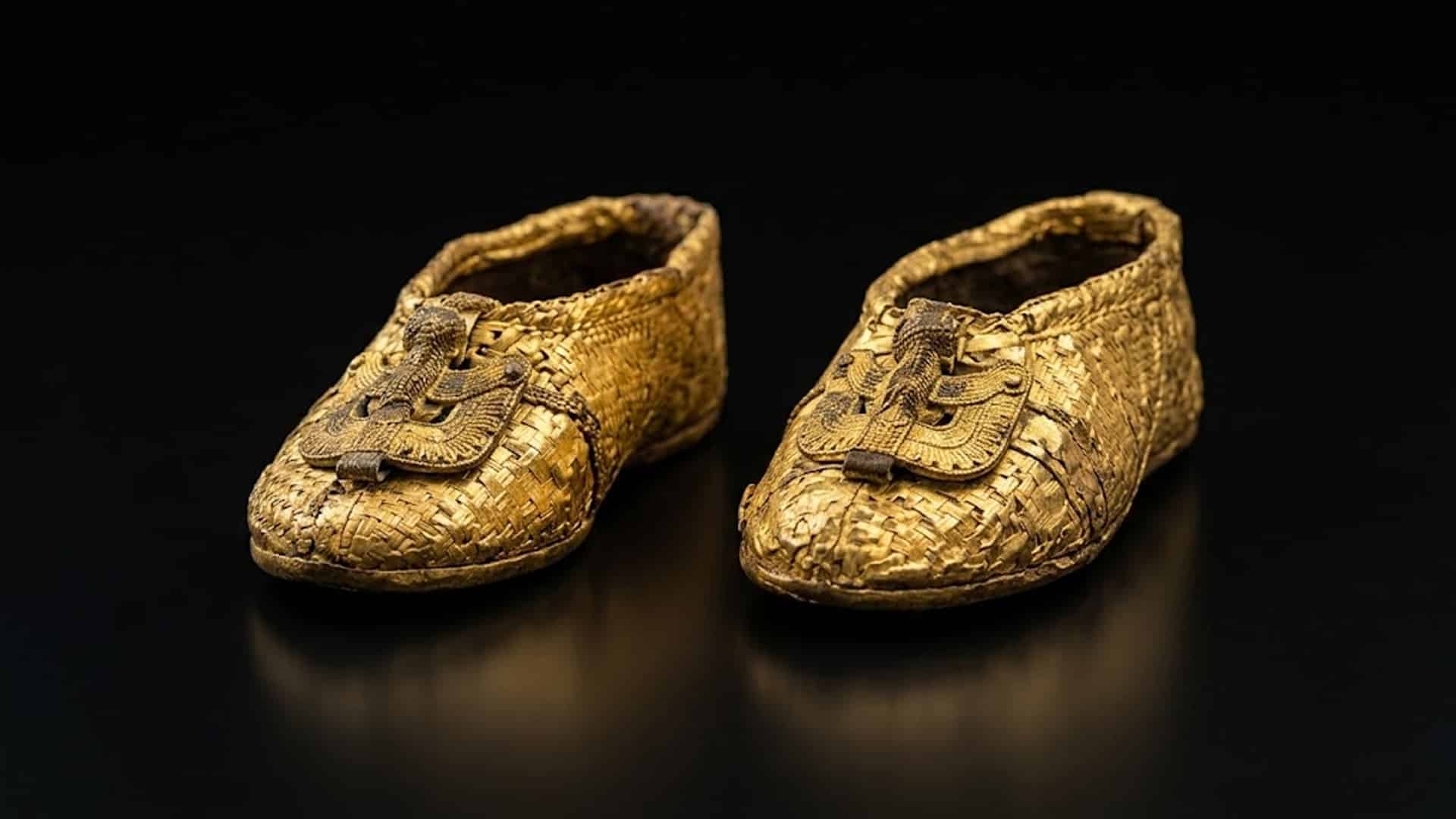
A pair of «golden shoes» dating back approximately 1,500 years has been discovered in the grave of a noblewoman on the shores of the Caspian Sea. The find was made at the Karakabak necropolis on the Mangyshlak Peninsula, near Aktau. Kursiv LifeStyle reports on what archaeologists have learned about this unusual burial.
The shoes featured metal components covered with a thin layer of gold. Ornaments from a belt and headdress were also found in the grave. The gold overlays give the impression that the shoes were made entirely of the precious metal.
Archaeologists determined that the grave belonged to a young woman. She was buried in an unusual ceremonial costume that was apparently intended to emphasize her high social standing.
The woman wore a headdress decorated with round gold plaques and a red fabric diadem. The central plaque on her forehead resembled a gorgoneion — a motif from classical antiquity depicting Medusa’s head. Some of the other gold-plated ornaments are believed to reflect much older Scythian traditions.
The attire, however, was probably not intended for everyday use. The shoe and belt buckles lacked functional fastenings, leading researchers to conclude that they were made specifically for the burial. The ceremonial costume appears to have been designed to present the woman as a person of high status and to emphasize her position in the afterlife.
The burial dates from the second half of the 5th century to the first half of the 6th century. The artifacts belong to the so-called Shipovo horizon, associated with the late Hunnic and post-Hunnic periods. Similar objects have been discovered at the nearby Altynkazgan archaeological site.
Researchers suggest that the gold components may have been produced locally in Karakabak. Evidence of metallurgy, jewelry making, glassmaking and pottery production has been found at the ancient settlement. This suggests that local workshops may have produced luxury goods for the nomadic elite.
According to archaeologists, Karakabak was an important center of craft and trade on the eastern coast of the Caspian Sea. This region served as a trade hub, connecting Central Asia, the North Caucasus, the Volga region, the Southern Urals, and other territories.