Kazakhstani oil refinery targets Russian market

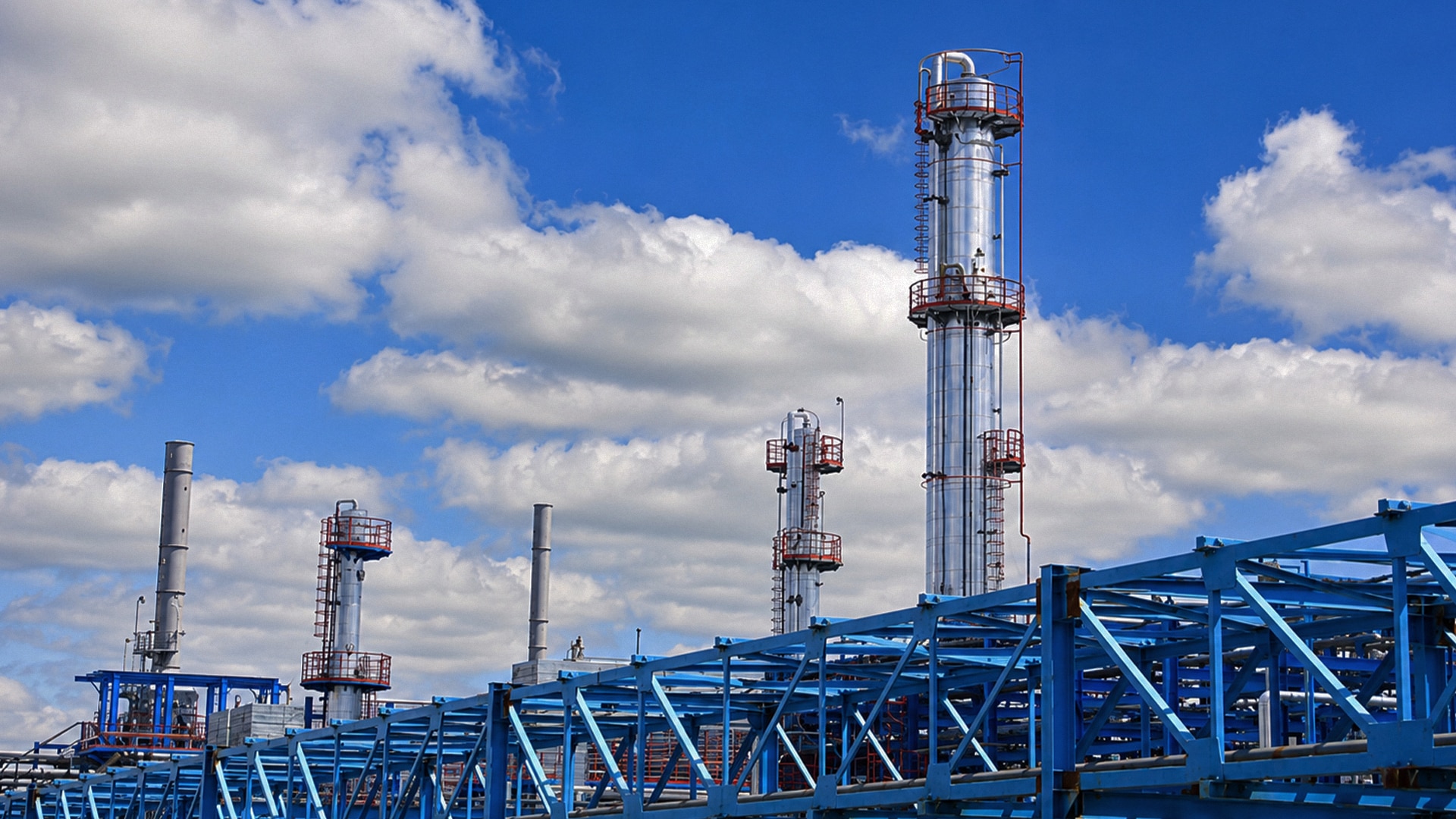
Kazakhstan’s Energy Minister Yerlan Akkenzhenov said that the Condensate Oil Refinery in Aksay, the West Kazakhstan region, plans to export 70% of its gasoline and diesel to Russia. The other 30% will go to the local market. The refinery can also export its products beyond the Eurasian Economic Union (EAEU).
«It will depend on rail capacity. Under the current agreement, up to 30% of the in-demand oil products, such as gasoline and diesel [produced by the Condensate Oil Refinery — Kursiv], will remain in Kazakhstan, while the rest will be shipped to the Russian Federation,» the minister told reporters.
He pointed out that the refinery has no pipeline connections and receives crude oil from Russia by rail. Petroleum products will also be shipped back to Russia by rail, thanks to the facility’s location near the Russian border.
«I believe this is reasonable [to supply 70% of petroleum products from the Condensate Refinery to Russia — Kursiv]… The owner is not included on any sanctions lists, so there is no risk of sanctions,» Akkenzhenov said.
The minister also noted that deliveries of Kazakh gasoline and diesel fuel to Russia from the refinery could begin immediately.
«If the owner wants to start now, that’s fine. There’s no problem. It depends on the railway’s capacity. I know they are still carrying out some reconstruction work at the plant to increase its capacity,» he said, adding that the project will boost investment in the refinery and preserve jobs.
The minister also added that the project will boost investment in the refinery and preserve jobs.
«The former owner of Condensate had a large debt to the Development Bank of Kazakhstan. As far as I know, it was around $100 million. The new owner came in and has practically paid off these debts, which works well for us,» the official said.
In June, Reuters, citing its sources, reported that the Condensate refinery could face feedstock supply problems, including naphtha and gas condensate. The Kazakh refinery receives feedstock from Tatneft’s TANECO refinery in Nizhnekamsk, which completely halted oil refining on June 12 following a drone attack.
Attacks on several Russian refineries have led to gasoline and diesel shortages in the country, prompting Russia to begin importing motor fuel from abroad for the first time in many years. Some media outlets reported that the Russian government had approached Kazakhstan for help in addressing the fuel shortage. However, Akkenzhenov repeatedly said that he had not received an official request.
On Aug. 17, however, Reuters reported that Russia had begun importing gasoline from Belarus and Kazakhstan. The first shipments of gasoline from India by sea were also reported, while fuel supplies from South Korea were under discussion. On Aug. 21, Russian Deputy Prime Minister Alexander Novak confirmed that Russia had begun importing fuel to cover the shortage.