

China has approved the country’s first innovative Class 1 drug developed with the help of artificial intelligence, according to Westlake University. The National Medical Products Administration (NMPA) granted conditional market approval for Mprosevir, an antiviral drug developed for the treatment of mild to moderate COVID-19 in adults.
It took three and a half years from the initial discovery of the drug candidate to the completion of clinical trials.
Mprosevir was jointly developed by Westlake University, Westlake Laboratory and Westlake Pharmaceuticals.
What is a Class 1 drug?
According to Xinhua, the Class 1 designation in China refers to innovative drugs that have not previously been marketed domestically or internationally.
It is the highest category in China’s drug approval system. Key requirements include a completely novel chemical structure, a new mechanism of action and clear clinical value.
Mprosevir also became the world’s first small-molecule innovative drug to receive regulatory approval after being developed using DNA-encoded library (DEL) technology, according to the development team. The milestone came 34 years after the DEL concept was first conceived.
Combining AI with DNA-encoded libraries
In their search for a drug candidate, scientists combined artificial intelligence with DEL technology. AI was used for virtual screening to eliminate false positives and identify compounds with the potential for further development.
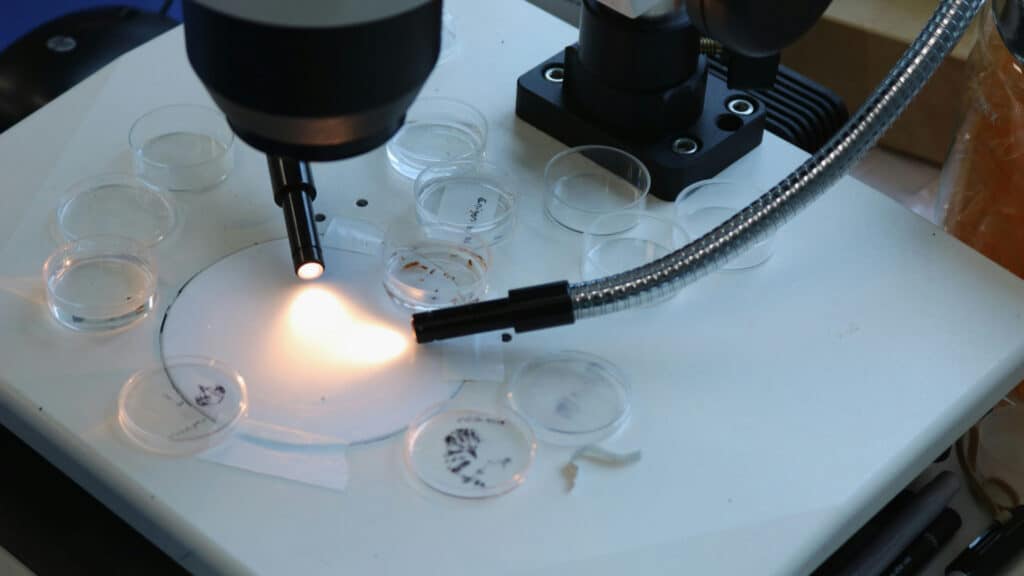
The DEL library used to search for Mprosevir contained 49 billion compounds. During the first stage, the technology identified more than 100 promising candidates.
Using a traditional approach, separately screening more than 100 molecules would have required substantial time and human resources. An AI model narrowed the list to nine candidates in just a few days.
Subsequent testing showed that six of the nine molecules had higher activity, supporting the accuracy of the preliminary AI-based selection.
After assessing toxicity, metabolism and other characteristics, the developers selected the molecule WLU6937 as the lead candidate.
From discovery to clinical trials
Over the next two years, the team conducted comprehensive optimization of the selected molecule. The scientists increased its activity, refined properties needed for use as a drug and reduced its toxicity.
Development progressed from in vitro cell experiments and mouse studies to clinical trials, with artificial intelligence continuing to play a role throughout the process.
According to the development team, the work on Mprosevir demonstrates that artificial intelligence can already be an effective and feasible tool in drug development.