
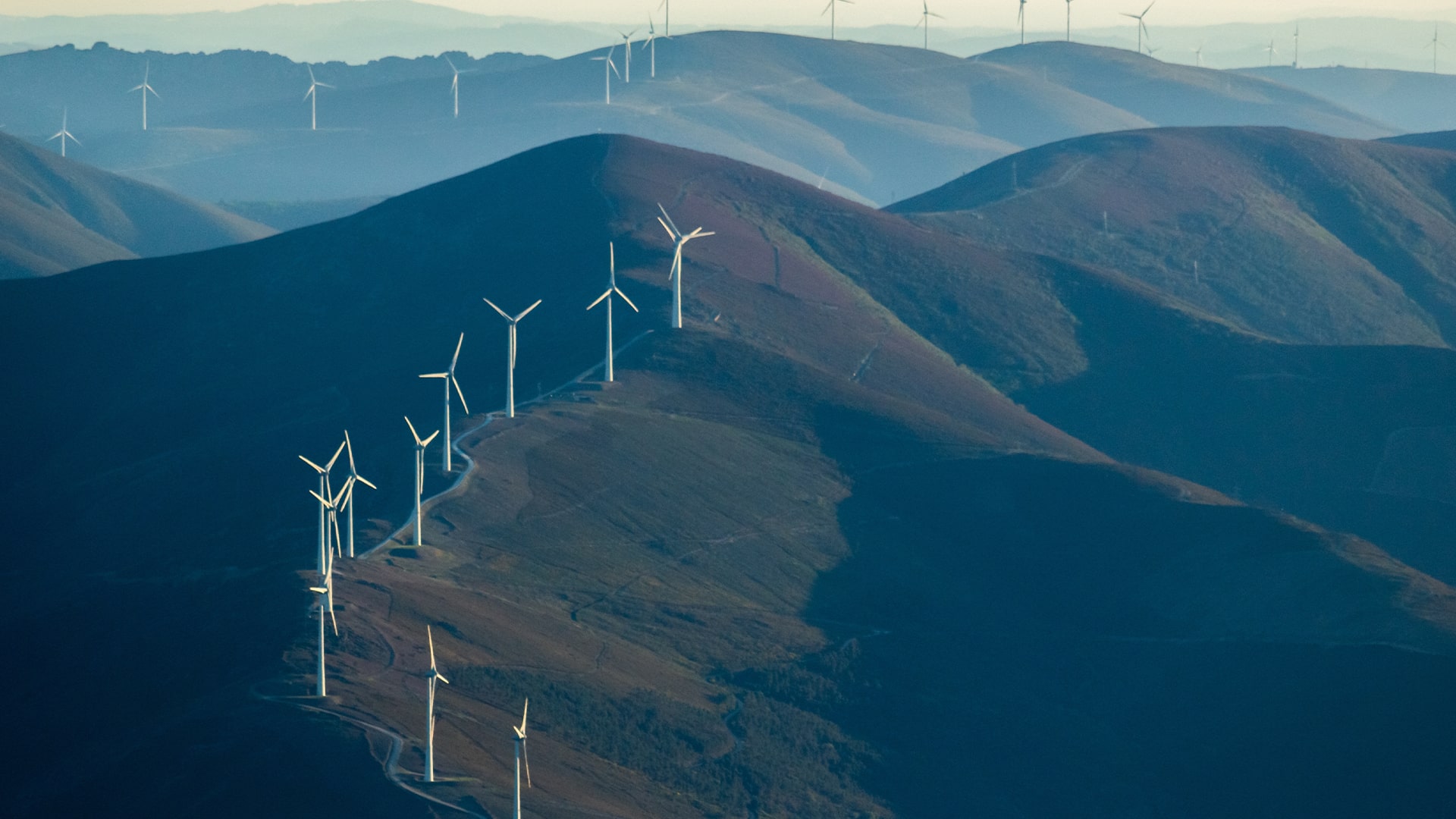
Portugal is exploring whether deep layers of porous rock could store surplus renewable electricity, potentially offering a large-scale alternative to conventional batteries, Euronews reported.
Researchers from NOVA University Lisbon and the University of Lisbon have studied how this technology, known as compressed-air energy storage, could help address one of the main challenges of wind and solar power: Limited capacity to store surplus electricity. Their modeling suggests that under the most favorable theoretical conditions, a single reservoir at a depth of up to 3,000 meters could provide around 1 TWh of storage capacity.
The idea is to use excess wind and solar power when generation is high to compress air and inject it into suitable geological formations hundreds or thousands of meters underground. This could help prevent clean energy from going to waste when electricity production exceeds demand. When electricity is needed, energy companies could release the pressurized air from underground and use it to drive turbines and generate power.
Unlike lithium-ion batteries, compressed-air systems could store large amounts of energy over longer periods, helping improve grid stability.
Kazakhstan is already familiar with a similar principle: using underground geological formations for large-scale storage, though for a different purpose. The country has long used underground natural gas storage to help ensure stable supplies during the winter months. By 2028, Kazakhstan plans to increase the capacity of the Bozoi underground gas storage facility to 4 billion cubic meters.