


Kazakhstan’s tax reform has had only a limited impact on strengthening the state’s revenue base, according to the National Bank of Kazakhstan’s August 2026 Monetary Policy Report.
Budget deficit widens
In the first half of 2026, the overall state budget deficit rose to 3.2% of gross domestic product (GDP), exceeding the 2% target. The increase came despite a reduction in transfers.
At the same time, the non-oil deficit narrowed to 7.1% of GDP, falling below levels recorded in previous years. According to the National Bank, the improvement reflects a structural strengthening of the fiscal position rather than cyclical factors, with the contribution of the cyclical component close to zero.
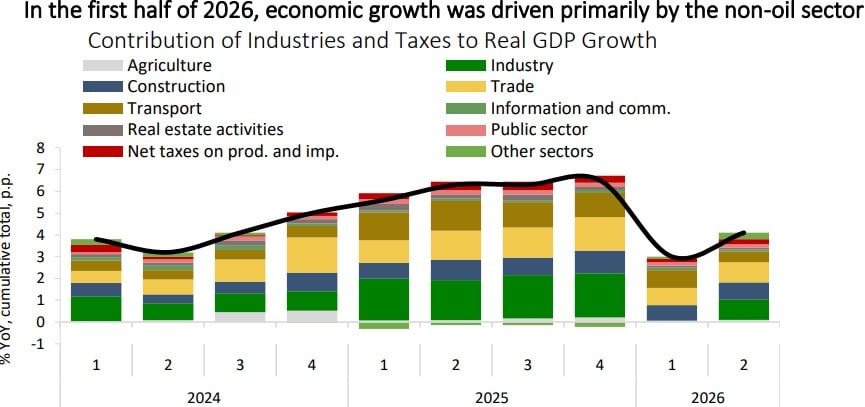
Tax revenues increased 5.7% in real terms during the first six months of 2026. Value-added tax (VAT) and the mineral extraction tax (MET) were the main drivers of the increase, with VAT accounting for the largest share of the growth.
However, the increase remains modest relative to the size of the economy. Tax revenues rose from 17.5% of GDP in the first half of 2025 to just 17.7% in the same period of 2026.
Spending drives fiscal consolidation
Fiscal consolidation is being achieved primarily on the expenditure side. Although nominal government spending increased 11.7% year over year, spending as a share of GDP declined from 24.7% in the first half of 2025 to 23.5% in the first half of 2026.
At the same time, the cost of servicing public debt continues to rise, limiting the government’s ability to finance other expenditures within the framework of fiscal rules.
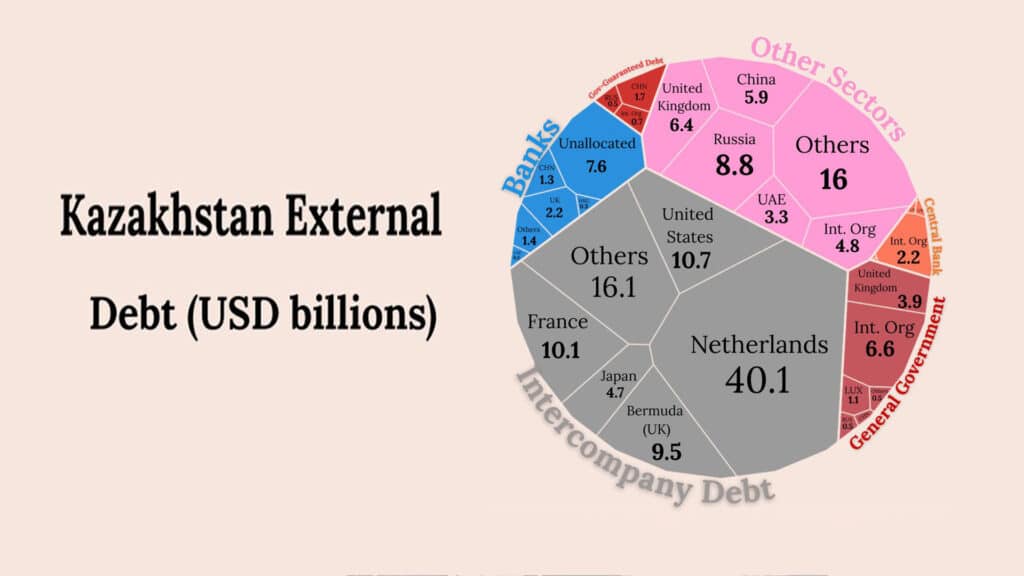
Alongside the reduction in the fiscal impulse, the government is expanding quasi-fiscal financing, which is not reflected in the non-oil deficit. In effect, part of the financial burden is being shifted to the extra-budgetary sector.
«As a result, the continued pressure of government spending on aggregate demand limits the disinflationary effect of fiscal consolidation and may require tighter monetary conditions to achieve the target inflation path,» the National Bank said.
Tax reform shows early signs of consolidation
Kursiv Research previously reported that Kazakhstan’s tax reform had shown the first signs of fiscal consolidation in the first half of 2026: Government spending was growing more slowly than inflation, while the government was avoiding withdrawals from the National Fund beyond planned levels.