From tariffs to AI: What’s on the table for Trump and Xi

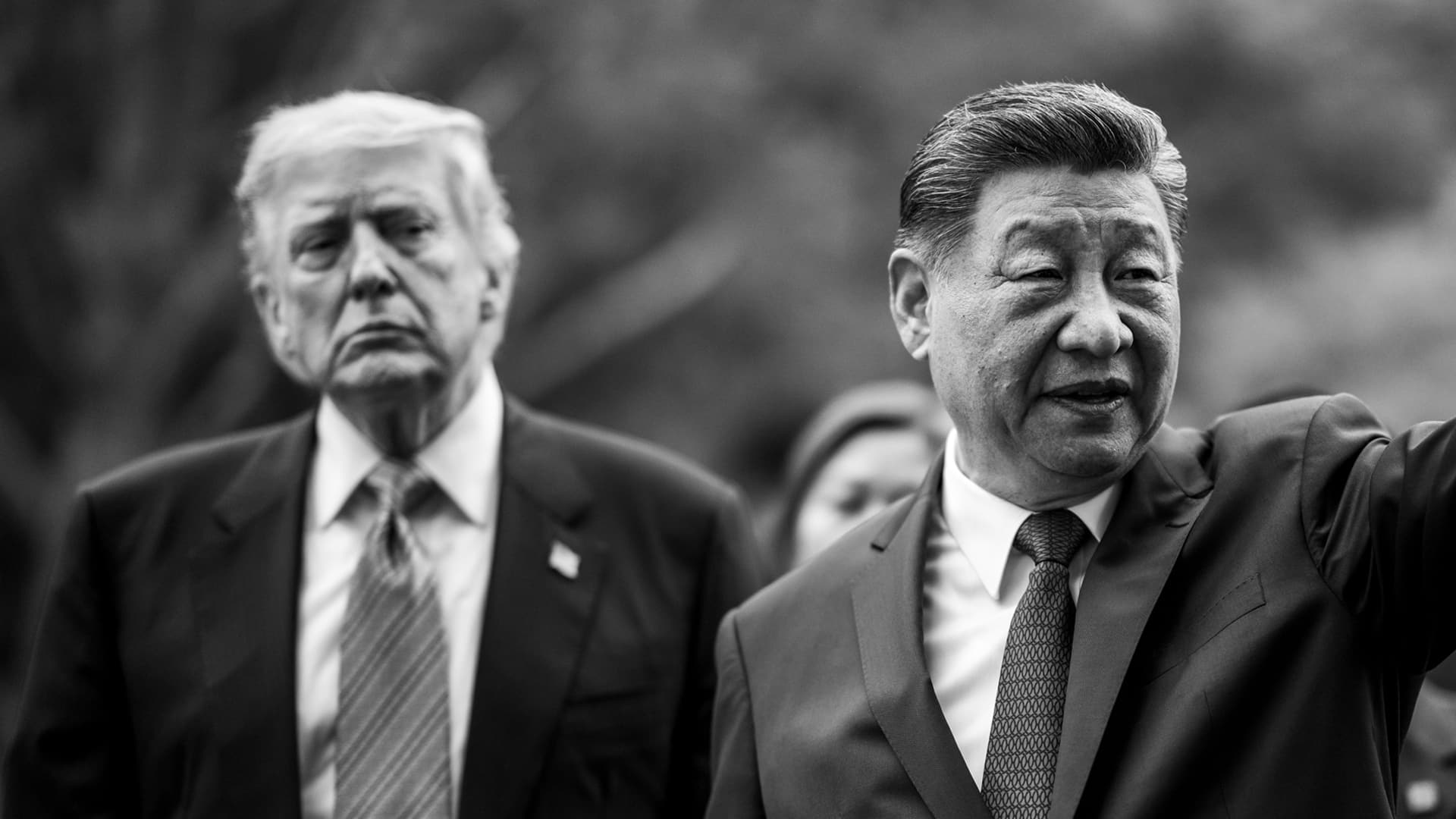
Chinese President Xi Jinping is set to pay a state visit to the U.S. from Sept. 23 to Sept. 25 and hold talks with U.S. President Donald Trump.
Although the Chinese president has not published a signed article or op-ed ahead of the trip — something he has frequently done before state visits to other countries — three issues are likely to feature prominently in the talks: trade, artificial intelligence (AI) and global security.
The state visit will be Xi’s first to Washington, D.C., in more than a decade, following his trip to the U.S. in 2015. Trump, meanwhile, has visited China twice as president: in November 2017 and May 2026.
The U.S. leader and the first lady are expected to greet Xi and his wife, Peng Liyuan, at Joint Base Andrews upon their arrival on Sept. 23. The main ceremonial events and talks are scheduled for the following day.
On Sept. 24, a formal State Arrival Ceremony will unfold across the White House’s South Lawn, State Floor and Rose Garden, involving 479 U.S. military personnel. A state dinner will follow in the evening, while First Lady Melania Trump and Peng are also expected to visit the Smithsonian’s National Museum of Asian Art.
High stakes for the trade truce
Despite the elaborate ceremonies, the two sides face difficult negotiations.
Last year, Trump and Xi met in South Korea and reached an agreement under which China eased export restrictions on rare earths and other critical minerals, suspended some retaliatory tariffs and increased purchases of U.S. agricultural products. The U.S., in turn, modified some tariffs imposed on Chinese imports.
The two sides expanded their economic arrangements during Trump’s visit to China in May. At the time, Beijing committed to additional purchases of U.S. agricultural products and an initial order for 200 Boeing aircraft, while the two countries established bilateral boards to address trade and investment issues.
The leaders are now expected to discuss how long the current trade arrangements should remain in place and whether they can be expanded. Agriculture, aircraft, tariffs, rare earths and other critical minerals are among the issues likely to feature in the talks.
AI emerges as a key issue in US-China talks
AI has emerged as another major subject ahead of the summit, amid a broader international debate over the pace and risks of AI development.
The issue is increasingly intertwined with U.S.-China economic and strategic competition. The two countries are leading centers of AI development, while the U.S. dominates the market for some of the most advanced AI semiconductors and China plays a major role in global supplies and processing of critical minerals needed by the technology industry.
The talks come as some experts, including Anthropic CEO Dario Amodei, have warned about the risks AI could pose to humanity. Against this backdrop, an AI-generated false report claiming that a Chinese vessel was transporting a nuclear bomb in the Middle East was a close call for both countries, highlighting the need to rein in AI to prevent similar incidents in the future.
In other words, any discussion between Trump and Xi could extend beyond technological competition to the broader question of how the world’s two largest powers approach AI development and security.
International relations
The third major track is likely to cover some of the most difficult issues in U.S.-China relations, including Taiwan and the Middle East.
Taiwan is expected to be a major priority for Xi. Beijing opposes U.S. arms sales to the self-governed island, which China claims as its territory, and could press the Trump administration over future weapons supplies.
For Washington, China’s relationship with Iran could also feature in the talks, as Beijing remains an important economic partner for Tehran.
The two leaders may also discuss other international security issues as Washington and Beijing seek to manage their strategic competition while preventing disagreements from further destabilizing bilateral relations.