

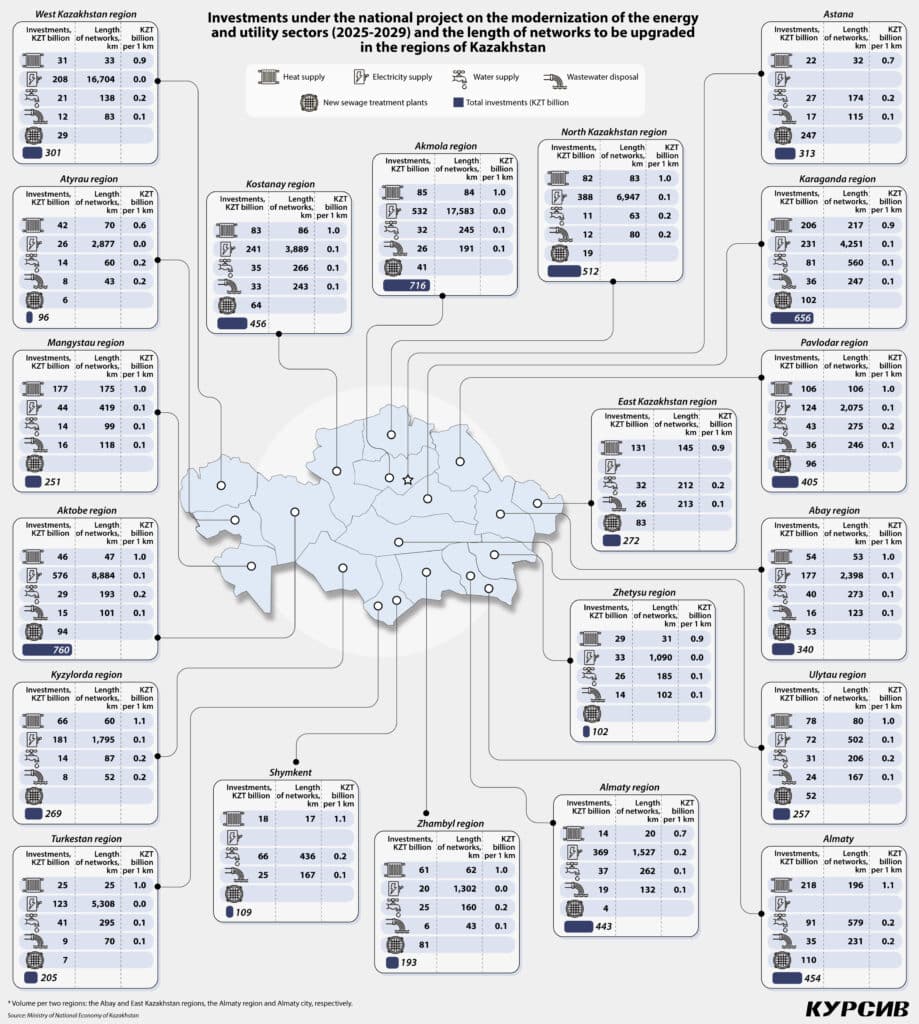
Kazakhstan is set to allocate part of its National Fund to finance major infrastructure projects, including schools, hospitals, roads and energy facilities. EU Reporter examines how the move could shape the country’s future.
How the National Fund works
Kazakhstan’s National Fund accumulates a portion of state revenues from the sale of natural resources and serves two main purposes: a savings function, aimed at preserving national wealth for future generations, and a stabilization function, designed to reduce the budget’s vulnerability to fluctuations in global commodity markets.
As of mid-2026, the fund’s foreign-currency assets stood at $65.5 billion.
Kazakhstan plans to allocate more than $4 billion to major infrastructure projects of national significance in 2027, followed by just over $3 billion annually in 2028 and 2029.
When funds are directed toward long-term social and physical infrastructure, national wealth is not lost but transformed into another form, the article argues.
Since 2024, Kazakhstan has also operated the National Fund for Children program, under which a portion of the fund’s investment income is allocated annually to every child who is a citizen of Kazakhstan. Once they turn 18, beneficiaries can use the accumulated funds for education or housing.
Between February 2024 and Aug. 1, 2026, more than 338,000 young Kazakhstanis received payments totaling approximately $67.8 million. The funds allocated to minors, however, remain part of the National Fund’s assets and continue to be invested until the beneficiaries reach adulthood.
How other countries manage sovereign wealth
Similar approaches are used in countries including Norway, Chile, Kuwait and Azerbaijan. There is no single global model for managing sovereign wealth funds, with countries striking different balances between saving for future generations, fiscal stabilization and using capital to finance development.
Read also: Kazakhstan’s hidden wealth: a closer look at the National Fund portfolio.
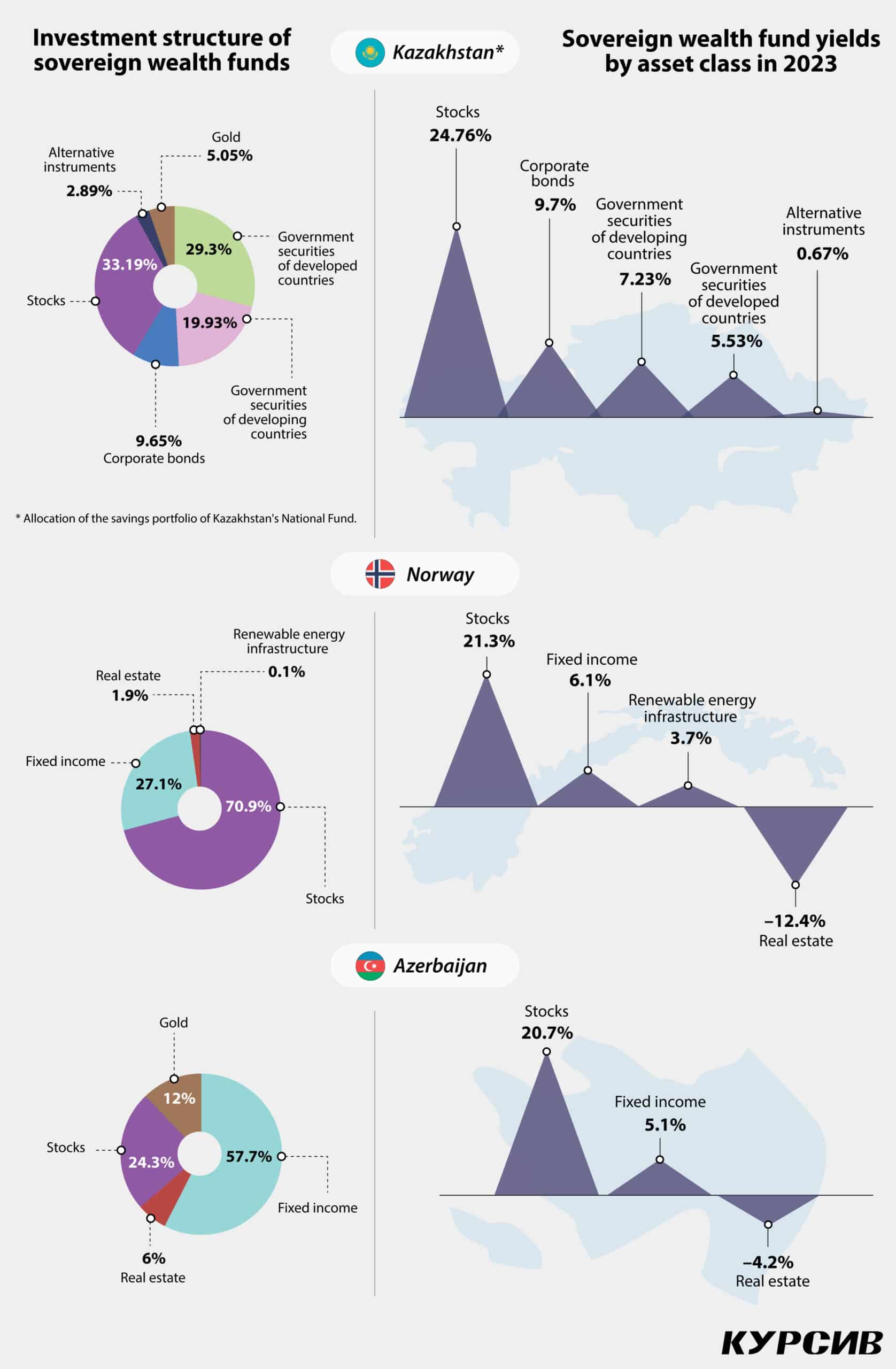
Norway has one of the most structured approaches. Its fiscal rule links withdrawals from the Government Pension Fund Global to the expected long-term real return on the fund.
Chile places greater emphasis on the stabilization function. Its Economic and Social Stabilization Fund has been drawn down repeatedly during periods of economic stress, with withdrawals reaching nearly $9.28 billion in 2009.
Azerbaijan, whose sovereign wealth fund was established largely around revenues from its oil and gas sector, has used resources from the State Oil Fund of Azerbaijan to finance major infrastructure projects, including the Baku-Tbilisi-Kars railway and the Oguz-Gabala-Baku water supply system.
Kazakhstan has used the fund during previous crises
Using National Fund resources to address strategic priorities is not new for Kazakhstan.
During the 2008-2009 global financial crisis, $10 billion was allocated from the fund to stabilize the financial sector and support the real estate market and small businesses.
Another $9 billion was withdrawn between 2015 and 2017. During the COVID-19 pandemic in 2020 and 2021, transfers from the National Fund helped support economic stability and provide assistance to citizens.