NVIDIA Physical AI chief: AI can help Kazakhstani companies cut costs


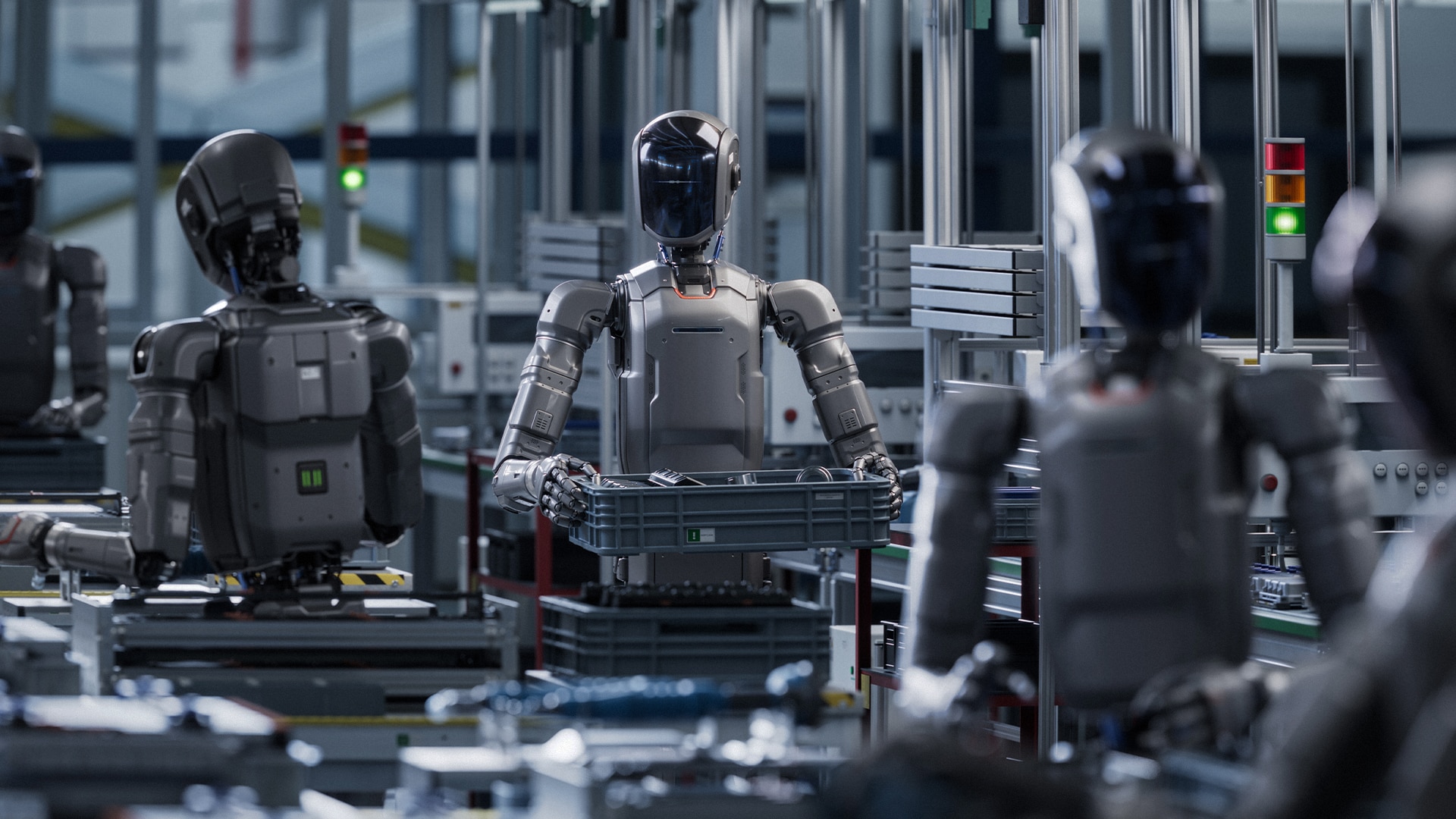
Digital twins can help mining companies reduce waiting time, improve equipment utilization and lower fuel use, while enabling manufacturers to identify costly mistakes while they are still digital, according to Rev Lebaredian, NVIDIA’s vice president of physical AI simulation, who shared his vision with Kursiv.
He cited a scenario typical for Kazakhstan: an open-pit mining company operating dozens of vehicles at a remote site. By using applications built with NVIDIA Omniverse libraries, a company can bring together its site layouts, equipment and operating data in a digital twin.
This model would allow engineers to explore how trucks move between loading and unloading points, where queues form, and how a different route or equipment arrangement might affect the operation.
«For the first year, I would start with one measurable problem,» Lebaredian said.
He explained that a company could build a model of its workflow, check it against what happens at the mine, and use it to compare alternatives. Depending on the data and systems already available, the goal could be to identify and test changes that reduce waiting time, improve equipment utilization or lower fuel use.
Ultimately, the business case is whether those better decisions save enough time, fuel or capital to justify building and maintaining the twin, the expert said.
Fixing mistakes in a digital model is cheaper
Another application of this technology is the design of new industrial facilities. Lebaredian believes companies can achieve cost savings by identifying expensive mistakes early on and avoiding the need to move equipment after installation, deal with a production line that cannot achieve its intended throughput or discover that systems do not work together during commissioning. Finding those problems earlier can reduce rework, delays and disruption.
«The opportunity is to find expensive mistakes while they are still digital,» the NVIDIA representative emphasized.
Using digital twin applications built with NVIDIA Omniverse libraries, engineering teams can connect models of the building, equipment, robots and material flows to study how the facility works as a system before construction.
Lebaredian cited BMW Group as an example. The company can now check production-line collisions through simulation in just three days, compared with almost four weeks of physical testing previously.
AI agents can also help engineers prepare the models, set up simulations and compare alternatives. For instance, an engineer could define a goal, such as increasing output within the available space, and have an agent help explore different configurations.
Engineers can check the results against equipment specifications and physical measurements, refine the model and decide what to build.
Physical AI moves beyond the lab
A key focus area for NVIDIA is «Physical AI» — artificial intelligence capable of interacting with the real world. According to Lebaredian, such systems are already beginning to move beyond research laboratories.
He identifies manufacturing, logistics, the automotive industry and robotics as the most promising sectors. In these fields, AI systems need to understand and operate in complex physical environments.
What makes this possible is the combination of accelerated computing, simulation and world models. Developers can train and test AI systems in virtual environments before deploying them in the real world, where experimentation can be expensive, slow or unsafe.
The next phase will involve scaling these systems reliably — improving how accurately simulation reflects the real world, validating performance and ensuring that what a machine learns virtually transfers effectively to physical operation, Lebaredian noted.
NVIDIA is a major American technology company that develops graphics processing units (GPUs) and computer chips.
Rev Lebaredian is vice president of physical AI simulation at NVIDIA. He leads the development of technologies that enable the creation of virtual models of real-world objects and processes — ranging from industrial facilities and production lines to robots — and the simulation of their behavior in a digital environment using NVIDIA Omniverse.