French, Japanese researchers win Nobel Prize in chemistry

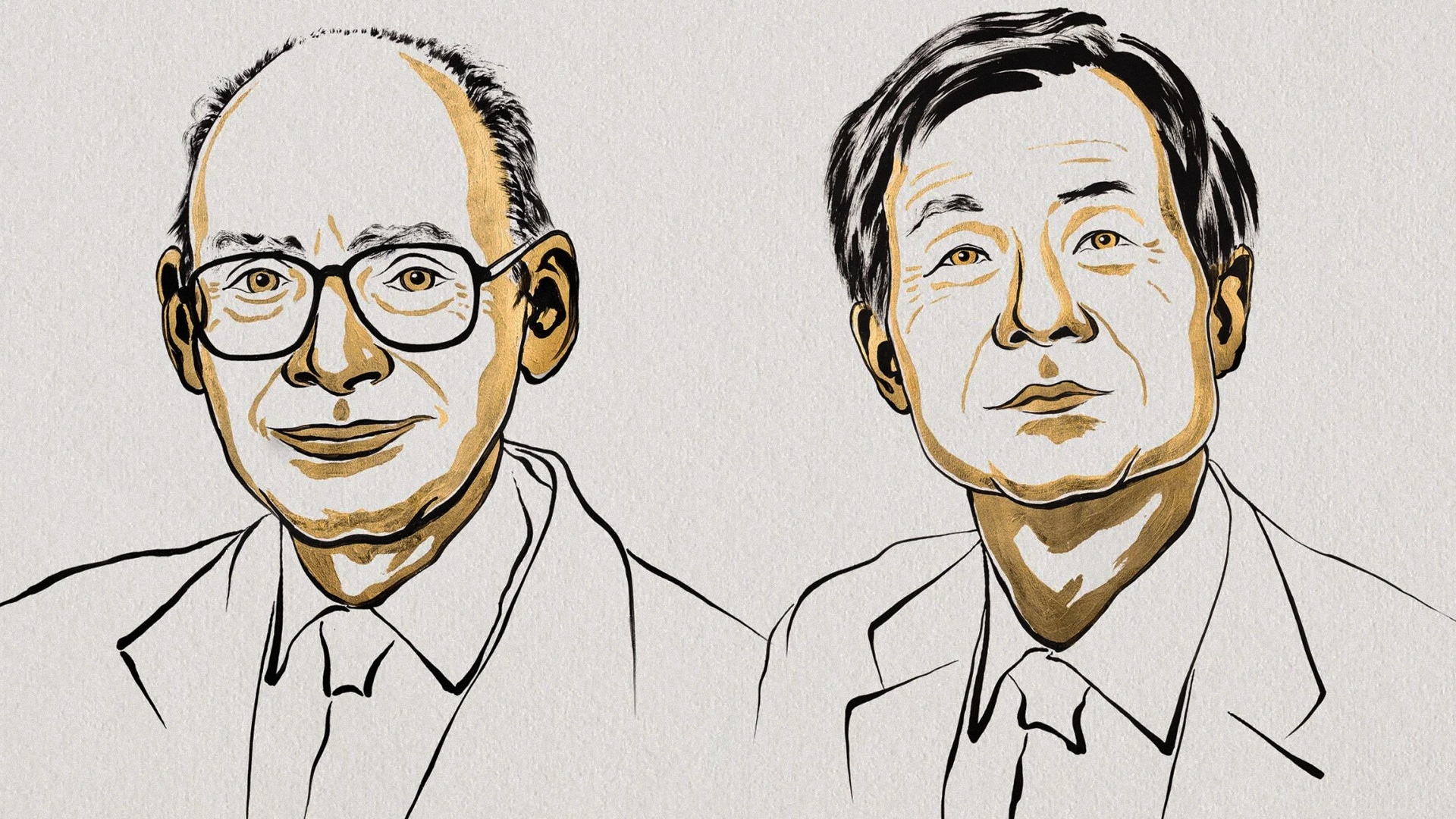
French researcher Henri B. Kagan and Japanese researcher Kenso Soai have been awarded the 2026 Nobel Prize in Chemistry for discoveries that showed how chemical reactions can be steered towards homochirality, a phenomenon with important implications for pharmaceutical manufacturing.
According to the Nobel Prize press release, the researchers were recognized «for the discovery of non-linear effects and autocatalysis in asymmetric organic synthesis.» Their work helped explain how chemical asymmetry can emerge, addressing the scientific question of how homochirality could arise spontaneously. Amino acids, for example, exist in two mirrored variants, while living organisms predominantly use only one of these forms. This peculiarity is important for pharmaceutical development, as the two forms of a molecule can interact differently with living systems.
In 1986, Kagan found a new way to control chemical reactions so that they produced far more of the desired version of a molecule, rather than an equal mixture of its two mirror-image forms. In 1995, Soai described a chemical reaction with the potential to become homochiral, before presenting a successful reaction in 2003 in which one of the two mirrored forms emerged exclusively.
«Henri Kagan and Kenso Soai have provided a solution to a chemical mystery that is over a century old: how homochirality can emerge spontaneously. The chemical reactions they have developed are spectacular,» Heiner Linke, chair of the Nobel Committee for Chemistry, said.
The 2026 Nobel Prize in Chemistry prize pool is 12 million Swedish kronor (about $1.2 million) which will be divided equally among the two researchers.
Earlier, Nobel Prize laureates in medicine and physics were revealed.