


Drone strikes on Yandex data centers in Russia in October disrupted taxi and delivery services in Almaty, giving Kazakh regulators additional grounds to demand that computing operations serving Kazakhstan be moved inside the country, according to an analytical report by Teniz Capital.
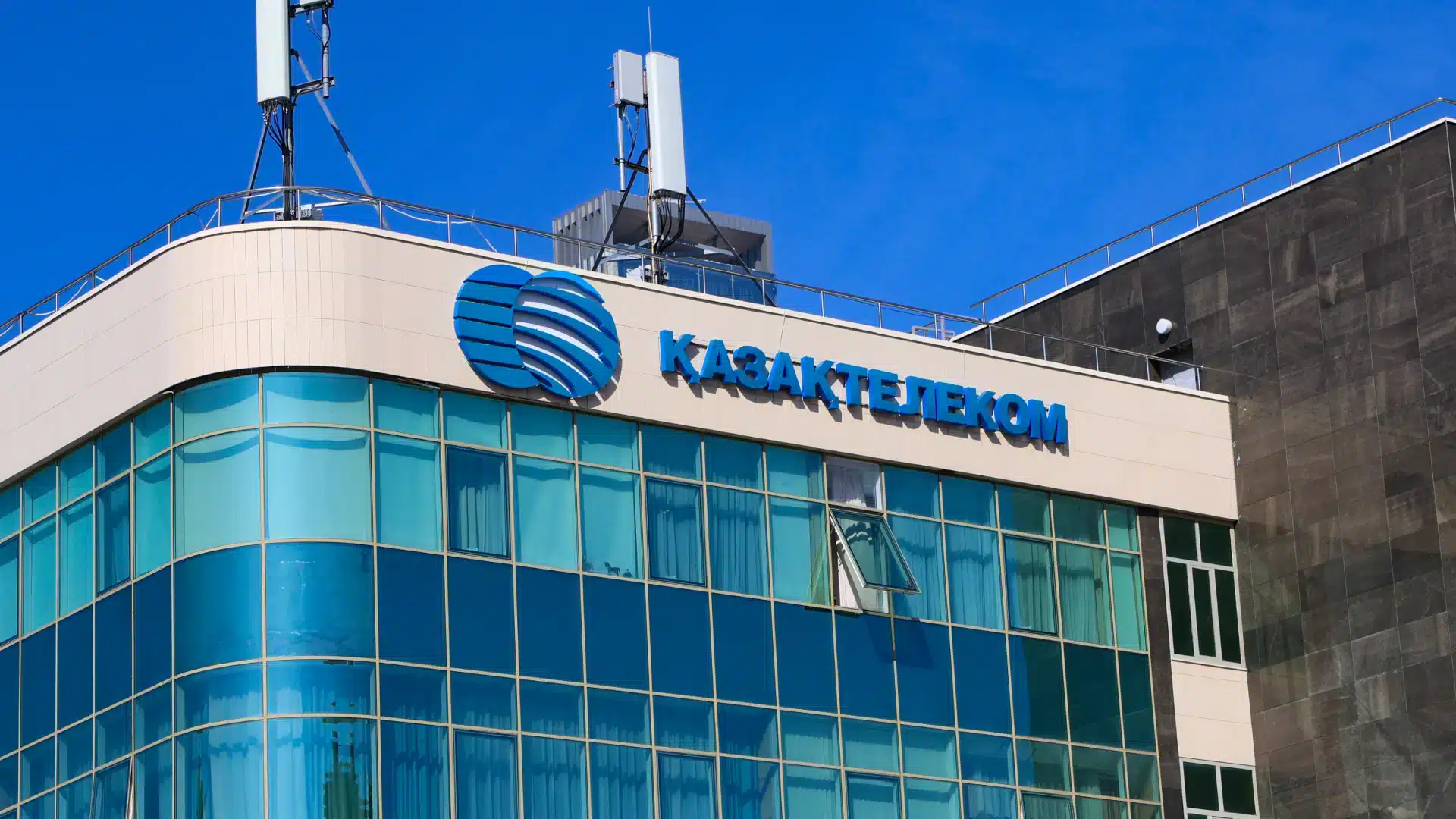
For Kazakhtelecom, Kazakhstan’s largest telecommunications operator, the disruption could create a significant business opportunity. Demand for domestic server capacity is rising, potentially expanding the pool of major international customers as the company prepares to develop new data center facilities.
Read also: 500 Kazakhtelecom staff to be replaced – some by new AI agents.
Yandex outages strengthen the case for localization
A series of drone attacks on Yandex data centers in Russia disrupted the technology company’s infrastructure and affected digital services across the region.
- On Oct. 8, 2026, a drone strike and subsequent fire forced Yandex’s data center in Sasovo, in the Ryazan region, to shut down.
- On Oct. 9, another strike damaged the company’s data center in Kaluga, disabling part of its infrastructure. The facility has a planned capacity of approximately 3,800 server racks, more than twice Kazakhtelecom’s entire current rack capacity, according to Teniz Capital.
- Overnight into Oct. 11, a third Yandex data center, in Vladimir, reportedly came under attack.
- On the morning of Oct. 11, the Yandex Go ride-hailing service and the Yandex Eda and Yandex Lavka delivery apps temporarily stopped working in Almaty.
Kazakhstan’s Ministry of Artificial Intelligence and Digital Development subsequently clarified that personal data belonging to Kazakh citizens was stored on servers inside the country, but that key computing operations were being performed abroad.
«Yandex has not announced plans to relocate its computing operations to Kazakhstan, but the service disruptions have given the regulator grounds to demand that those processes be localized,» Teniz Capital analysts wrote.

Read also: Stability in the steppe: Kazakhstan’s data centers attract global firms.
Meanwhile, Kazakhtelecom is negotiating with more than 20 major prospective customers, while its existing data centers are operating at nearly full capacity.
Limited capacity and a stronger market position
Kazakhtelecom holds a 47% share of Kazakhstan’s commercial data center market, according to the company’s CEO Bagdat Mussin in April 2026.
The operator runs more than 1,700 server racks, with a combined capacity of approximately 25 megawatts. Its facilities are about 95% occupied, leaving little room for additional customers.

With more than 20 major prospective customers in discussions, the company can seek favorable commercial terms for leasing capacity in its upcoming facilities.
Information technology currently accounts for a relatively small share of Kazakhtelecom’s revenue. Consulting firm IKS-Consulting estimates Kazakhstan’s commercial data center market at 25.8 billion tenge ($57 million). In 2024, Kazakhtelecom generated 19.9 billion tenge ($44 million) from IT services, including data centers, cloud computing and business solutions — approximately 4% of its total revenue.
Ekibastuz megaproject: Nvidia chips and $10 billion in agreements
Kazakhtelecom’s most ambitious expansion is the planned Data Center Valley campus in Ekibastuz, a major project involving U.S.-based AI infrastructure company Firebird and chipmaker Nvidia.
Kazakhstan has secured U.S. export authorization for advanced Nvidia computing chips, including the GB300 series, for the project. Teniz Capital says Kazakhstan is the only country in Central Asia, and one of only two in the Commonwealth of Independent States (CIS), alongside Armenia, to have received such authorization.

On June 15, 2026, the Kazakh government, Firebird and Nvidia announced a package of agreements valued at up to $10 billion.
The joint venture KT-Telecom, owned equally by Kazakhtelecom and Samruk-Kazyna Invest, subsequently signed a binding term sheet. On Oct. 2, 2026, the parties signed the principal agreement covering the facility’s design, construction and long-term lease.
Under the arrangement, Kazakhtelecom will provide and operate the supporting infrastructure, including power supply, cooling systems and telecommunications links. Firebird will finance and own the computing equipment.
The campus is planned near the Ekibastuz GRES-1 power plant. The project has been allocated 300 megawatts of power, with potential expansion to 1 gigawatt by 2033. The initial facility is designed to accommodate 100,000 chips.

The first phase is valued at $5 billion, with the Kazakh side contributing $1 billion. The initial rollout is expected to begin in the first half of 2027, followed by further expansion in 2028. However, published figures differ on the planned capacity of each phase: some reports cite 125 megawatts for each, while others give 109 megawatts for the first phase and 136 megawatts for the second.
The project’s planned final capacity of approximately 245 megawatts would be nearly 10 times Kazakhtelecom’s current data center capacity.
Despite the potential scale of the project, Teniz Capital analysts consider Yandex an unlikely major tenant.
«It is unlikely that the Russian company will be allowed into Ekibastuz with American chips and an American tenant; while the license terms have not been disclosed, such a risk appears too great for a state-owned company,» the analysts wrote.

Financial upside and accounting limitations
According to Teniz Capital’s estimates, once both phases reach full capacity, potentially by 2029-2030, the project could generate annual lease revenue of $220 million to $330 million.
Kazakhtelecom’s 50% share would amount to $110 million to $165 million annually. The analysts estimate that the project could generate $95 million to $140 million in earnings before interest, taxes, depreciation and amortization (EBITDA), equivalent to 20%-30% of the group’s current EBITDA.
However, investors should not expect these benefits to flow directly into Kazakhtelecom’s reported revenue and EBITDA, the analysts cautioned.
After selling a 50% stake in KT-Telecom to Samruk-Kazyna Invest in the first half of 2026, Kazakhtelecom accounts for the joint venture using the equity method. As a result, the company’s share of the venture’s net profit is reported as a separate line item rather than being fully consolidated into its revenue and EBITDA.
Moreover, profits could remain close to zero during the initial years of operation. Teniz Capital estimates that annual interest payments of approximately $120 million and depreciation expenses of about $110 million could absorb nearly all the projected rental income.
Power supply, financing and counterparty risks
The analysts identify several risks that could limit the project’s financial returns.
Electricity supply. Continuous operation of a 250-megawatt data center complex would require approximately 2.2 billion kilowatt-hours of electricity annually, potentially exceeding Kazakhstan’s current power grid surplus.
Read also: Regional grid collapse throws Kanye West’s new show into doubt.

Counterparty reliability. Firebird’s operating track record remains limited. According to Teniz Capital, the company currently has one operational facility, a 15-megawatt site in Armenia.
High financing costs. Interest rates of 17%-18% could weigh on the project’s profitability, particularly during its early years, when debt-servicing costs and depreciation are expected to be high.
Limited influence for minority shareholders. The state’s 91.28% stake in Kazakhtelecom could also be a consideration for minority investors assessing the company’s financial flexibility and governance.
Kazakhtelecom’s financial position
In 2025, Kazakhtelecom reported revenue of 568.2 billion tenge and EBITDA of approximately 200 billion tenge.
In the first half of 2026, net profit from continuing operations totaled 6.5 billion tenge ($14 million). The company’s results were affected by high borrowing costs, with interest rates of 17%-18.5%, as well as depreciation expenses.
In April 2026, the Samruk-Kazyna sovereign wealth fund repurchased 10.43% of Kazakhtelecom’s common shares from the market, increasing its ownership to 91.28%.
The company is expected to pursue a secondary public offering (SPO) before 2029.