
AI content copyright hinges on human creative input, Kazakh minister says


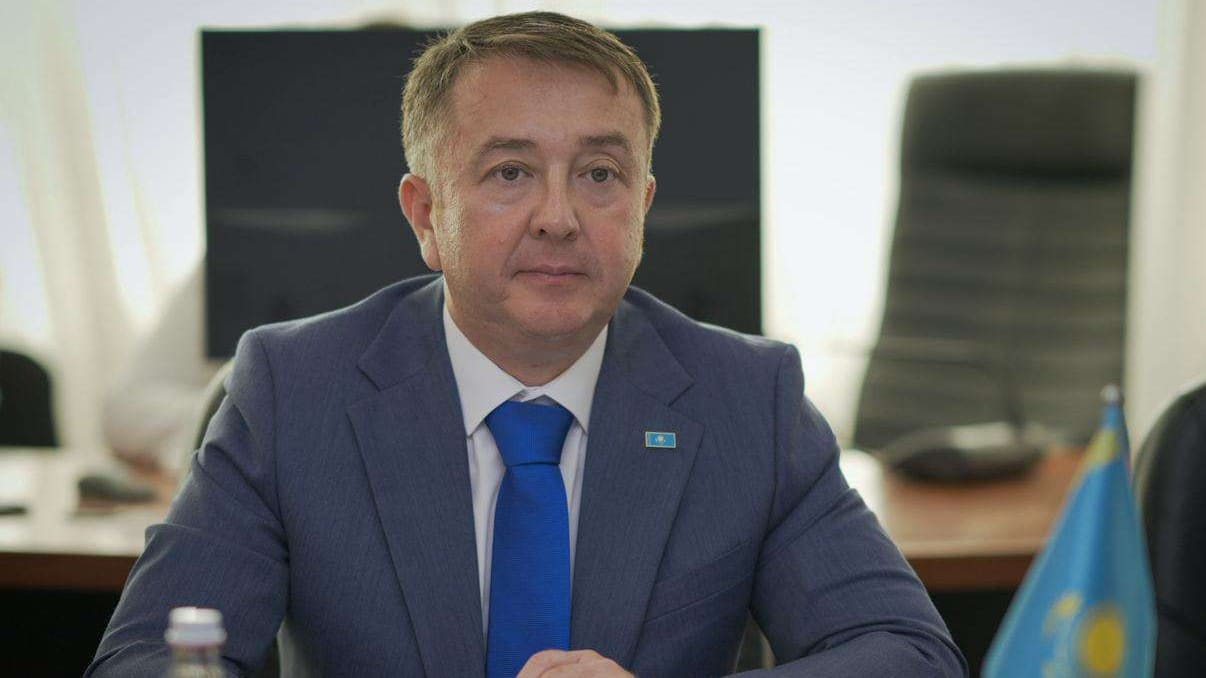
People who develop concepts for products created with the help of artificial intelligence (AI) may hold copyright to the resulting works, provided they make a demonstrable creative contribution, according to Yerlan Sarsembayev, Kazakhstan’s justice minister. Once works — including films, videos, music and other content — are registered on a unified digital platform, their authors become eligible to receive royalties when the works are reproduced.
«Essentially, neural networks are a type of digital tool. In any scenario, the underlying intent, concept and idea originate with a human. The individual makes adjustments, creates sketches and defines specific tasks for the neural network to execute. Consequently, these elements of human involvement allow the individual to claim authorship and seek formal recognition as the creator of a given work,» he said in an interview with Atameken Business Channel.
He clarified that the same principle applies to videos and images generated using neural networks.
«For instance, a person might use AI to process a specific prompt, resulting in an image or a work of art. The individual may then consider themselves the author and submit an application to us, requesting formal recognition as such. Current legislation addresses this by emphasizing that a human’s contribution to the creative process is a prerequisite for authorship,» he explained.
Sarsembayev said the capabilities of AI could not be ignored in the modern world.
«Our position is twofold: first, only a human being can be an author; and second, authorship requires a demonstrable creative contribution from the human creator. Only then can we recognize their authorship,» he said.
In his view, creating such a work involves a distinct process.
«An individual — the author — comes up with an idea. He then refines it, and within the framework of a particular concept, a work takes shape. The author must document and preserve all sketches, drafts and revisions. This ensures that, when registering his copyright, he can prove he made a creative contribution to the work in question,» the minister said.
He added that the ministry would establish methodological requirements specifying the minimum level of human contribution needed for a person to qualify for copyright protection.
Amendments to intellectual property legislation are scheduled for 2027.

Read also: Will AI make translators obsolete, or can algorithms capture literature?
Sarsembayev also noted that Kazakhstan’s new Constitution enshrines the importance of intellectual property for the first time. He said the ministry began a comprehensive review of copyright and related rights in 2025, with the first legislative amendments introduced in November of that year.
The ministry is now focused on ensuring that collective management organizations (CMOs), which administer copyright and related rights, distribute royalties to authors registered on the unified digital platform.
«The unified digital platform was launched this year, and we expect to see the first results as early as this month. Previously, the process involved authors, collective management organizations and users, such as television and radio broadcasters, who were required to pay royalties for reproducing works — whether songs, melodies or other forms of creative output. A CMO collected these payments, and the author subsequently received the remuneration,» he said.
According to Sarsembayev, these relationships are now being moved to a digital system. Authors will register on the platform, which is intended to help protect their rights.
«Collective management organizations will also register on the platform, and some have already joined. All ‘users’ — a term defined by law to include anyone who reproduces a work in a public space, from television and radio broadcasters to cafes, restaurants and train stations — will also be part of the system,» he explained.
Sarsembayev said the platform would allow authors to track the royalties they were owed for the use of their works and plan future creative projects.
«Depending on an author’s popularity and how frequently their work is reproduced in these venues, they will receive a quarterly update on their ranking — for example, whether they are among the top 100 or the top 10. Although the total remuneration may fluctuate depending on usage, authors can be confident that their copyrights are being protected,» he said.
The minister added that the platform would maintain a complete digital record, making it possible to determine authors’ rankings and the amounts owed to them without resorting to litigation or other formal disputes.
The law allows collective management organizations to retain up to 30% of royalties to cover operating expenses, with the remaining 70% going to authors.
«Through a personal account accessible via a mobile app, which we have also developed, each author can see the remuneration they are entitled to receive for a given quarter for a particular song or musical work they have created,» Sarsembayev said.
He noted that the transition was still underway because not all Kazakhstani authors had registered their works on the unified platform.
