
No Future for Standalone Banks. It’s Time for Ecosystems
In just a few years, Freedom Bank has grown from a small financial institution with a deposit portfolio of $126 million to one with deposits exceeding $3.2 billion. Today, it’s not just a bank but the core of a large-scale ecosystem that integrates grocery delivery, ticket purchases, public services, investments and other services. In an interview with Kursiv.media, Aidos Zhumagulov, a member of Freedom Bank’s board, discussed how the company plans to export Kazakhstani fintech solutions to the European and U.S. markets, and why the era of traditional banks is over.

Freedom Bank is one of the holding’s core companies. What role does the bank play within the ecosystem today: is it the core, a platform, or one of the points of attraction?
It’s all of these things. The bank is, first and foremost, an infrastructure builder, a platform architect. For example, there’s IT infrastructure: servers, networks, communication channels and the core banking system (CBS). And then there’s the client infrastructure: uniting millions of users on a single platform. We’re building foundations so that all the holding’s companies can communicate directly with clients. The bank acts as a locomotive that paves the way and creates a gravitational force within the ecosystem.
What is the bank’s strategy for the next three to five years and what priorities are the most crucial now?
Our strategy is divided into two parts: development in Kazakhstan and international expansion. Domestically, we created the SuperApp. All the holding’s companies are hosted on it. We currently have almost 6 million clients. This year we are targeting 8 million and 12 million next year. Essentially, this represents the entire economically active audience in Kazakhstan. Our goal is to achieve maximum critical mass.
Regarding expansion, our priority is the export of technologies and accumulated expertise. We have already done this in Tajikistan. We are expanding into Georgia. We have plans for Europe, Turkey, Pakistan and several other countries. Exporting banking services and technologies is a huge part of our strategy. Our team possesses unique expertise that’s virtually impossible to find in the market, and, of course, it’s important for us to try to scale it globally.
Speaking of strategy, I believe one of the problems in the modern financial world is that many models are built solely around consumption. We wanted to partially change this philosophy. When people receive our Freedom Currency cashback not simply as bonuses or points but as a tool linked to the share value of the company and the ecosystem, a completely different model of engagement emerges. People begin to see themselves not only as consumers of services but also as participants in the growth of the ecosystem. This fosters a more long-term mindset: an interest in investments, savings, an understanding of asset value and financial inclusion. In many ways, this is no longer just a banking model, but a model for shaping a new financial culture.
What key benefits does an ecosystem provide to a bank? Is there a downside, whereby a negative experience with one service impacts the bank?
There is definitely a downside. The boundaries between a financial institution and other services are blurred. The client lives under one brand, with one account. It’s a holistic digital platform of trust, and if there are issues with grocery delivery or ticket purchases, the negative experience is transferred to the entire platform. Therefore, we need to constantly improve quality. Getting into the SuperApp is a major challenge for many of the holding’s companies. We carefully approach issues of unified information security, unified standards, a unified customer experience and other systemic requirements.
However, without an ecosystem, there is no chance in the market. The time of standalone banks is passing. You can see this in the market: no matter what anyone says, without an ecosystem, you’ll ultimately remain a niche or boutique corporate bank. Gravity is created only within the platform. Previously, we were just a digital bank where a client would log into the app once a month simply to repay a loan and spend the other 95% of their time in third-party ecosystems. The SuperApp has created that vital gravity so that clients can build long-term relationships with us.
Our ultimate goal is to become a national-scale techno-industrial platform, a place where clients can solve any problem: from finding a cheap mortgage to getting free medication. We want to develop social products and services related to employment, pensions and social benefits, as well as services for the self-employed. We will soon launch a social card with attractive cashback. I think it’s a misconception to assume that a retiree or a recipient of targeted social assistance should simply use an ATM to withdraw their money. We’re going to create a decent and convenient product.
In Kazakhstan, all banks are commercial. So, the only thing we have to do is explain to retirees what suits their needs best. They can simply pay utility bills, or they can pay them and simultaneously receive discounts, cashback and other benefits. We want to be part of people’s everyday lives.
So, with the ecosystem, your customer acquisition costs are lower, right?
Yes, every service and product has its own math. All in all, changing people’s habits is very difficult and expensive. Convincing a customer to switch banks for a new app, even a cool app, is a tall order.
However, if a customer came to buy groceries at Arbuz or a ticket at Ticketon, it’s much easier. Introducing customers to the ecosystem through non-financial services is dozens of times cheaper. I think, over time, banking products and services should become seamless, closing the loop of a particular transaction and nothing more.
How long does it take to tie a customer to the ecosystem?
Everyone says different things. We believe it takes at least a year to build adoption. Habits take a long time to form, and if you don’t create value for the customer, you’ll quickly lose your customer base. That’s why we’re constantly working on interesting solutions. Our cashback programs aren’t a temporary promotion. This is a long-term strategy. Major partners — Marvin, Meloman and others — are currently joining our loyalty system and are willing to share their margins. We are building a nationwide loyalty platform. Customers always benefit from the combination of our cashback and our partners’ cashback.
What happens when you reach the user ceiling in Kazakhstan? Will you focus on increasing ARPU and LTV?
Digitalization enables explosive growth. In 2025, we have acquired 4 million new customers. Once we reach the entire active market, our main goal will be to increase customer lifetime value (LTV).
We want clients to use our services across the entire ecosystem. To achieve this, we’re creating a Freedom Rating, which will assess clients’ loyalty to the ecosystem. Based on this rating, we will fairly distribute limited, preferential products, such as home-savings mortgages or government programs. Loyal clients within payroll projects will have priority access to them.
Does Freedom try to change Kazakhstani consumers’ behavior from “credit” to “investment”?
Yes. We’ve opened millions of brokerage accounts. Hundreds of thousands of people hold our Freedom Currency. That’s millions of dollars. For the past 20 years, consumer behavior has dominated the market. We’ve begun to break this pattern.
There was an interesting case: Initially, Freedom Currency was automatically deducted when there wasn’t enough money on the card. However, clients asked for the option to disable this feature. They don’t want to accidentally spend Freedom Currency, which could increase in value tomorrow. They want to save. This proves we’re on the right track.
Is there competition for user attention within the ecosystem?
Yes, there is. Every company has its own KPIs, and each wants to be on the main page. But we’ve taken a different approach and given the client a choice. They are the ones who decide what their main page is going to look like.
Furthermore, we’re working on hyper-personalization. We shouldn’t target services solely based on the internal KPIs of our lifestyle services. We analyze the client’s profile and offer what they need: some need groceries, some need tickets and some need car insurance.
And what are your rules for incorporating external partners?
The main criterion is value for the ecosystem and the client. Every day, up to 10,000 people download the app organically. We have traffic and see if an external service (for example, flower delivery) solves a client’s problem. If the answer is yes and the service is technically ready for integration, we’ll be happy to partner with it.
The bank is part of a public company listed on Nasdaq. Does that hinder flexibility? Have there been cases where interesting products weren’t launched due to regulators?
We are the first company from Kazakhstan listed on Nasdaq. This gives our investors tremendous confidence. However, this status also comes with strict regulations. We are constantly audited by local and international auditors and regulators in Europe and the U.S.
Launching products is more difficult for us than for private players. We are required to verify every step. In the long run, however, public companies always win. They are transparent and it’s easier for them to fight information attacks and attract capital.
At the beginning of 2025, the bank was losing money due to the revaluation of its securities, but now it’s profitable. How sustainable is this reversal?
The loss in the first quarter is an accounting factor related to the asset itself. Let me explain how it works. The bank holds government securities. Some of them are in the trading portfolio. Their value depends on whether the base rate rises or falls. If the rate rises, the price of the securities falls. This is a purely accounting, “paper” revaluation.
This isn’t a true operating loss. A loss is only recorded when securities are sold. And we don’t plan to sell them. We understand that the base rate will eventually fall, and then these same securities will show a positive revaluation. We closed the last financial year in the black. Our business model has always been profitable. Freedom Bank is almost six years old, and during that time, our capital has grown from $45 million to $532 million. Our shareholder appears to be the only one who has capitalized the bank by more than $200 million over the past five years, while many other banks primarily pay dividends to their shareholders.
We simply have a different philosophy: the shareholder has decided to share part of its profits and invest in the bank’s growth, rather than take everything in the form of dividends.
Freedom Bank has one of the best non-performing loan rates in the market. What’s the secret?
People, diversification and technology. The corporate portfolio performed excellently in a recent AQR audit. In retail, we focus on secured lending (mortgages, the 7-20-25 national mortgage program) with low transaction costs and high quality.
One of our secrets is automation. We don’t have credit committees or human error. Decisions are made by aggregated mathematical ML models. They objectively evaluate client behavior. Over several years, we’ve received $129 billion worth of loan applications from 6.5 million clients. And we’ve only issued $5 billion in loans. We simply selected the best and most reliable ones.
The bank was the first in the market to offer a 20% deposit rate. Is it difficult to offer such terms?
When we acquired the bank in early 2021, the deposit portfolio was only $126 million. The base rate was around 9%. Currently, our portfolio exceeds $3.2 billion.
Offering 20% deposit rates was possible because the base rate was 18%. If the base rate were to drop to 16%, deposits would also fall to 16%. We follow the market. Our growth over the past five years has never been dependent on temporary rate hikes or marketing promotions.
Will you launch a housing savings mortgage at 5% to 10% on the secondary market?
We’re implementing this program on the primary market in conjunction with BI Group. We don’t receive government subsidies for this program, and the bank doesn’t have any free money. Affordable mortgages are only possible through synergies and compromises with the developer. We’re currently bringing in other construction companies.
This is extremely difficult to do on the secondary market. The seller there is an individual. Without access to low-cost funding or a special mechanism where both seller and buyer are willing to compromise, such a rate on the secondary market is impossible to achieve.
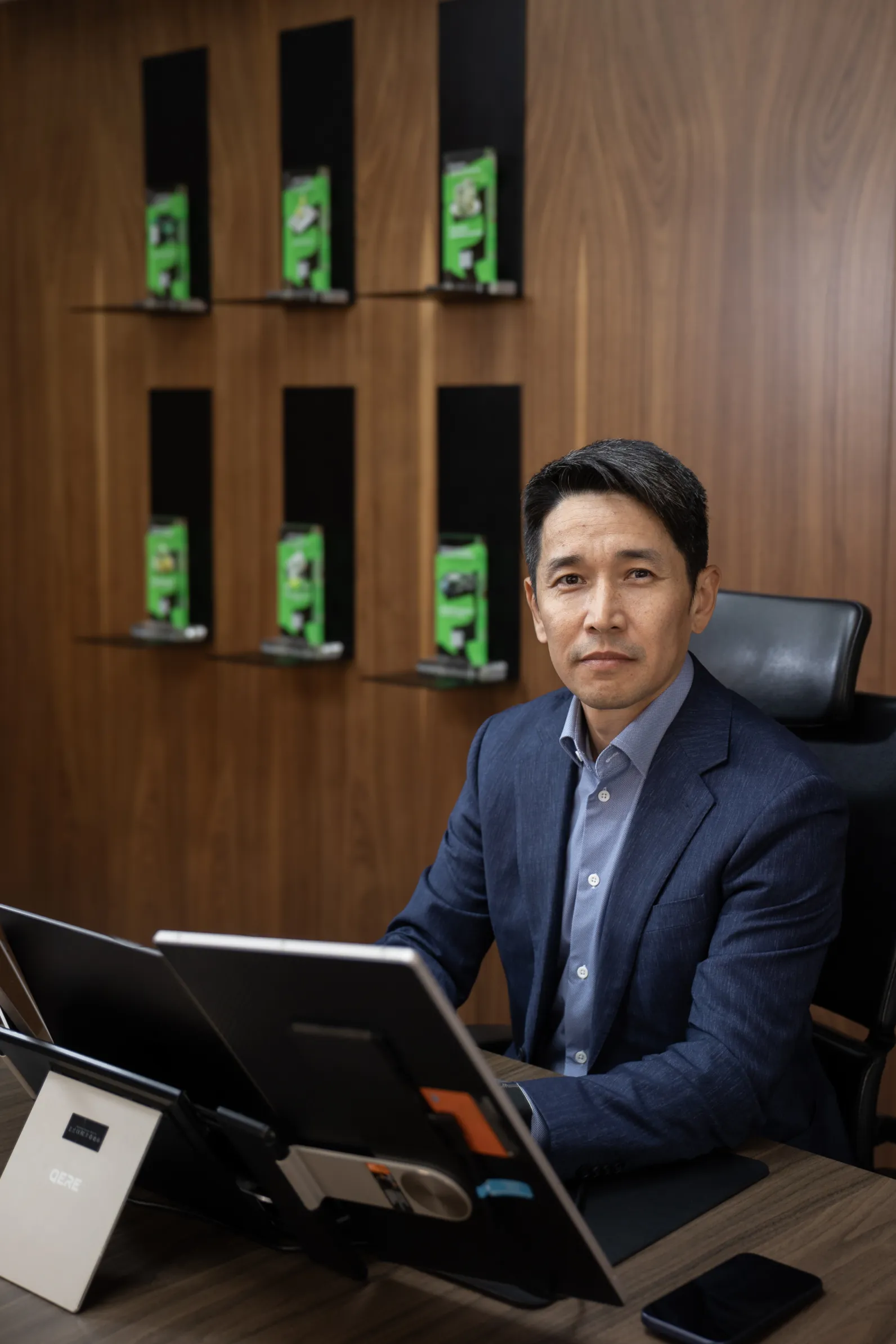
You’re talking about exporting technology, not just banking services. If we compare Kazakhstan, Turkey, Georgia, Pakistan and potentially Europe, which elements of Freedom SuperApp can be transferred virtually unchanged, and which will need to be adapted to local customer habits and regulatory requirements?
That’s right. What we’re talking about is exporting technology, expertise and a proven digital model — not banking services themselves. In Kazakhstan, our success is built on several key components: a digital platform powered by in-house technology, deep integration with government services, and a broad ecosystem that includes banking, brokerage, insurance, lifestyle services, payments and other businesses within the holding. Freedom’s platform, together with these core components, can be exported with relatively little difficulty. Our mobile applications, scoring models, digital onboarding, AI-powered compliance tools, payment infrastructure, loyalty program and SuperApp mechanics can be deployed in almost any market. However, adaptation is required when it comes to government services and local regulatory requirements. To expand into Turkey, Georgia, Europe, or Pakistan, we need entirely different integrations. The same applies to electronic signatures, customer identification and verification (KYC), anti-money laundering (AML) procedures, credit bureaus and real estate registries. In other words, the underlying technology remains the same, while the integration layer is built locally.
In Kazakhstan, the SuperApp relies heavily on integration with government services, digital mortgages and advanced digital identification. In your view, what will an “export” version of the SuperApp look like for Turkey, Georgia, or European markets? Which services will form its core, and how quickly can the Kazakhstani model be replicated abroad?
The core of the SuperApp will be adapted to each market. In Kazakhstan, the foundation consists of payments, government services, digital mortgages, digital auto loans, card products, a loyalty program and the ecosystem effect created by bringing these services together. In every new market — whether Turkey, Georgia, or Europe — we will begin with services that are part of customers’ everyday lives: payments, card products, loyalty programs, international money transfers and credit cards. The next phase will include investments, insurance, travel services, other lifestyle offerings and market-specific solutions.
For example, customers in Georgia have shown strong interest in our loyalty program, which is why we have prioritized the launch of Freedom Currency there. In Europe, regulators have been receptive to neobank models, and we plan to scale our card products across multiple countries through passporting. In Pakistan, we see significant potential in helping customers transition from anonymous wallets and basic payment services to fully identified financial products. As we establish a presence in these markets, we will gradually introduce digital mortgages and other products tailored to local demand. With our platform and processes, we believe we can ultimately reach hundreds of millions of customers.
That said, we do not intend to replicate the Kazakhstani model exactly, because every market is unique. What we can do is launch a digital bank quickly and efficiently almost anywhere. We already have everything required to do that: the team, the expertise, the technology and the resources of the holding.
What exactly will be Freedom’s competitive advantage in Turkey and Europe: pricing, technology, or the unique ecosystem the company has built in Kazakhstan?
We do not expect to compete on price alone in Turkey or Europe. These banking markets are already highly competitive. Our advantage lies in the combination of technology and ecosystem. In Kazakhstan, we have demonstrated that it is possible to bring banking, investments, insurance, payments and everyday services together within a single app. Most competitors excel in only one of these areas. Our goal is to provide customers with a unified digital environment where their core financial needs can be met through a single application. That is why our primary export product is not a bank. It is a digital ecosystem and the technology that enables us to rapidly build modern financial services tailored to the needs of each individual market.
How do you see the future of the banking sector?
We’re entering a period of consolidation. The market will split into ecosystems and individual banks. Platforms will compete with each other and ultimately account for 80% of all clients. The remaining 20% will go to niche banks without ecosystems — they will serve specific, niche needs or local factories. To become a national player, you need a platform.
What revolutionary services is the bank developing for the future?
We digitized Freedom Holding Corp. CEO Timur Turlov’s voice in Russian and Kazakh and trained AI to perform 140 operations within Freedom Business. You can transfer salaries, pay taxes, or issue invoices simply by sending a voice message. Use cases like these are rare worldwide, but we are the first in Kazakhstan. AI will become the main assistant, coordinating clients’ actions across these sprawling super apps.

What is the Freedom Bank team’s competitive advantage?
A unique combination of people and culture. The top management team is assembled not by the number of years its members have spent in traditional banking, but by their skills and willingness to change the market. We have banking IT architects and then there are people who came from marketing, fintech, or the public sector.
However, the most important thing is the culture built by the shareholder. It is based on trust, not fear. When people trust each other, intrigue and competition for resources disappear. A results-oriented culture emerges.
How do you keep strong specialists from leaving for other companies?
I don’t hold anyone back. None of the top managers come to me with ultimatums such as, “I’ve been offered double my salary; pay me or I’ll leave.”
They constantly receive offers from other companies, yet for many, Freedom has become a place they simply don’t want to leave. And those who do leave often find their way back. Once you’ve experienced a culture built on trust and the freedom to create, it’s hard to go back to the rigid structure of a traditional corporation. We give people the opportunity to build a business from scratch and be proud of the results. This is what motivates professionals.
How do you measure your success as a leader?
My main KPI is growing trust within the team. If trust grows, it means we’re doing everything right. Financial performance and client growth will always catch up. If the numbers were growing but trust was falling, I’d start to worry seriously.
In a climate of uncertainty, my main principle is to trust professionals. If I’m not deeply immersed in a topic, I listen to the team. Otherwise, why would I hire the best?
How do you maintain your energy at such a demanding pace?
The main thing is sleep and routine. To clear my head, I’m also learning English. It’s quite difficult because I didn’t start until I was 42, and my brain is no longer as flexible as it used to be. But after a year and a half, I can confidently conduct international meetings. My advice to young people: learn languages before you’re 20; don’t take it easy on yourselves.
If I hadn’t gone into finance, I might have pursued a career in the military or as an investigator. I love logic and deduction. However, I’m glad my life turned out the way it did.
Who are the people behind Freedom Bank today? How is the bank’s team structured, what backgrounds and expertise do they bring, and what, in your opinion, is your team’s key competitive advantage?
There’s a core team. Gulfairus Akhmetova — she rose from the Welcome Desk to senior management. Our CTO Daniyar Tazhedenov is essentially the architect of the bank’s entire infrastructure, including the SuperApp. Saule Almat leads the legal department — without her, we wouldn’t have been able to properly package and scale many of our ideas.
Of course, we’ve been greatly strengthened by employees who came from the market and had never worked in a bank before. For example, Vyacheslav Kim built a career in marketing. Ainur Temirkhankyzy has always worked in fintech. They didn’t previously understand how a traditional bank worked, but it was these talented people who ultimately began to set new standards for the market.
Olga Drychkova and her team built one of the most complex and at the same time powerful card products on the market. Yulia Kim is responsible for processing and built an ATM network where customers now line up to top up their cards. Dulat Saryshev is implementing processes in acquiring that I’m sure the market will soon hear about loud and clear.
Kaisar Imangaliev and Duman Kasymzhanov have learned to open branches and offices as quickly as we issue digital mortgages. Timur Agdavletov expertly manages the bank’s liquidity and helps establish new correspondent relationships. Kanat Sybanov and Assel Kairgalikyzy are developing Priority Banking and VIP Banking.
Our head of compliance, Assel Suleimenova, and her team are building AI-powered compliance tools and creating AI agents. Rakhilya Mirzalimova always knows how to promote the bank in the media space and build its PR strategy. Bakytzhan Karagoishin and Yalkunchan Ganiyev are among the key drivers of the business. Given the opportunity, they are capable of building a strong position in any market. Oleg Smolyakov is helping drive our international expansion, while Yelnur Sailaukul and his team have built a robust risk management system.
We are also very lucky to have our CFO Natalya Melnikova — I’ve known her for many years; she’s a true professional.
And all these people aren’t from another planet or from the largest global corporations like Amazon or Meta. They are professionals who have always worked here and have built something truly exceptional for the market, inspiring us as well.
For people who want to build something, Freedom is a place where they can fully realize their potential.

Read also
Freedom Life chairman on AI, digital insurance and long-term planning
How Freedom Telecom is building telecom operator around financial ecosystem
How Digitalization Saved Freedom Insurance $14 Million in One Year
From Drone Delivery to Healthcare of the Future: How Freedom Is Building Its Lifestyle Ecosystem
When Rapid Growth Is Part of DNA: The Role of M&A in Scaling Freedom Holding Corp.
Lawyers must understand the business – not just the rules.
Compliance Is Not About Control. It's About the Infrastructure of Trust
How risk management works in the Freedom ecosystem
The key role of IT is to help business grow