
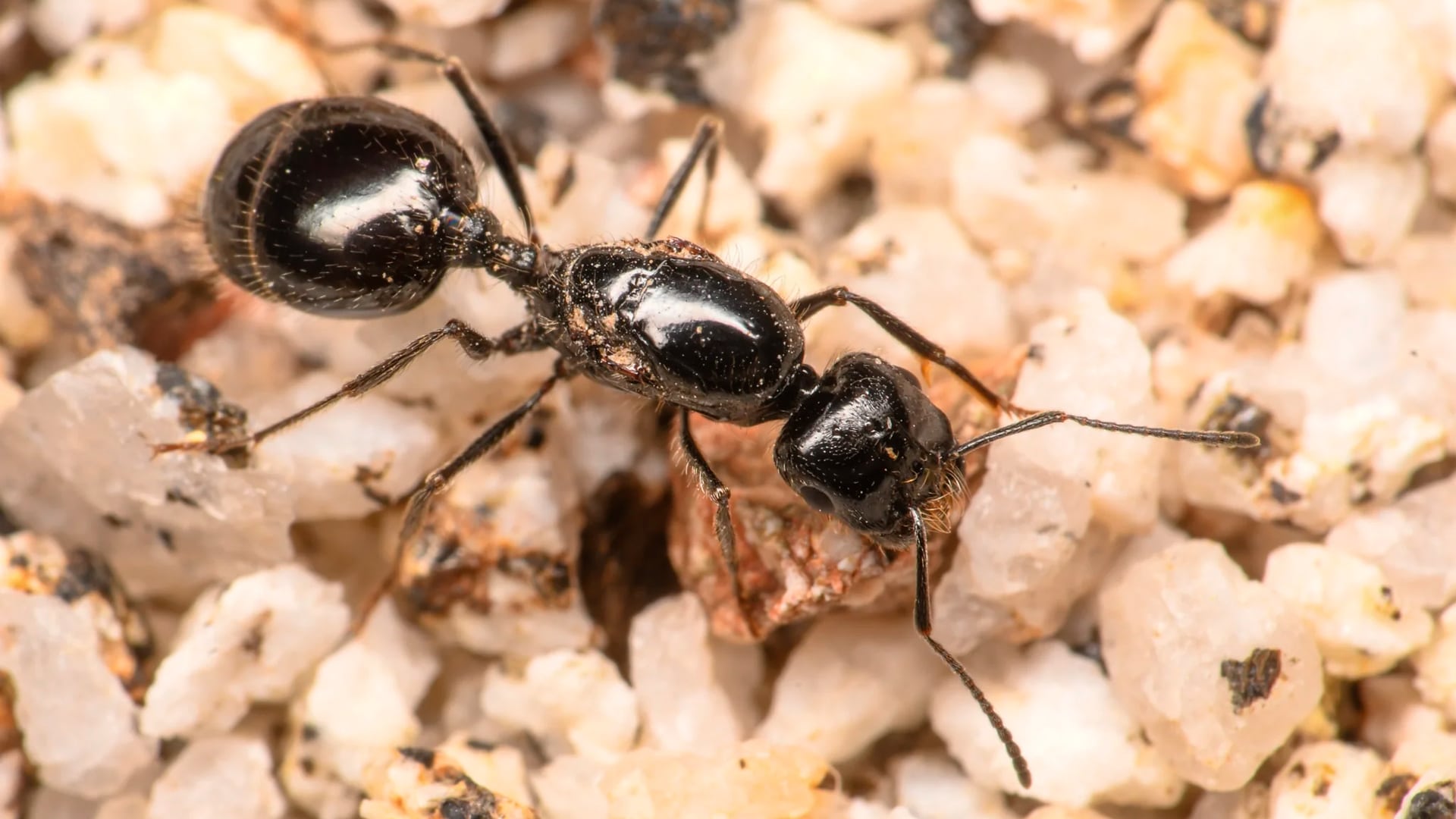
The giant African harvester ant (Messor cephalotes), a species native to East Africa and mentioned in the Bible, has become part of a growing illegal international trade driven by collectors and hobbyists, The Guardian reported.
A single queen can establish a colony that grows to hundreds of thousands of individuals, producing workers and soldiers while continuing to lay eggs throughout her life. These colonies can survive for decades, building large circular nests and storing seeds underground.
As seed collectors, they help spread plant species across grasslands and savannahs. This supports the biodiversity that livestock, wildlife and entire ecosystems depend on. Because of this, they are considered a keystone species, meaning they have a far greater impact on their environment than most other species.
For enthusiasts, however, these ants are simply pets. Collectors, especially in Europe and Asia, keep them in formicariums to observe how they forage and how their colonies grow. This interest has created a separate market in which ants are bought and sold, often illegally.
According to conservationists, taking large numbers of ants from their native habitats can disrupt the ecosystems that rely on them. At the same time, introducing them into new environments may lead to biological invasions. Studies warn that if species like Messor cephalotes become established in other regions, they could harm agriculture and local biodiversity, causing both environmental and economic problems.