

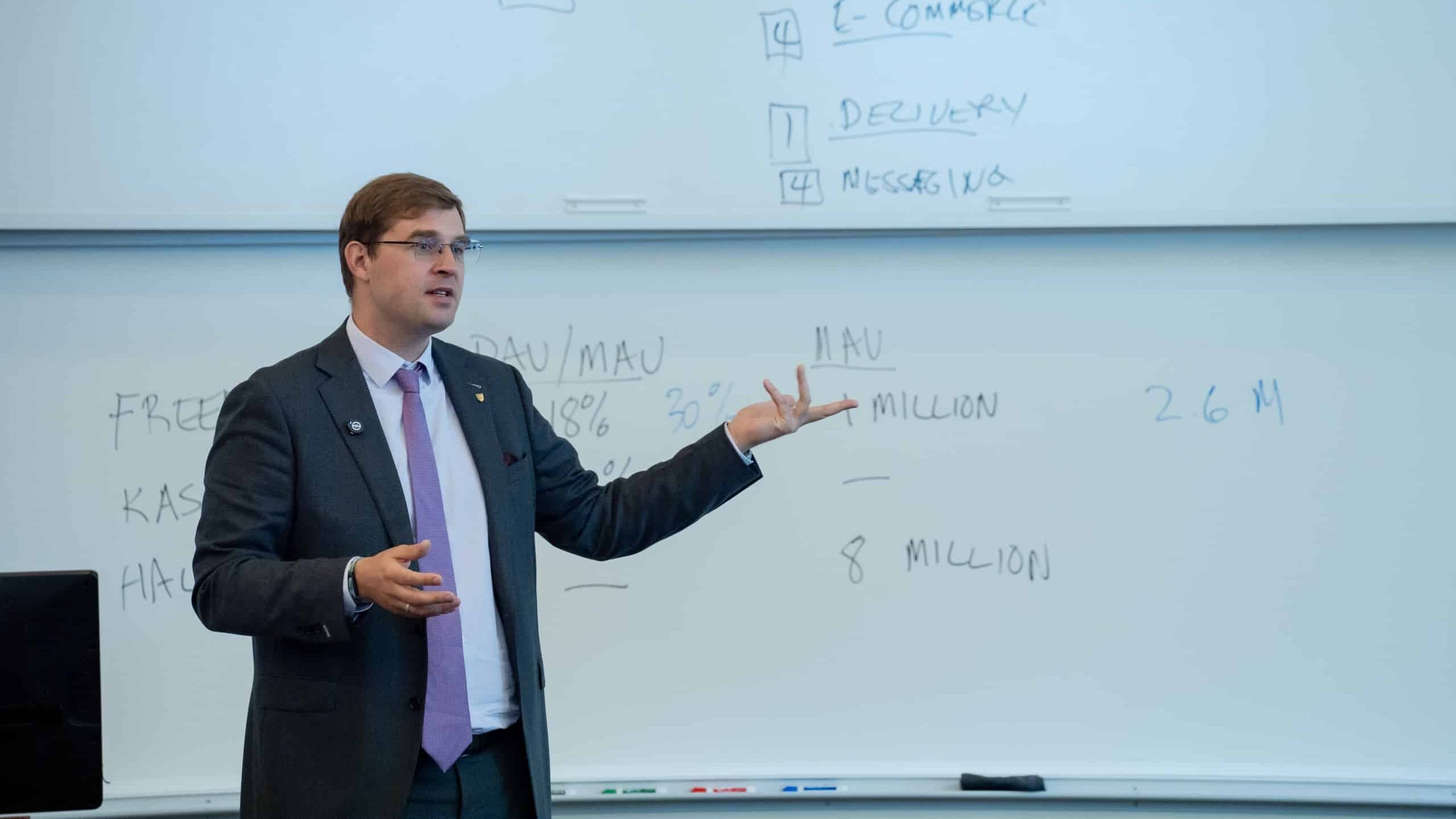
On May 26, Freedom Holding Corp. CEO Timur Turlov addressed MBA students at Stanford University, where the Stanford Graduate School of Business (Stanford GSB) dedicated an academic study to the corporate strategy of a Central Asian company for the first time.
According to Professor Howard Rosen, who broke down the case, Kazakhstan is an excellent example for studying international entrepreneurship thanks to its vast territory and economy.
In turn, the fintech group’s CEO Timur Turlov revealed that Freedom Bank issues online mortgages in just four hours and that the bank became the leader in Kazakhstan in Mastercard payment volume within 18 months.
Silicon Valley talks
A case study discussion among MBA students and Stanford professors sparked an active debate on the phenomenon of product-market fit.
Professor Rosen emphasized that Freedom Holding Corp. attracted his attention primarily as a benchmark for studying product-market fit. He explained that the company’s example allows students to thoroughly examine critical metrics for startups: lifetime value (LTV), customer acquisition cost (CAC) and the daily active users (DAU) to monthly active users (MAU) ratio.
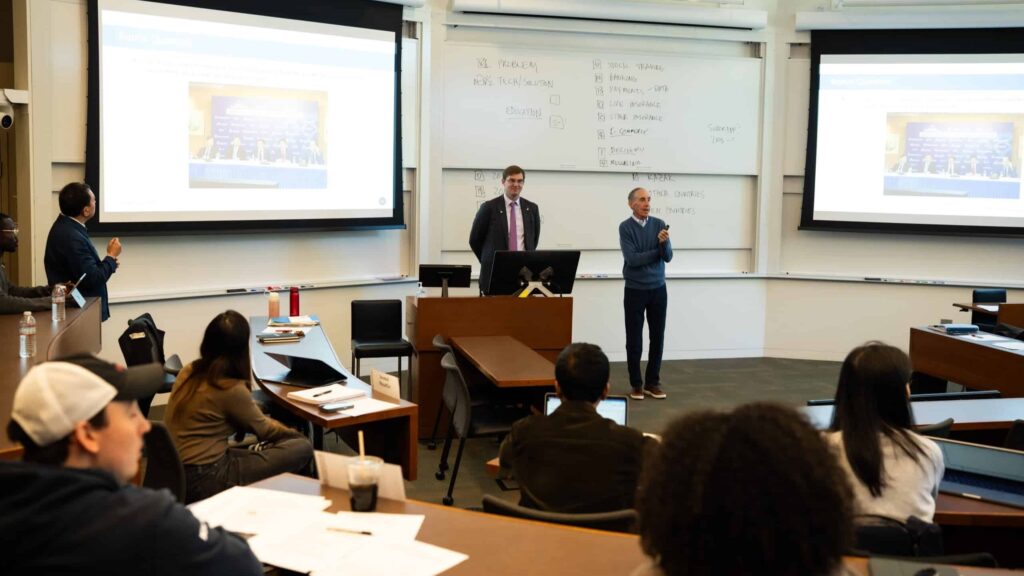
One of the students noted that Freedom Holding had to educate the market from scratch, aggressively promoting new AI-powered trading technologies. During the Q&A session, the holding’s CEO discussed trust, regulation, competition and governance.
«Customers perceive banks as more trustworthy than brokers. Therefore, the bank has become a ‘trust anchor’ for us. It’s easier to trust a debit card balance than a brokerage statement,» Turlov explained, answering students’ questions.
He emphasized that Freedom is a champion in everything permitted by financial regulators.
«If we were conservative, we wouldn’t have achieved anything. We always try to test our limits, even though our innovations cause a great deal of stress for regulators,» the businessman explained.
Global dialogue with the world
According to Turlov, Kazakhstani businesses are now speaking the same language as global innovators, and local success stories are becoming sought-after business cases worldwide.
«I think we’re increasingly beginning to speak the same language as key innovators, including those from Silicon Valley. Established professionals who study at business schools and have achieved significant success in their businesses or management careers are certainly interested in learning about what’s happening not only in the U.S. but also in other parts of the world. And, of course, our success story is already starting to attract attention,» Timur Turlov added.
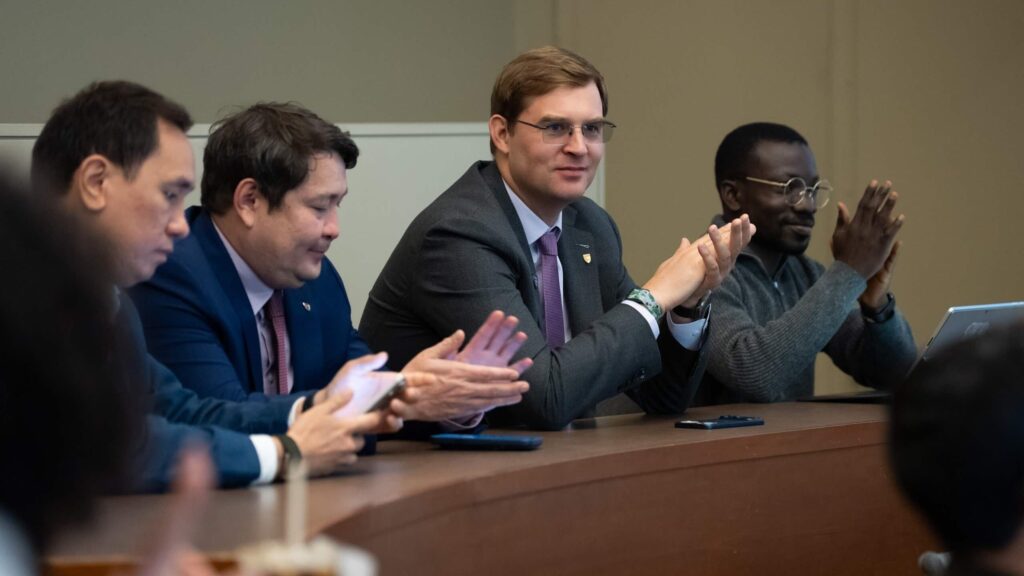
The new reality is that various projects within Freedom Holding survive and grow only because they are part of a unified ecosystem. They wouldn’t survive otherwise.
«We’re not just a holding company that owns everything. We consciously built Freedom as an ecosystem where each company’s presence makes sense. Our SuperApp is a vivid example of why we’re only competitive together, not separately. This is why studying our companies separately is pointless. Neither the bank nor the insurance companies could have survived or achieved significant success on their own. The lifestyle segment is a clear example. Before we consolidated our assets into SuperApp, they were struggling financially. However, this trend reversed after the merger,» Timur Turlov highlighted.
Enormous growth potential and the battle for leadership
Speaking to Stanford students, Freedom Holding Corp. CEO also explained that the company aims to catch up with competitors in monthly active users and become the absolute leader in each of its segments.
«We still have significant room for growth and tests ahead to determine whether we will ultimately succeed. This also applies to our battle for MAU. We currently have 2.7 million users, while our competitors claim to have between 10 million and 12 million. Will we be able to achieve leadership in the segments in which we operate? We’ll see. We have already achieved this in some areas. Thus, we are very strong in brokerage; we’re second or third in insurance, and, I believe, third in banking,» he said.
Digital export as a new economic paradigm
As Timur Turlov explained, the era of exporting raw materials and manufactured goods is becoming a thing of the past. The future lies in the export of high-tech digital solutions with high added value and this is a global race.
«We’re currently expanding into new markets: we’re actively building a product in Tajikistan, obtaining a license in Georgia, very much hoping for quick approval of the acquisition of a small bank in Turkey, and, of course, dreaming of Europe. I’m pretty sure we will have successful technology export cases very soon. The page of industrial development, in the classical sense, needs to be turned. Just as everyone initially competed in the export of raw materials, and then in the export of manufactured goods, now everyone is competing in the export of digital products. The highest added value comes from the creation and use of digital solutions,» Turlov said.
The illusion of a «ready-to-use» solution and the importance of localization
Freedom’s global expansion is based on exporting a digital ecosystem developed in Kazakhstan. However, it’s impossible to simply «install» SuperApp in a new country. The technology requires extensive and expensive adaptation. However, having a ready-made technology stack provides a huge advantage at the start, Timur Turlov said.
«If somebody thinks that you can just bring a ‘box’ with SuperApp, install it, and everything will simply unfold, they are wrong. Any automated system, no matter how good, requires very thorough implementation. Each system implementation costs much more than the system itself. For example, a ‘box’ might cost 500 units, while its implementation costs 5,000. The integration needs to be rebuilt and adapted to different regulatory regimes and reporting requirements,» Turlov emphasized.
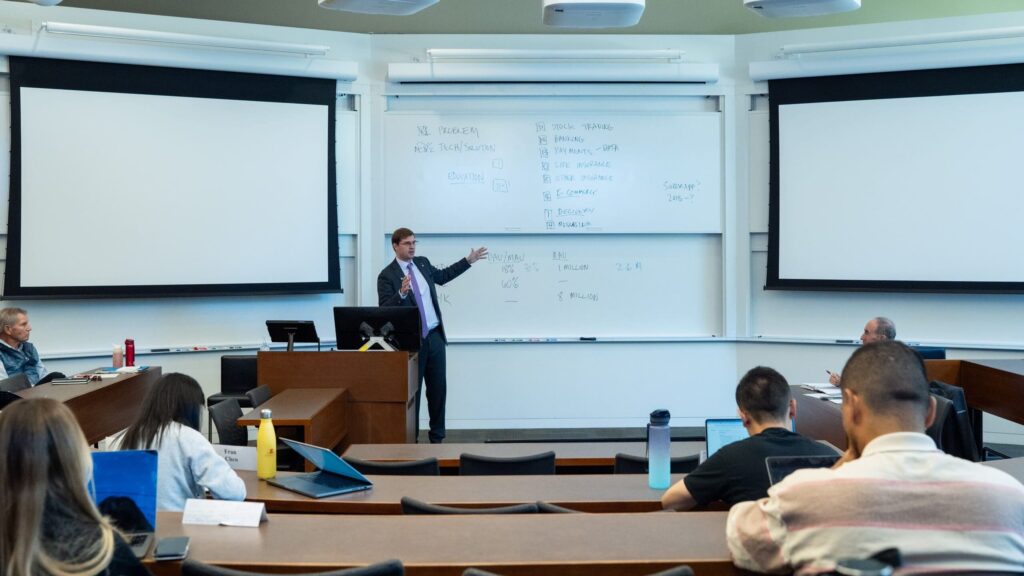
As he noted, the company already has well-established business processes in Kazakhstan, and there’s no fundamental reason why this shouldn’t work in Europe or elsewhere.
«We won’t have to constantly reinvent the wheel. We’ll use ready-made solutions and fine-tune them for each specific market. Technology alone isn’t enough to win, but starting with something is always better than building everything from scratch, which would take years and an enormous investment. Furthermore, with some services, like ticket sales, you need something more than just technology. To export this solution, you have to do the legwork and negotiate with all the cinemas and event organizers,» the Freedom Holding Corp. CEO explained.
Digitalization records: From broker to SuperApp
Presenting the Freedom business case to Stanford students, Timur Turlov emphasized that the key stage of the holding’s evolution was the construction of a sophisticated digital ecosystem. According to him, this was a strategic decision to ensure the business survived in a tough environment. Freedom Bank served as the core of the ecosystem, and in 2025 and 2026, it outperformed the global market in service speed.
For example, the digital mortgage issuance process takes 4 hours and 34 minutes, with the bank’s market share in Kazakhstan reaching 58%. Car loans are issued in 53 minutes, with a market share of 41.3%. Car insurance issuance takes 15 seconds, and insurance claim payments are processed in 15 minutes.
When SuperApp was first introduced in 2024, combining finance and lifestyle services, it reported a 51% surge in its active user base within the first month. The integration of services increased customer retention in the ticketing category from 5% to 25%. Currently, 46% of internal payments in lifestyle services are processed through Freedom’s banking infrastructure. In just 18 months, Freedom Bank has become the third-largest bank in the country by Visa payment volume and the largest by Mastercard payment volume.
Professor Rosen also pointed to the transformation of a company that began as a highly specialized stock trading service and eventually grew into a large-scale ecosystem and superapp.
He compared the Freedom case to his previous research on agricultural drones in Africa and China, emphasizing that Timur Turlov’s example is a good case study for students to learn how to identify unique niches and opportunities in existing markets.
Rosen also revealed that MBA students were particularly impressed by the company’s fintech segment, specifically the development of payment systems and traditional banking tools within the digital platform.
FRHC proves the possibility of creating global fintech in Almaty
Stanford GSB, one of the world’s leading business schools, prepared an official case study describing the development of Freedom Holding. Experts analyzed the project’s transition from a local brokerage in Central Asia to a full listing on Nasdaq in the U.S.
Turlov, who began his career in finance at 15 and founded the company at 21 (in 2008), emphasized that recognition from Stanford proves the feasibility of creating a breakthrough fintech ecosystem headquartered in Almaty, not in New York or London. In the early stages of its development, amid a lack of infrastructure, the holding made a long-term commitment to financial education through the Freedom Academy project and the launch of Tradernet, its own trading platform. As a result, between 2011 and 2022, the number of accounts on the KASE exchange grew from 4,000 to 618,000, largely due to the group’s efforts.
«It’s not where you start — the problem or the technology — but where you end up,» Professor Rosen concluded, pointing out that Freedom Holding Corp. successfully navigated a path of iteration and exploration, achieving the level of product-market fit that is now studied in Silicon Valley.
The Freedom Holding Corp. case study was published at Stanford in June 2025. The case covered strategy, business model and management decisions, as well as listing on Nasdaq, launching IT products, internal transformation and creating a corporate ecosystem.
Freedom Holding Corp. operates in more than 20 countries, including Europe and the U.S. The holding company develops brokerage, banking, insurance and lifestyle businesses, including Freedom Bank, Freedom Finance Global, insurance companies, as well as the Aviata, Arbuz.kz and Ticketon services. The founder and CEO of the company is Timur Turlov, who controls approximately 69% of the holding’s shares.
In its financial statement for the first nine months of fiscal year 2026 (from April to December 2025), the company reported $1.69 billion in revenue, $12.3 billion in assets and $145 million in net profit. In 2026, the holding continued its international expansion, announcing the acquisition of 99.32% of Turkish Bank A.Ş. The company also received a ratings affirmation from S&P and announced plans for a possible share offering in Kazakhstan.