
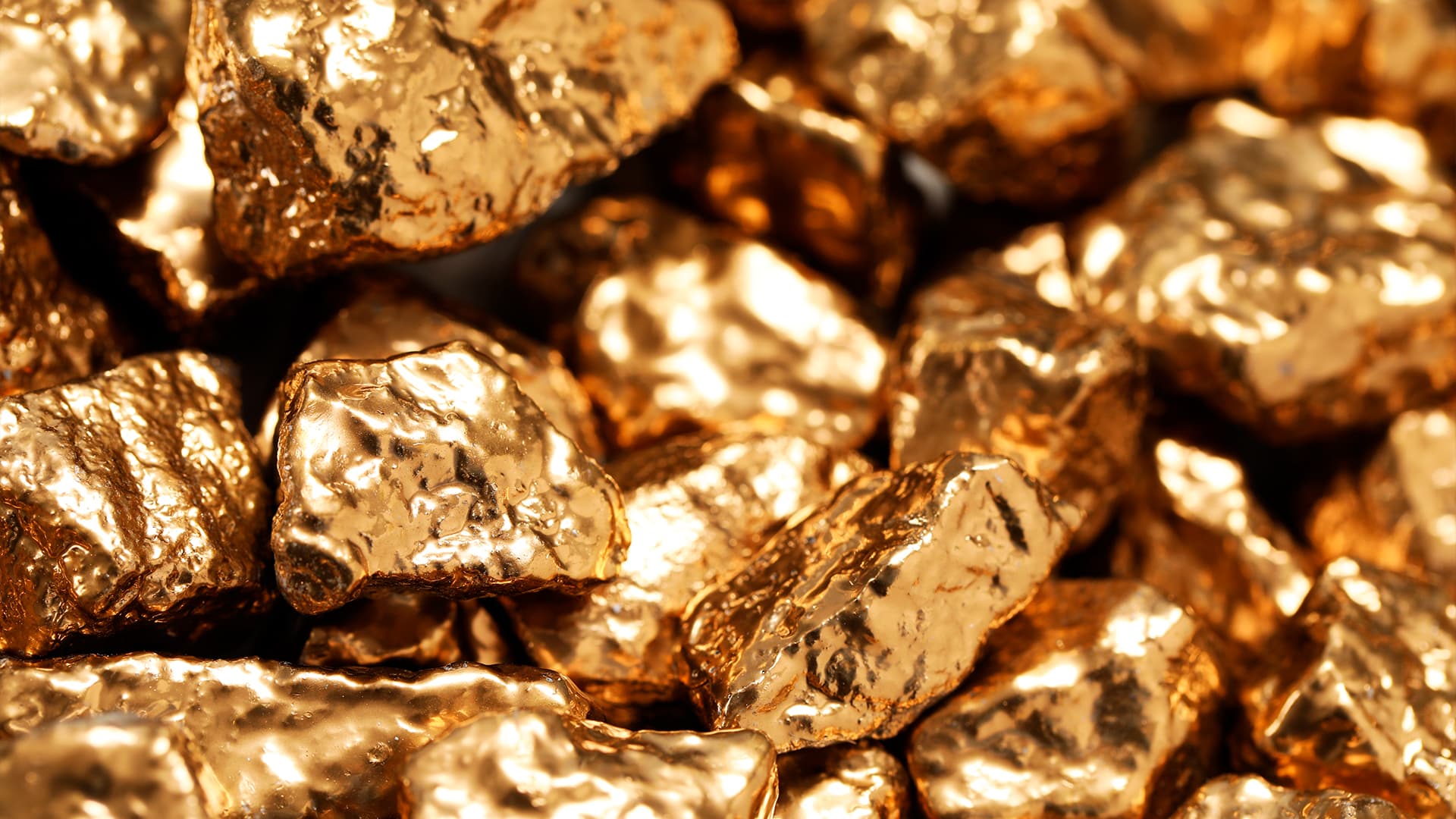
Central Asian countries continue to expand their international reserves, with Kazakhstan, Uzbekistan and Kyrgyzstan increasingly relying on gold as a key reserve asset.
According to a recent review by Halyk Finance, Kazakhstan’s international reserves reached $67.8 billion in April, while Uzbekistan’s climbed to $70.9 billion. The main drivers of this growth were rising global gold prices and continued gold purchases by central banks.
Gold dominates reserve portfolios
Kazakhstan has become one of the countries with the highest share of gold in its international reserves. Gold currently accounts for approximately 78% of the country’s reserves. Uzbekistan has an even higher concentration, with gold making up 87% of reserves.
For comparison, gold accounts for 81% of Kyrgyzstan’s reserves, while the U.S. and Germany each hold about 83% of their reserves in gold. China’s share stands at just 9%.
The global average share of gold in international reserves is estimated at roughly 20%. The analysts note that gold serves not only as a safe-haven asset for Kazakhstan, Uzbekistan and Kyrgyzstan but also reflects the commodity-oriented nature of their economies.
Benefits and risks of a gold-heavy strategy
The large share of gold in reserves is supported by domestic production, export revenues and the development of the mining sector. This strategy offers both advantages and risks.
On one hand, gold has traditionally been viewed as a reliable store of value during periods of geopolitical uncertainty and financial market volatility.

Read also: How global gold reserves shifted from 2019 to 2024 (infographic).
On the other hand, central banks require highly liquid foreign-currency assets to conduct foreign-exchange interventions, service external obligations and ease pressure on exchange rates. A reserve portfolio that is overly concentrated in gold can limit flexibility in responding to external shocks.
Reserve levels remain strong
Measured as a share of GDP, Uzbekistan remains the regional leader, with international reserves equivalent to 48% of GDP. Kyrgyzstan follows at 39%, while Kazakhstan’s reserves amount to 22% of GDP.
However, analysts note that Kazakhstan also holds $64.8 billion in foreign-currency assets in its National Fund. When combined with the country’s international reserves, Kazakhstan’s total external financial buffers are broadly comparable to those of its regional peers.
According to experts, the most balanced approach for Kazakhstan would be to maintain gold at 70% to 80% of total reserves, while holding the remainder in highly liquid foreign-currency instruments.