
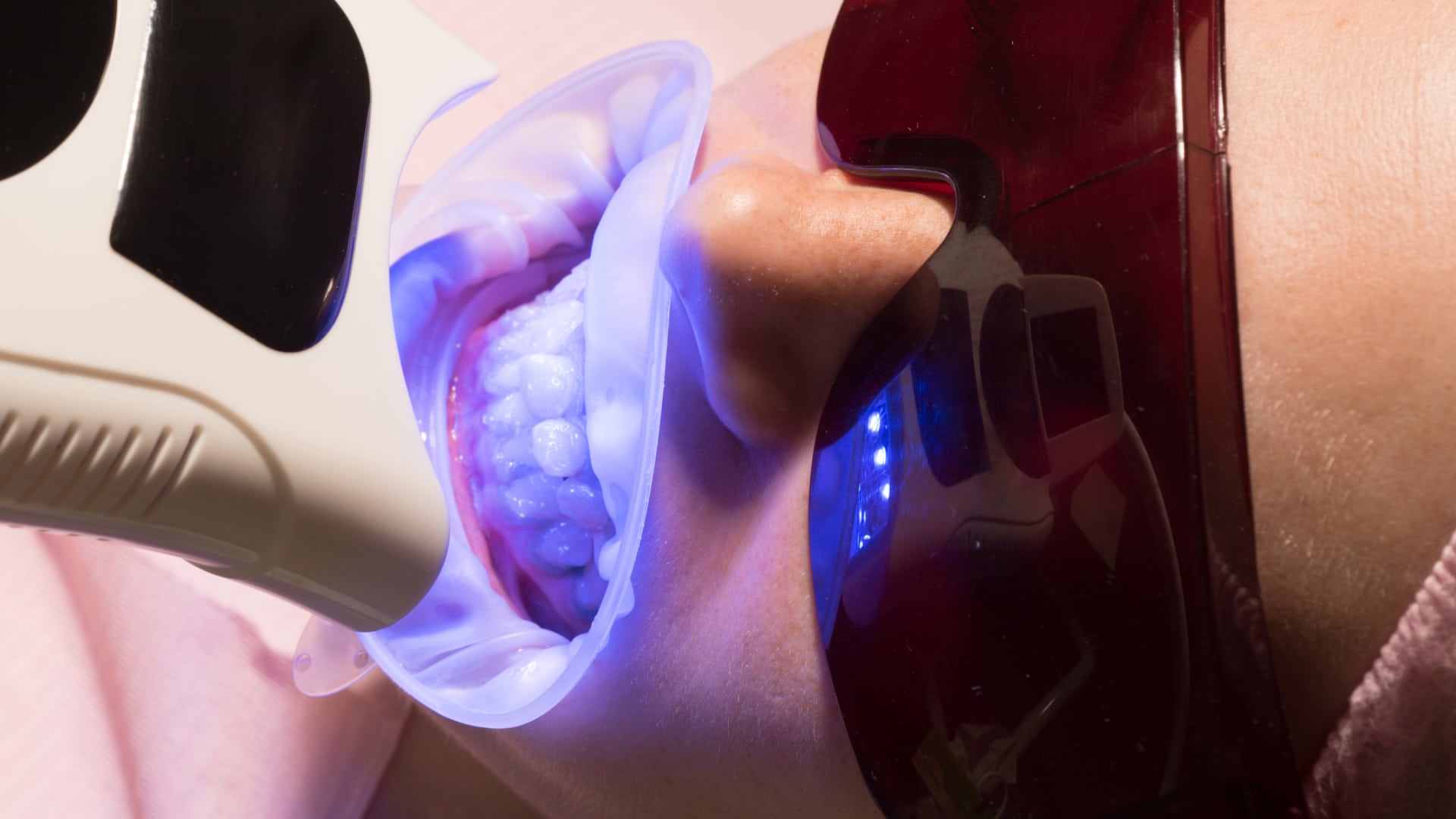
A bright, white smile is a goal for many people, which is why teeth whitening remains one of the most popular cosmetic dental procedures. In an interview with Kursiv Health, dentist Aralbek Tasbulatov discussed the mechanics of teeth whitening, its primary disadvantage, and possible alternatives.
— Manufacturers often claim whitening results can last up to two years. Is that true?
— Dental product manufacturers often state that whitening results can last up to two years, and some even claim up to six years. In practice, however, that is not always the case.
— How does the procedure work?
— The basis of any whitening procedure is the application of a chemical agent to the teeth. Depending on the system used, the agent is activated either by a light source or through a chemical reaction. Light-activated whitening is the most common method.
— What effect does it have on the teeth?
— Most whitening products contain hydrogen peroxide. It penetrates the tooth structure and breaks down pigments that contribute to discoloration.
The visible color of a tooth is determined largely by dentin, the layer beneath the enamel, rather than by the enamel itself. During whitening, hydrogen peroxide passes through the enamel and acts on the dentin, where it lightens the pigments responsible for darker tooth shades.
— That doesn’t sound entirely harmless.
— The main drawback is that whitening is not permanent. Over time, exposure to coffee, tea, tobacco and other staining substances can cause teeth to darken again.
As a result, many people choose to repeat the procedure periodically to maintain the desired shade.

— Does whitening damage enamel?
— Whitening does not damage enamel itself. However, after the procedure, teeth can become more susceptible to staining from foods and beverages that contain pigments.
Coffee, tea, dark chocolate, beets, berries and many other products contain natural or artificial colorants. Because of this, teeth may become discolored again more quickly after whitening.
Are there alternatives?
— What alternatives do you recommend?
— I always recommend professional dental cleaning. Unlike whitening, this procedure is essential for oral health because it removes both hard and soft plaque, as well as pigmented and non-pigmented deposits.
Professional cleaning removes buildup above and below the gumline. As a result, teeth often appear cleaner and brighter, while the gums are healthier and feel better after the procedure.
— How frequently should people have professional cleanings?
— I recommend having a professional dental cleaning twice a year. In other words, people should schedule the procedure every six months.