


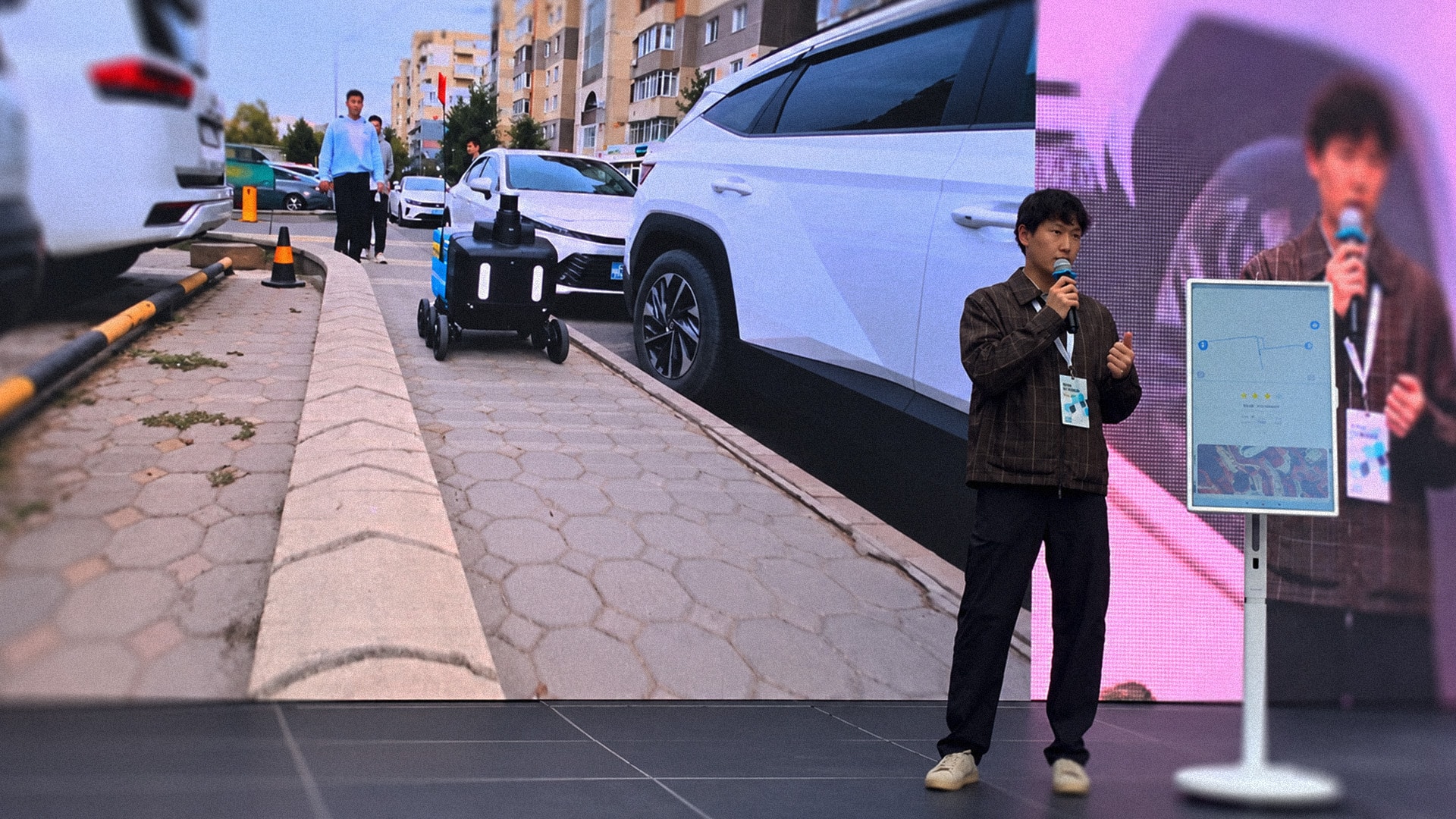
Robot delivery has recently been introduced in Almaty’s upscale Samal microdistrict and the Nurly Tau residential complex.
Initially, the robots will deliver groceries only. It remains unclear whether they will eventually handle other items, such as important documents. The automated couriers are expected to arrive within 15 to 30 minutes and wait at the building entrance for up to 15 minutes. They will not enter buildings or navigate narrow alleyways.
When will customers have to pay for robot deliveries?
For now, the service is free. Timur Shalekenov, CEO of Yandex Qazaqstan, told reporters that if demand proves strong, the company may continue offering robot deliveries without a separate delivery fee for some time. Eventually, when a fee is introduced, it will be no higher than the cost of delivery by a human courier.
«We are seeing the cost of these devices decline globally. A rover similar to the one we launched in Moscow just five years ago would likely have cost three to four times as much. Prices are falling, and in a few years, the technology will become even more affordable,» Shalekenov said.
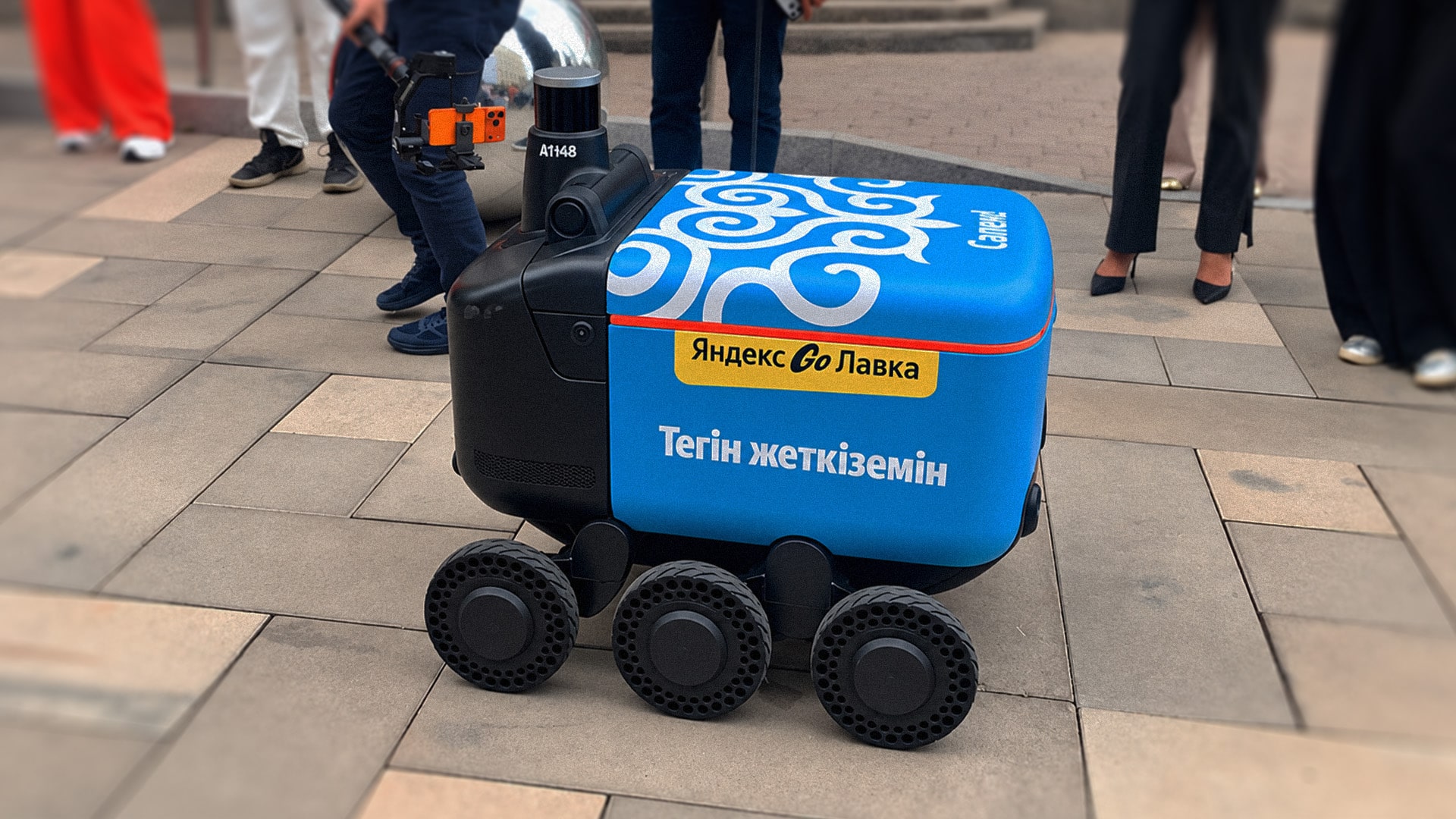
Where will the service operate?
The company has established five hubs, or dark stores, across the city. The robots will operate within a 1.5- to 2-kilometer radius of these locations.
One hub is in the Samal microdistrict, another is near the Atakent International Exhibition Center, and a third will serve Almaty’s «Golden Square,» an upscale central district. Shalekenov did not disclose the locations of the remaining two hubs or when they would become operational. However, he said that, for the time being, the entire robot delivery network would operate only in areas north of Raiymbek Avenue.
Read also: Yandex data center strikes open new tech opportunities for Kazakhstan.
Irresponsible behavior by members of the public may pose the greatest risk to the robots. Children have already tried riding on them, although no incidents have been reported so far.
Shalekenov said human couriers would not lose their jobs, pointing to the continued expansion of the delivery market and the growing adoption of delivery services by online marketplaces. Meanwhile, Arman Dosmailov, head of Yandex Lavka, said the rovers do not require additional compensation for operating in bad weather, suggesting that delivery fees are unlikely to vary with weather conditions.
No legislation governing delivery robots
Shalekenov did not elaborate on how the robots would navigate Almaty’s challenging terrain. Although they are designed to maneuver autonomously around construction sites and roadworks, a human operator can take control in more complicated situations.
«Currently, there is no legislation in Kazakhstan governing delivery robots. They enter public spaces and travel along sidewalks. They move slowly, of course, but they are still moving vehicles. We are now considering how to classify these small delivery units to ensure they do not inconvenience pedestrians or motorists, while also giving companies launching these services the green light to further develop this technology,» MP Ekaterina Smyshlyayeva told Kursiv LifeStyle.
As a result, it may be difficult to obtain compensation if a robot injures a child or a pet, although such an incident would be unlikely in the first place. As for the risk of theft or damage to the units, Dosmailov said the robots could not be stolen. If anyone other than the intended recipient attempts to open one, it will sound a loud alarm.
Notably, delivery robots were previously deployed in Almaty’s Golden Square area in 2024, although the earlier initiative was not mentioned during the presentation.
