

Global energy demands driven by artificial intelligence and industrial growth are sparking a major resurgence in nuclear power construction. A recent ranking by World Population Review highlights how 74 nuclear reactors are under construction across 15 nations, signaling a global shift toward low-carbon energy independence.
While Western countries cautiously rejoin the field, momentum has shifted decisively toward Asia, where massive infrastructure investments are redefining the global energy landscape.
Read also: A risky shortcut? Power companies to use AI to generate nuclear licensing docs.
Chinese dominance and construction momentum
China leads global nuclear expansion with 37 reactors under construction, representing nearly 43 gigawatts of capacity. This single buildout exceeds the combined projects of all other nations, adding more capacity than the operational fleets of Russia and South Korea combined.
India ranks second with eight reactors underway, while Russia follows with seven as it maintains its position as a premier nuclear technology exporter. Meanwhile, Egypt and Turkey are each building four reactors, marking their entry into commercial nuclear energy production, while the United Kingdom has two underway.
Read also: Why Russia’s Rosatom is the undisputed pick for Kazakhstan’s first nuclear plant.
Existing fleets and global output
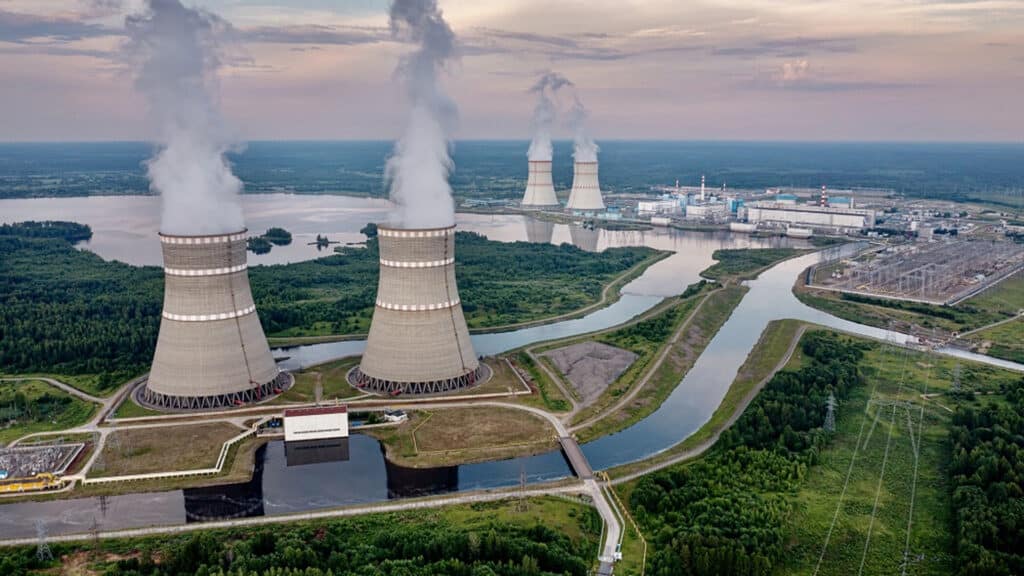
Despite building few reactors in recent decades, the U.S. operates the world’s largest fleet at 94 reactors, generating 826,100 gigawatt-hours (GWh) annually. China ranks second in output at 485,200 GWh across 60 operating reactors, followed by France with 57 reactors producing 390,100 GWh. Five nations generate more than two-thirds of all global nuclear electricity. However, total output differs from national reliance. France leads global grid dependence by drawing over 68 percent of its electricity from nuclear power, followed by Slovakia at 64 percent and Ukraine at 55 percent. In contrast, the U.S. draws 18 percent from nuclear power, while Germany closed its final reactor in 2023.
Read also: Affordable Armageddon: A look inside Ukraine’s $4,000 nuclear shelters.
Small modular reactors and future projections
Looking ahead, global nuclear capacity could increase by more than 75 percent over the next two decades. China projects adding 118 gigawatts of capacity, India targets 32 gigawatts and Russia plans 21 gigawatts of growth. Simultaneously, small modular reactors — compact, factory-built units — are moving from concept into active construction across North America, Europe and Asia. These advanced modular systems offer flexible clean power to meet soaring electricity demand across an increasingly digital global economy.
