
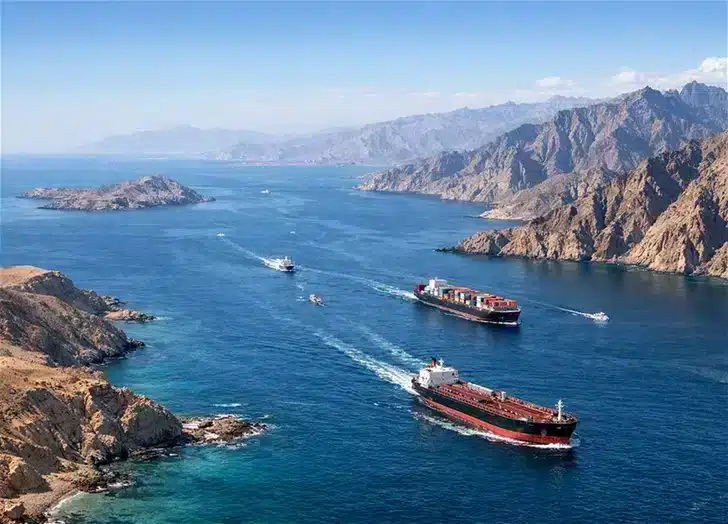
The escalation of conflict in the Middle East, along with the risk of a closure of the strategically vital Strait of Hormuz, is putting significant pressure not only on global energy markets but also on the economic stability of countries across the region.
Amid rising geopolitical uncertainty and the potential disruption of supply chains, the International Monetary Fund (IMF) has revised its GDP growth forecasts for Gulf states, sharply lowering its outlook.
Qatar sees sharp downgrade, followed by rebound
Qatar experienced the most dramatic revision among Gulf countries. The IMF cut its 2026 growth forecast by 14.7 percentage points, to negative 8.6%. However, growth is projected to rebound strongly to positive 8.6% in 2027. This pattern likely reflects temporary structural factors rather than a prolonged or systemic downturn.
Kuwait and Bahrain expected to contract
Kuwait and Bahrain are both projected to see economic contractions in 2026. Kuwait’s economy is forecast to shrink by 0.6%, while Bahrain’s is expected to decline by 0.5%. These figures represent downward revisions of 4.5 and 3.8 percentage points, respectively, underscoring a broader regional slowdown.
UAE and Saudi Arabia remain relatively resilient
Despite downward revisions of 1.5 to 1.9 percentage points, the United Arab Emirates and Saudi Arabia are still expected to post positive growth of 3.1% in 2026. These economies continue to be viewed as among the most stable and resilient in the region.
Oman outlook remains steady
Oman saw the smallest adjustment, with a revision of just 0.5 percentage points. The IMF’s outlook for the country remains steady, with GDP growth projected at approximately 3.4% to 3.5% over the next two years.
Oil constraints and recovery prospects
The broad downward revisions for 2026 are largely tied to production limits under OPEC+ agreements and ongoing pressure on oil revenues. Even so, most Gulf economies are expected to regain momentum by 2027 as conditions stabilize.