
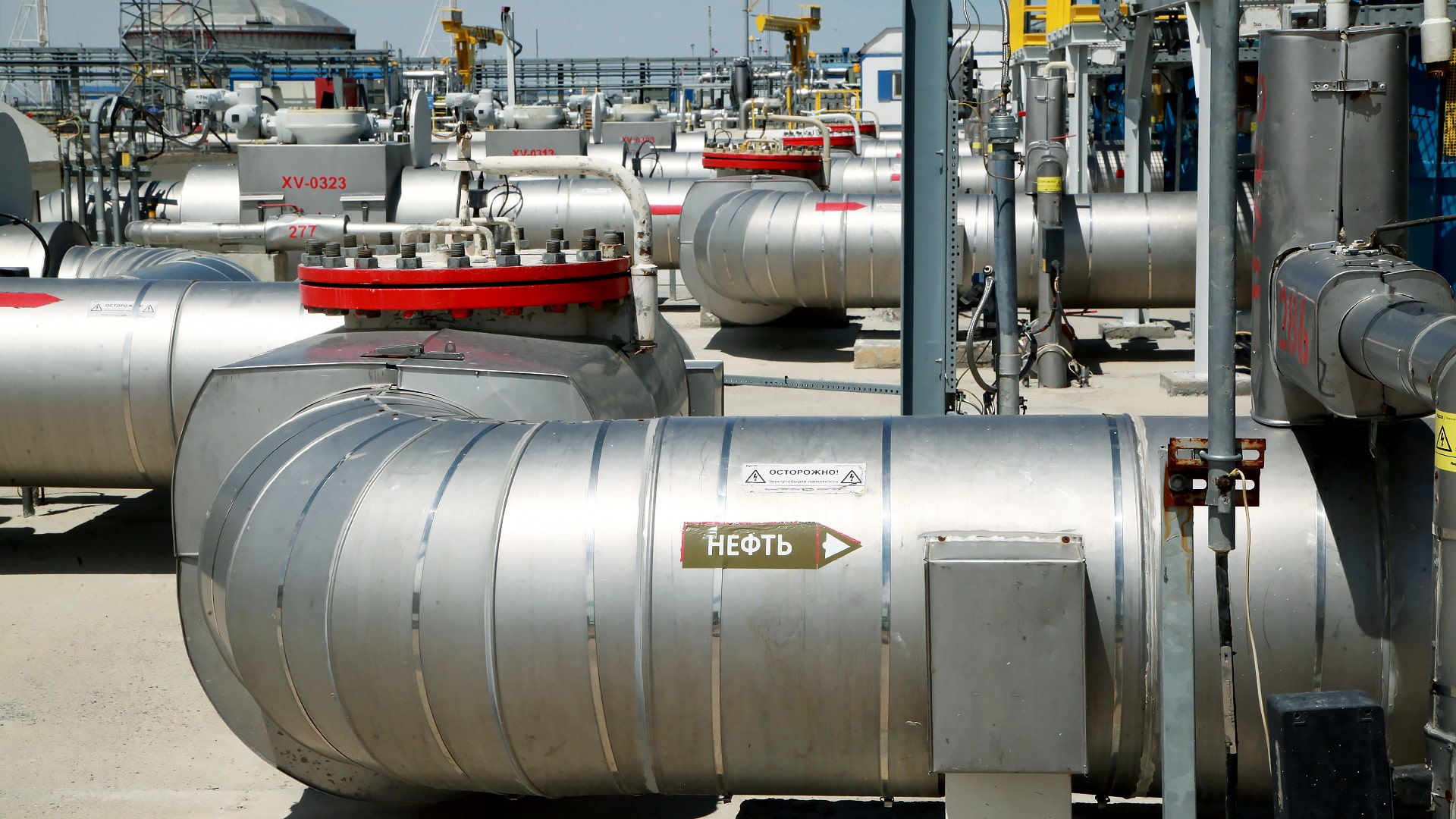
The share of crude oil in Kazakhstan’s exports fell to a historic low of 44.4% in the first quarter of 2026. Strong growth in the non-oil sector helped offset losses from hydrocarbons, as record prices for copper, silver and sulfur boosted export revenues. Analysts say current geopolitical tensions could further benefit Kazakh exporters in the second quarter.
From January through March 2026, Kazakhstan’s foreign trade turnover rose 10.5% year over year to $32.9 billion. Goods exports totaled $18 billion, up 9.4% from the same period last year.
However, the composition of exports changed significantly. The share of crude oil declined because of lower average prices, logistical disruptions and production problems. At the same time, exports of metals, uranium, sulfur and agricultural products surged.
Oil accounted for 44.4% of Kazakhstan’s exports in the first quarter, down from 52% a year earlier. Revenue from crude exports fell 6.6% year over year, although physical export volumes increased 9.6%.
The rise in shipment volumes was partly due to a low comparison base from last year, when Kazakhstan’s main export route was disrupted by Ukrainian drone attacks. This year, attacks have become more frequent and have expanded to other transport infrastructure, including tankers chartered by companies such as Chevron and KazMunayGas. Despite the disruptions, Kazakh exporters were able to redirect supply flows.
Europe declines while Asian demand rises
Total oil shipments to European countries, including the United Kingdom, fell by 236,000 tons, or 1.5% year over year. However, exports to the UK alone rose by 394,000 tons, partially offsetting the broader European decline.
Shipments through alternative routes also increased. Exports to Turkey — likely via the Baku-Tbilisi-Ceyhan pipeline — climbed by 397,000 tons, or 73.8% year over year.
Asian demand also strengthened. South Korea imported 507,000 tons of Kazakh oil after purchasing none during the same period last year. China increased imports by 475,000 tons, nearly tripling its purchases.
The growth in exports came despite an accident at the Tengiz oil field, which reduced production there to 5.7 million tons in the first quarter, compared with 9.4 million tons a year earlier.
Analysts say recent developments — including the United Arab Emirates’ withdrawal from OPEC, the partial easing of sanctions on Russia’s shadow tanker fleet and lower global oil demand forecasts — have increased volatility in global energy markets. At the same time, these factors could improve conditions for Kazakh exporters. Key risks include potential new attacks on transport infrastructure and additional production-related technical problems.
Metals exports surge
Rapid growth in non-oil exports helped compensate for declining oil revenue.
Exports of copper cathodes jumped 62% year over year to $1.25 billion, while shipment volumes rose 17.5%. Much of the increase came from higher exports to Turkey, which rose by $306 million, or 88.3%, and to the UK, which increased by $176 million.
Although exports to China fell by nearly one-third in volume terms, higher global prices limited the decline in revenue to 7.5%, bringing total exports to China to $392 million. Turkey has now become Kazakhstan’s largest importer of copper cathodes.
Exports of copper ore and concentrate climbed 84.6% to $1.2 billion, driven largely by strong demand from China.
China’s increased purchases of raw copper materials, alongside reduced imports of finished copper products, reflect Beijing’s push to expand domestic processing capacity. Analysts expect this trend to accelerate as copper prices hit record highs in 2026.
Wheat exports expand
Wheat exports rose 53.7% year over year in value terms, while shipment volumes increased 90.8%.
The growth was fueled by last year’s strong harvest and the extension of transportation subsidies for exporters.
Although Kazakhstan expanded wheat shipments to countries including Iran, France and the UK, Uzbekistan and Tajikistan remained the primary buyers, accounting for 88.3% of total wheat exports.
Exports to Afghanistan nearly quadrupled, reaching $60.4 million.
Silver becomes fastest-growing export item
While the top half of Kazakhstan’s export rankings remained largely unchanged over the past year, four new products entered the lower half of the top 10.
Silver recorded the fastest growth among the country’s leading exports. Revenue from silver exports, ranked sixth overall, surged more than 3.5 times year over year to $392 million.
The increase was driven by both a 40.9% rise in shipment volumes and a sharp increase in global silver prices, which climbed from $32 per ounce a year earlier to $84 per ounce during the reporting period.
Uranium exports surge
Uranium ranked eighth among Kazakhstan’s top export products in the first quarter of 2026. Export revenue rose 219% year over year, driven almost entirely by a threefold increase in shipment volumes.
France accounted for more than 90% of Kazakhstan’s uranium exports, while the remainder was shipped to the U.S.
Kazakhstan strengthens position in tungsten market
Kazakhstan also continued to expand tungsten exports. Revenue from tungsten shipments reached $57 million in the first quarter alone, approaching the $71 million generated during all of 2025.
All tungsten exports currently come from the Boguty deposit, which entered commercial production in November 2024. The project is being developed by Zhetysu Volframy, a company established by Hong Kong-based Jiaxin International Resources Investment, with all output shipped to China.
The launch of the single deposit helped Kazakhstan become one of the world’s top three tungsten producers by the end of 2025.
Read also: Tungsten titan: China’s Boguty project made Kazakhstan a top producer.
Production is expected to continue growing in the medium term as development begins at the North Katpar and Upper Kairakty deposits, which are considered among the world’s largest by total reserves. The projects will be developed through a Kazakh-American joint venture.
Exporters adapt to global turbulence
First-quarter results highlighted the adaptability of Kazakhstan’s exporters amid ongoing geopolitical and logistical challenges.
The rerouting of export logistics, combined with record global prices for copper, silver and sulfur, helped Kazakhstan maintain a positive trade balance of $3.1 billion.
Geopolitical tensions late in the quarter — including escalating tensions surrounding Iran and disruptions in the Strait of Hormuz — have already pushed global oil prices to between $100 and $110 per barrel.
Exports of other key commodities, including sulfur, also rose sharply.
Analysts say these developments could support further growth in Kazakhstan’s foreign currency earnings during the second quarter, provided exporters are able to limit infrastructure disruptions and avoid additional production-related problems.