

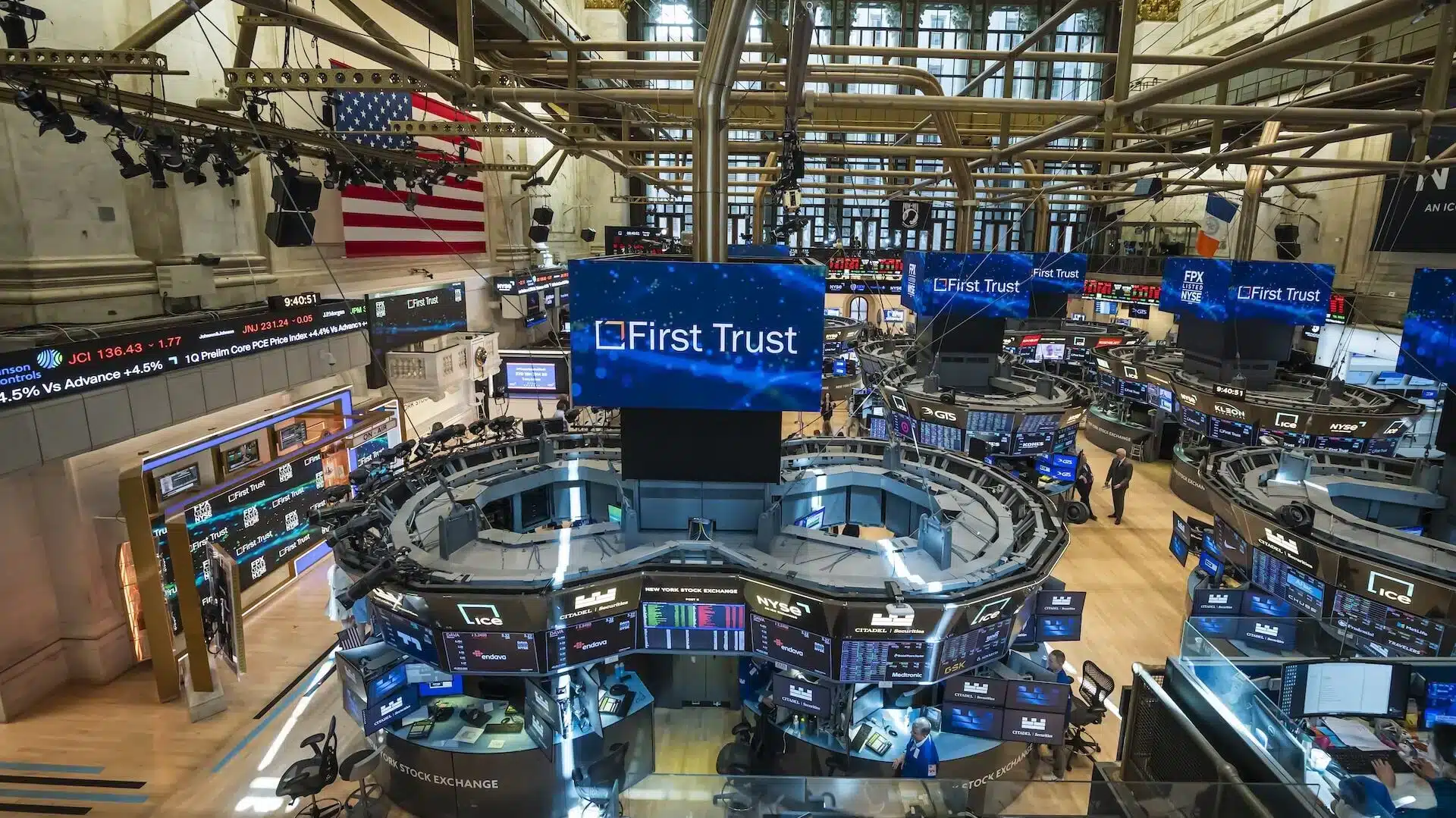
In fiscal year 2025, Freedom Capital Markets (FCM), the American division of Freedom Holding Corp., operated in 32 U.S. states. In fiscal year 2026, it expanded its license to 35 states and the District of Columbia. In order to get a closer look at Freedom’s American business and capture the spirit of the stock market from its very center — the NYSE on Wall Street — Kursiv.media traveled to New York to see it with its own eyes.
According to the annual report of Freedom Holding Corp., which includes FCM, total revenue for the brokerage segment (including FCM) increased by 16%, or $114.2 million, reaching $831.5 million in fiscal year 2026, compared to $717.3 million in 2025.
Clients’ trading activity has also risen, the report showed. Specifically, interest income from client margin loans increased by 31%, or $65.3 million, to $277.6 million. Payroll expenses in the segment increased by $58.1 million. The client base for brokerage accounts increased by 175,000 to 858,000 clients.
A key driver of this positive growth was the holding’s strategy to expand its presence in the global financial center, including its office at 40 Wall Street and its active operations on the New York Stock Exchange (NYSE). Thanks to growth in market capitalization and compliance with FTSE Russell criteria, including its status as a U.S. corporation and physical presence in the U.S., the company was added to the prestigious Russell 3000 Index.
However, the Russell 3000 Index is often associated with a well-known professional paradox, according to Jay Woods, FCM’s chief global market strategist. In other words, if a company on this list begins to grow too quickly and becomes overly successful, it is removed from the small-cap index and transferred to the mid-cap index. This is one reason why large-cap stocks often outperform. They simply keep the leaders within their own ranks.
A strategist’s view: Tech giants, AI and a cautious approach to IPOs
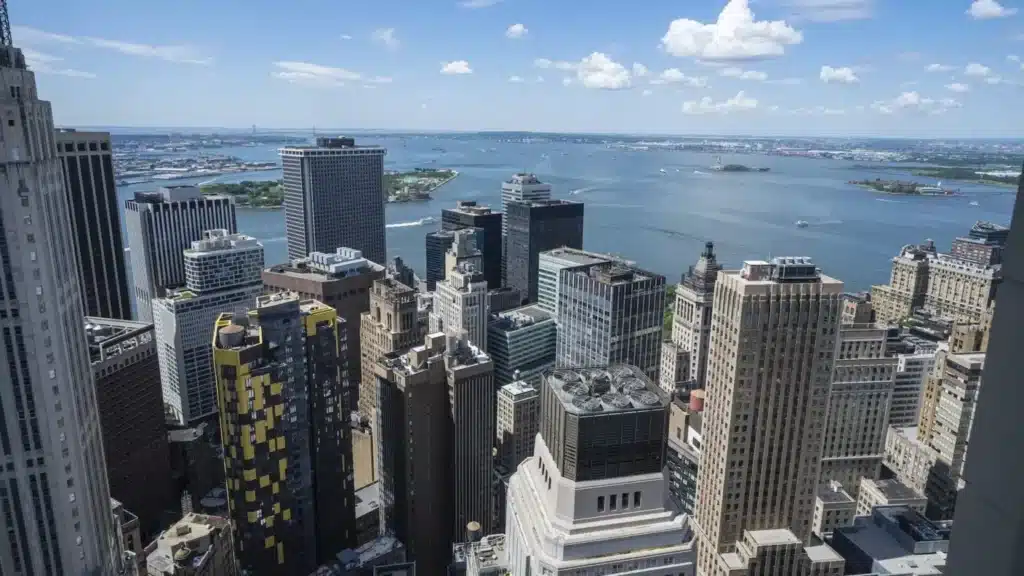
Our acquaintance with Freedom’s American business began in the heart of the financial world. On the 58th floor of the Trump Building, with its panoramic views of New York City and the Statue of Liberty, we observed the bustling activity that directly impacts FRHC’s stock price.
As Woods noted, 15 of the 20 largest companies in the S&P 500 are tech giants.
«The market is ignoring headlines about wars and inflation right now, focusing on what’s really working: earnings and growth in the tech sector,» he explained.
As an example of how the S&P 500 effectively does the investor’s work, self-cleansing and leaving only the top 500, Woods cites the case of Uber and Alaska Airlines. Two years ago, the index committee replaced the airline with a tech giant.
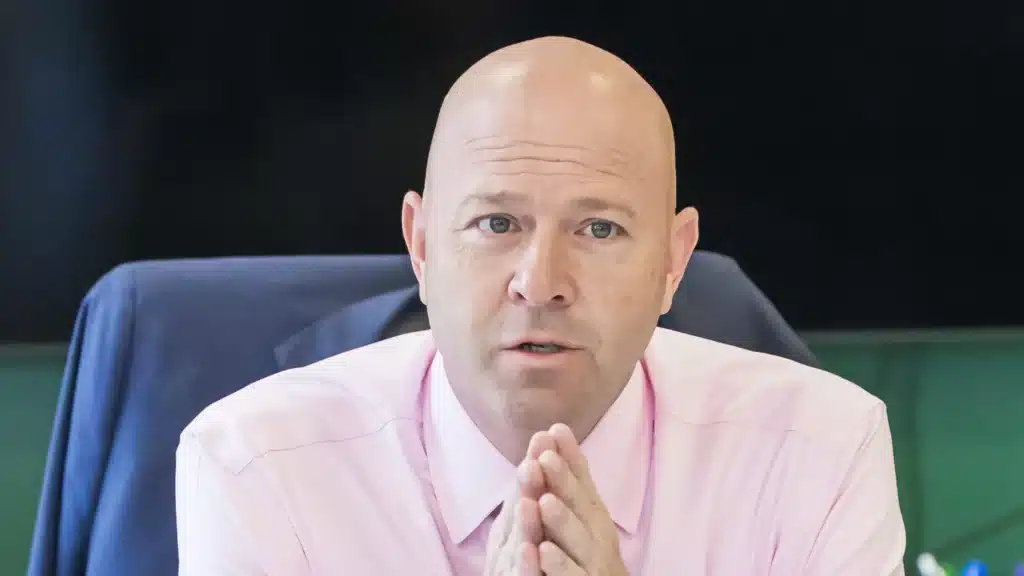
«Would you rather have the eighth-largest U.S. airline in your portfolio or a global company?» he asked.
Among other hot trends are AI and high-profile IPOs, such as the upcoming SpaceX IPO on June 12. FCM experts, however, are cautious about the latter, warning that retail investors risk holding the bag. Major players have been investing in SpaceX for years in the private market, and a public offering could simply be a way for them to lock in profits at the expense of mass buyers.
As for AI, the human factor still plays a big role in the field.
«Your word is your bond»: The daily life and traditions of Wall Street’s «Vikings»
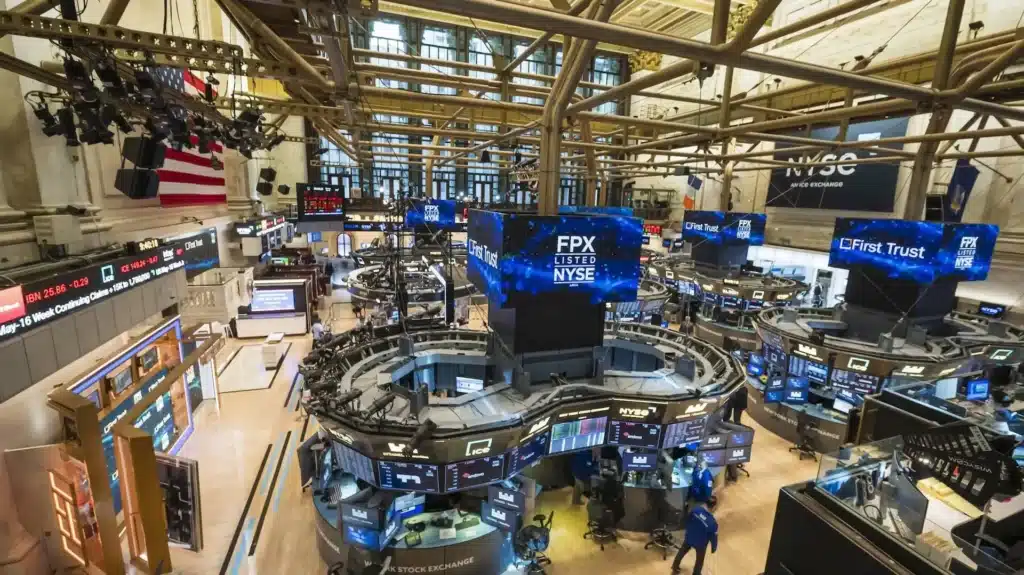
Prime Executions, an American broker-dealer that Freedom Holding Corp. acquired in 2021, is a key part of Freedom’s brokerage business. It is the oldest and one of the most respected teams on the NYSE. In an era when trading floors are emptying due to the advancement of algorithms, Freedom relies on the highest level of human expertise.
«In our business, your word is your bond,» Prime Executions Senior Vice President Jeffrey Vazquez said.
This isn’t just a catchy phrase but the foundation upon which the NYSE has stood since the signing of the Buttonwood Agreement in 1792. The exchange’s very history is woven from such traditions.
For example, in the early 1800s, traders rented just two offices, and each participant sat in the same physical chair every day. If you came to trade, you literally occupied your assigned seat. This practice gave rise to the famous expression «owning a seat.»
Prime Executions processes an average of 750 million shares per month. This is a huge number, which requires enormous resources to handle.
«Anyone can push a button and buy or sell something, but what we do down there on the floor requires a high level of personal involvement that will never change,» Vazquez emphasized.
The atmosphere on the exchange is far different from that of a sterile office. Traditions and memories of the life of Wall Street’s «Vikings» are still alive here. Before the digital age, brokers might not leave the building for weeks. As a result, an entire closed ecosystem emerged to support their needs. There was an in-house barbershop, a tailor who could iron your pants or sell you a new shirt if you stayed there until 4 a.m., and even a Bloomberg stationery store. Brokers literally «ate like Vikings» because the exchange compensated for their hard work with sumptuous breakfasts big enough to «feed a small country.»
In an era when up to 5,000 people were on the floor of the NYSE at the same time, a unique language of gestures and shouts developed.
«There used to be a lot of shouting and noise here,» Vazquez recalled. «Newbies were shredded apart if they didn’t understand our fast-paced conversations. You had to execute a trade within three minutes — from the moment the call came in to the moment the ticket was issued — or you lost money and your reputation.»
Experienced brokers would deliberately wear jackets with extra ventilation, as it was extremely hot on the trading floor, both physically and emotionally.
However, technology gradually cooled this ardor. The first chemical air-cooling system in North America was installed here in 1903, allowing traders to work more comfortably during the summer heat. When Ferrari completed its IPO on the NYSE, it lined up its supercars outside the exchange, making the historic building vibrate with the roar of its powerful engines.
Global export of the Kazakhstan ecosystem
For clients, shareholders and investors of Freedom Holding Corp., a positive signal about the company is not only its success in the U.S., but also its plans for technological global expansion. Freedom Holding Corp. CEO Timur Turlov has already begun exporting the Freedom ecosystem in the form of a SuperApp from Kazakhstan to international markets, including Tajikistan, Turkey, the United Arab Emirates and Georgia. Previously, the West was the main source of financial solutions exported to global markets. Now Kazakhstan, which is actively diversifying and modernizing its commodity-based economy, has joined this race.
Inclusion in the Russell 3000 Index is only the first step in recognizing the scale of the company, which combines the centuries-old traditions of the NYSE with the audacity of modern fintech solutions.
Breaking the mold: Why Americans need the stock market
Freedom’s investment case is complemented by an educational mission. According to Woods, there is a dramatic difference in approaches to savings and investing between American and Kazakhstani investors. In the U.S., bank deposits yield less than 1% per annum, while money market instruments yield around 3.5%. For Kazakhstani investors, accustomed to rates of 15% to 18% in tenge, this sounds strange. However, this difference is exactly what has historically motivated Americans to study the stock market from a young age, discover the power of compound interest and seek alternatives for smart investing.
«Our goal is to teach them how to invest wisely. The only way forward for young people is to buy what they know, what they use and what they believe in. If you have an iPhone in your pocket, buy Apple; if you use Google Search, buy Google, and so on,» Woods emphasized.
The expert believes that financial literacy should begin in school, and Freedom actively facilitates this process by offering transparent and effective tools for capital growth.
Currently, Freedom is building a bridge between Kazakhstan’s technological potential and the vast global capital markets. Even minor annoyances, like the elevator getting stuck on the sixth floor of the NYSE, forcing us to run up the stairs to our meeting, didn’t spoil the experience. As our guides joked, «That’s what real stock market dynamics are all about — you always have to be prepared for a quick move up.»